
Training & Behaviour

Published posts in Training & Behaviour.

Yorkies have a reputation for being difficult to house train, and it isn't entirely undeserved. The reason is mostly mechanical rather than stubbornness: a bladder the size of a walnut simply cannot hold on as long as a larger dog's, and a puddle from a four-pound dog is small enough to be missed, which lets a habit form in a spot you never cleaned.

The good news is that the method is straightforward. What it demands is frequency and consistency rather than cleverness.

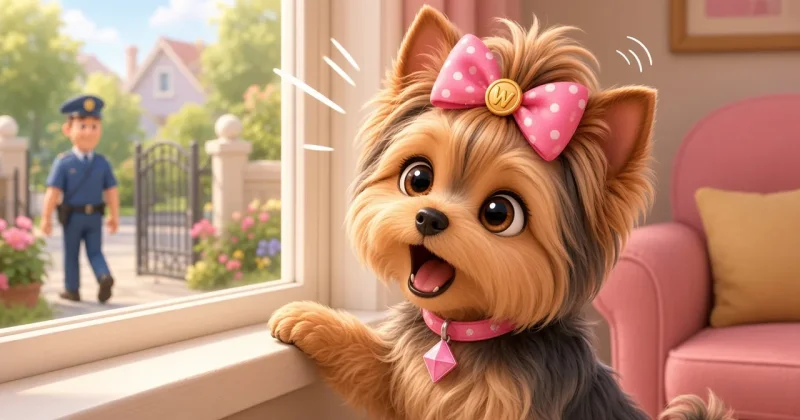
Yorkshire Terriers were bred to hunt rats in Victorian mills and to tell their owners about it. Alerting you loudly to things is not a flaw in the breed, it's the job description. That doesn't mean you have to live with constant noise.

The important thing is that there's no single fix, because there's no single cause. Barking at the window is a different problem from barking when you pick up your keys, and the treatment that solves one makes the other worse. This guide helps you work out which type you're dealing with first.

Fireworks combine sudden noise, vibration, flashes, and an unpredictable pattern—a difficult mix for an animal with sensitive hearing and no way to understand when it will end. A frightened dog may pant, tremble, hide, pace, bark, refuse food, or try to escape.

The best plan starts before the first explosion. Safety and management come first; training helps over time; and severe noise fear deserves veterinary treatment rather than a test of endurance.

Dogs communicate constantly, but much of what they say happens before a bark or growl. A head turn, closed mouth, change in weight, or sudden stillness can tell you whether a dog wants to approach, needs space, or is becoming overwhelmed.

No single signal has one fixed meaning. Good body-language reading combines the whole body, the situation, and the change from that individual dog's normal behaviour.

Dogs lick people for many reasons: affection, attention, interesting taste, stress relief, or a polite attempt to communicate. The same lick can mean “hello” in one moment and “please stop” in another.

To understand it, look at what happened immediately before, whether the dog's body is relaxed, and what usually happens after she licks. Context is more informative than the lick itself.