
Why Do Dogs Lick You? Affection, Communication, and When It Is Too Much
13 min read
Category Training & Behaviour
Tag dogs
Dogs lick people for many reasons: affection, attention, interesting taste, stress relief, or a polite attempt to communicate. The same lick can mean “hello” in one moment and “please stop” in another.
To understand it, look at what happened immediately before, whether the dog's body is relaxed, and what usually happens after she licks. Context is more informative than the lick itself.

Table of Contents
Licking Begins in Puppyhood
Newborn puppies are licked by their mother for cleaning, stimulation, and care. Puppies also lick around an adult dog's mouth during social interactions. Licking therefore begins as a normal part of canine communication long before a puppy meets her human family.
Once she discovers that humans respond with speech, touch, laughter, or attention, the behaviour can become even more rewarding.
Common Reasons Dogs Lick People
Affection and Social Contact
A relaxed dog may lick during greetings, cuddling, or quiet time. Soft eyes, loose muscles, and the freedom to stop are good signs that it is friendly social contact.
Licking is not proof of love by itself, but it can be one of the behaviours a dog uses with trusted companions.
Your Skin Tastes Interesting
Human skin carries salt, food traces, lotions, and a collection of smells far more interesting to a dog than clean fabric. Licking after exercise or cooking may be more about chemistry than emotion.
Do not let a dog lick skin covered with medicated creams, essential oils, topical pain relief, or other products unless a veterinarian confirms they are safe if swallowed.
Attention Works
If licking reliably makes you look, speak, laugh, push the dog away, or begin petting, it has achieved attention. Even a negative response can keep the behaviour going.
This is especially likely when the dog approaches during phone calls, computer work, or another predictable period when attention is unavailable.
Appeasement or a Request for Space
Quick licking toward a person's face or hands can be appeasement: “I am not a threat.” Lip licking can also indicate discomfort.
If a dog licks while leaning away, turning her head, lowering her body, showing the whites of her eyes, or trying to leave, stop the interaction. She may be asking for space rather than affection. How to read dog body language explains these combinations in detail.
Stress Relief
Repetitive licking can be self-soothing. The rhythm may help a dog cope with excitement, uncertainty, frustration, or boredom.
Notice the pattern. Does it happen when visitors arrive, before you leave, after a conflict, or during long inactive evenings? Changing the situation is more effective than repeatedly saying “no.”
You Reinforced It Without Meaning To
Behaviours that work are repeated. A puppy licks, everyone reacts warmly, and an adult dog continues because the rule has always been clear: licking starts interaction.
That is not manipulation. It is ordinary learning.
Why Dogs Lick Faces
Faces carry strong smells from breath, food, tears, and skin oils. They are also the centre of human attention, so approaching the face produces an immediate response.
Some dogs attempt face licking as an enthusiastic greeting. Others use small, quick licks when a person leans too close. The second dog may be trying to defuse an uncomfortable encounter.
Avoid putting your face directly against a dog's face, especially while she is resting, eating, restrained, or meeting you for the first time. Children should never be encouraged to accept “kisses” as proof that a dog is safe.
Are Dog Kisses Safe?
For most healthy adults, an occasional lick on intact skin carries low risk. A dog's mouth is not sterile, however, and is not “cleaner than a human's.”
Avoid licking:
- Open wounds, surgical sites, or broken skin
- Eyes, nose, and mouth
- Babies and very young children
- Anyone with a weakened immune system
- Skin covered in medication or potentially toxic products
Wash with soap and water after unwanted licking, and maintain routine veterinary care, parasite prevention, and dental hygiene. Yorkie dental care covers home brushing and warning signs that apply to many small dogs.
When Licking Becomes Excessive
The occasional social lick is normal. Investigate licking that is difficult to interrupt, damages skin, replaces sleep or play, or appears suddenly.
A dog may lick people or objects excessively because of anxiety, nausea, pain, cognitive decline, or a compulsive pattern.
A dog who repeatedly licks her own body may have allergies, fleas, infection, injury, joint pain, or nerve discomfort. The location is a clue:
- Paws: allergies, irritation, foreign material, or pain
- One joint: injury or arthritis
- Belly or flanks: skin disease, discomfort, or stress
- Genitals: urinary, reproductive, or skin problems
- Lips and surfaces: nausea or dental discomfort
Redness, hair loss, odour, discharge, swelling, limping, vomiting, appetite change, or night-time restlessness calls for veterinary advice.
How to Reduce Unwanted Licking
Decide What You Want Instead
“Do not lick” leaves a behavioural gap. Choose a replacement: sit for greeting, place a chin on your knee, bring a toy, or settle on a mat.
Remove Attention Calmly
For attention-seeking licking, quietly stand or turn away for a few seconds. The moment the dog pauses, ask for the replacement behaviour and reward it.
Avoid shouting, pushing, or holding the muzzle. Those responses may frighten the dog or still provide the attention she wanted.
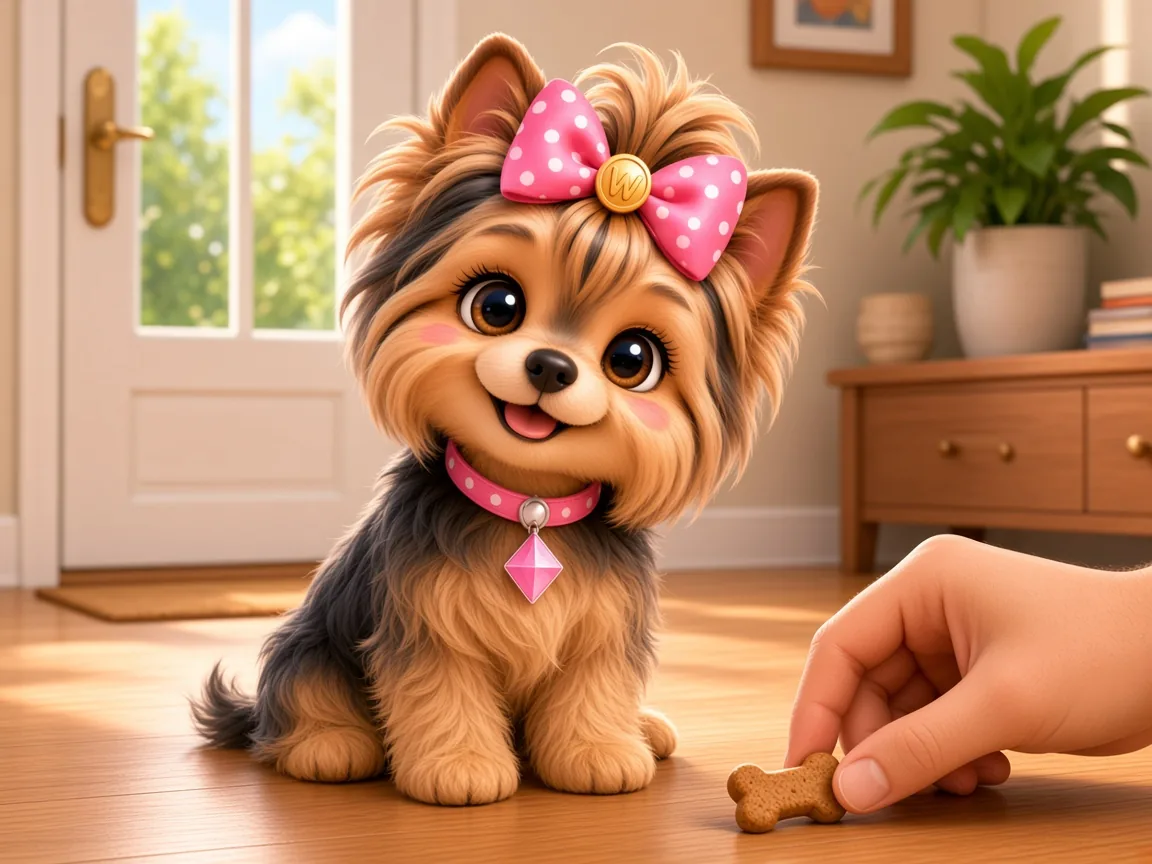
Reward Four Paws and a Closed Mouth
Pay for calm behaviour before licking begins. During greetings, deliver treats low to the floor while four paws remain down, then offer petting if the dog stays settled.
Meet the Underlying Need
Add sniffing walks, chew time, food puzzles, rest, and short training sessions. A dog who licks during overstimulation may need less activity and more sleep, while a bored dog may need meaningful engagement.
For an energetic small dog, the activities in what activities do Yorkies like are easy to adapt.
Give Consent-Based Affection
Pet for a few seconds, pause, and see what the dog does. Leaning back in suggests she wants more. Turning away, licking lips, or leaving means the interaction should end.
Should You Let a Dog Lick You?
That is a household preference within sensible hygiene limits. Consistency matters.
If face licking is not allowed, everyone should redirect it. If hand licking is acceptable, put it on cue or allow it briefly before asking for a stop. Mixed reactions—laughing one day and scolding the next—make learning harder.
Guests should not have to accept licking. Use a lead, gate, mat, or food toy while teaching a more polite greeting.
Frequently Asked Questions
Does my dog lick me because she loves me?
Possibly. Relaxed social licking can be affectionate, but licking can also seek attention, investigate taste, or express stress. Read the rest of the dog.
Why does my dog lick me after I shower?
Water droplets, warm skin, soap fragrance, and changed scent are all interesting. Prevent licking if any product could be unsafe to ingest.
Why does my dog lick my feet?
Feet have concentrated scent and salt, and licking them often gets a strong reaction. It is usually normal unless repetitive or difficult to interrupt.
Why does my dog lick the sofa or floor?
Food residue, interesting smells, boredom, anxiety, nausea, and gastrointestinal discomfort are possibilities. Persistent surface licking—especially with lip smacking, swallowing, vomiting, or reduced appetite—deserves a veterinary check.
Nauseated dogs may also graze urgently; why do dogs eat grass explains when that is ordinary browsing and when the wider pattern needs a vet.
Can I teach a cue that means stop licking?
Yes. Interrupt before the dog becomes highly excited, say the cue once, and reward a specific alternative such as sitting or resting her chin. Practise when the situation is easy.
Disclaimer: This article is for informational purposes only and does not replace veterinary or behavioural advice. Sudden or compulsive licking, damaged skin, pain, vomiting, appetite changes, or major anxiety should be assessed by a veterinarian.