
Yorkie Potty Training: A Step-by-Step Guide That Works
11 min read
Category Training & Behaviour
Toilet training takes time, and a small dog may need frequent opportunities to get it right. Age, health, previous experience, and the household routine all matter. A missed accident is a chance to adjust the plan, rather than a reason to blame the dog or yourself.
The good news is that the method is straightforward. What it demands is frequency and consistency rather than cleverness.

Table of Contents
Why Yorkies Take Longer
- Tiny bladder capacity, so genuinely shorter intervals between needing to go
- Small accidents are easy to miss, and any missed spot becomes a marked spot she returns to
- Sensitivity to cold and wet. A Yorkie who dislikes rain will hold on outside and then relieve herself indoors where it's warm
- Strong scent-marking instinct from their terrier heritage
- Signals need teaching. Give her a consistent way to ask for a toilet break, even if she needs to be carried outside
Most Yorkies are reliably trained by six to eight months. Expect occasional accidents up to a year, and don't treat a setback as failure.
What You'll Need
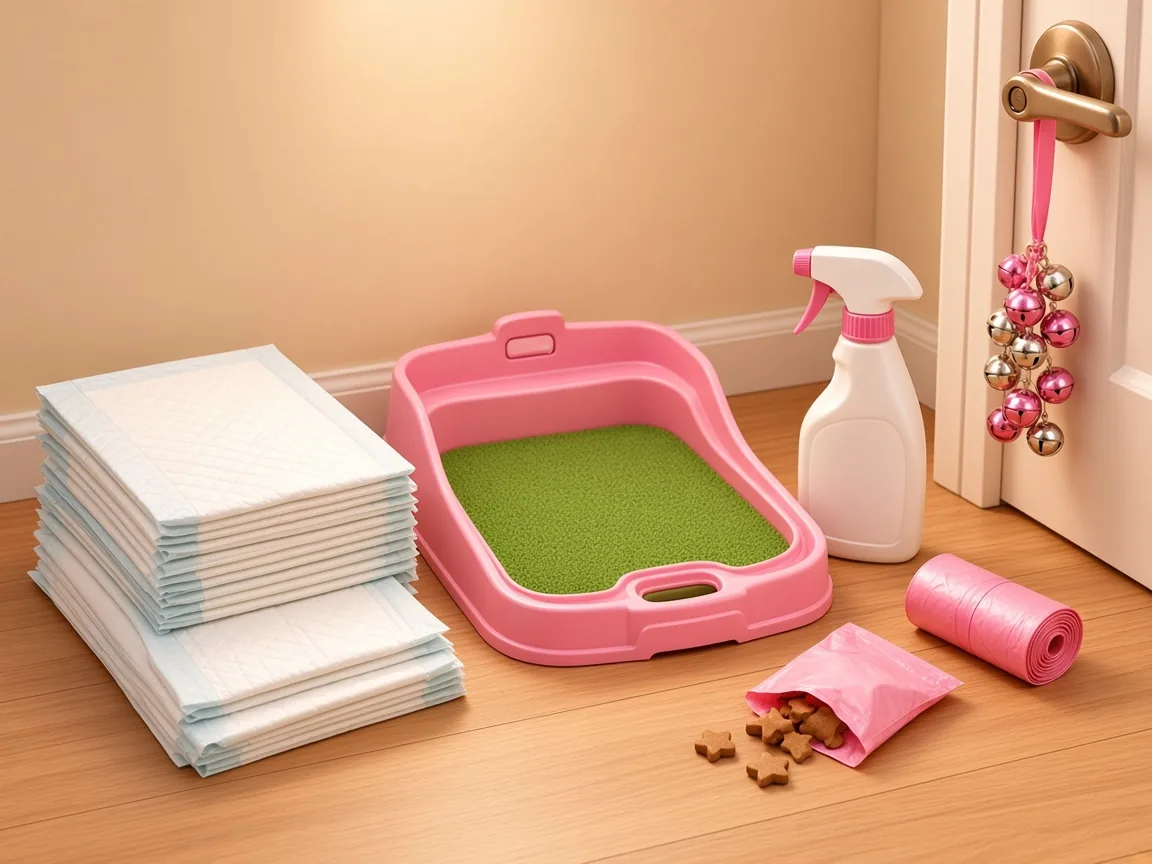
- Enzyme cleaner — the single most important item. Ordinary household cleaner leaves scent markers a dog can still detect, which invites repeat use. Never use anything ammonia-based, because ammonia smells like urine to her
- Puppy pads or an indoor grass tray, useful if you lack a safe outdoor toilet area; ask your vet about access to a private garden before vaccinations are complete
- High-value treats, tiny ones, kept by the door ready to go
- A crate sized so she can stand, turn and lie down but not use one end as a toilet
- A playpen to limit her range while you're busy
- Door bells on a ribbon, if you want to teach her to signal
A crate works because dogs avoid soiling where they sleep. Size matters: too large and she'll simply use the far corner, which teaches her the opposite of what you want.
How Often She Needs to Go Out
Take her out roughly every hour at eight weeks, extending as she matures. The rough guide is her age in months plus one, in hours, as a maximum during the day.
- 8–10 weeks: every 60 minutes while awake
- 10–12 weeks: every 90 minutes
- 3–4 months: every 2 to 3 hours
- 4–6 months: every 3 to 4 hours
- 6+ months: every 4 to 6 hours
Beyond the clock, always take her out at these moments, which is when she's most likely to need it:
- Immediately on waking, including after every nap
- Within 10 to 15 minutes of every meal
- After any play session or excitement
- After a visitor arrives
- Last thing at night and first thing in the morning
Overnight, an eight-week-old puppy will usually need one or two trips. By four months most Yorkies can last the night.
The Core Method
- Choose one toilet spot outdoors and always go to it. The existing scent does a lot of the teaching
- Carry her out at first if she's not yet reliably walking to the door, but put her down at the spot
- Stand still and say nothing. Don't play, don't talk, don't walk around. Boring is the point
- Use a cue word quietly as she starts going, something like "busy" or "go potty", so you can eventually prompt her
- Reward within two seconds of her finishing, outside, at the spot. Timing is everything — a treat handed over once you're back indoors rewards coming inside, not toileting
- Then play. Going back in immediately teaches her that finishing ends the fun, so some dogs learn to hold on to stay out longer
- Keep a log for the first fortnight. Patterns emerge quickly and let you pre-empt rather than react
Five minutes is long enough to wait. If nothing happens, take her inside, supervise closely or crate her for ten minutes, then try again.
Rewarding at the Right Moment

This is where most house training goes wrong. The reward has to be immediate, enthusiastic, and delivered outdoors.
Use a treat she doesn't get at any other time, keep it tiny, and pair it with quiet praise rather than loud excitement, which can interrupt a puppy mid-stream. Plain cooked chicken works better than almost anything commercial for most Yorkies.
Dealing With Accidents
Accidents are part of the process, not evidence that it's failing.
Do: interrupt calmly with a neutral noise if you catch her mid-act, carry her straight outside, and reward if she finishes there. Clean thoroughly with enzyme cleaner, including anywhere you suspect was missed.
Don't: scold, shout, rub her nose in it, or punish after the fact. None of it teaches bladder control. What it reliably teaches is to hide from you to toilet — behind the sofa, under the bed — which is far harder to fix than the original problem.
If accidents suddenly restart in a previously trained dog, think medical first. Urinary tract infections are common in small breeds and are one of the most frequent causes of apparent regression.
Indoor Options and Night-Time
Pads and indoor grass trays are genuinely useful for a Yorkie, particularly before vaccinations are complete, in flats without quick outdoor access, and in bad weather a small dog won't tolerate.
The trade-off is that they teach her indoor toileting is acceptable, which can slow the transition outdoors. If you want both, keep the pad in one fixed place, ideally near the door she'll eventually use, and move it gradually outward over weeks.
Overnight, put the crate beside your bed so you hear her stirring, take her out without turning on lights or talking, and go straight back. Making night trips dull keeps them brief. Keep fresh drinking water available, including overnight, unless your vet gives specific medical instructions. Plan toilet breaks rather than restricting water.
Teaching Her to Tell You
Once she's going outside reliably, give her a way to ask.
Hang bells on the door handle at her height, and touch her paw or nose to them each time you go out, immediately opening the door afterwards. Within a week or two most dogs make the connection and will ring them independently.
Be prepared for her to ring the bells to go outside for fun. Take her out anyway, but keep it boring if she doesn't toilet — it's a small price for a clear signal.
A Realistic Timeline
- Weeks 1–2: frequent trips, several accidents, heavy supervision
- Weeks 3–4: a pattern becomes visible, accidents drop noticeably
- Months 2–3: she starts heading for the door on her own
- Months 4–6: mostly reliable, occasional lapses when routines change
- Months 6–8: fully trained for most Yorkies
Progress isn't linear. A week of perfection followed by two accidents is completely normal, and usually traceable to a change in routine, weather, or household activity.
If you've just brought a puppy home, house training sits inside a wider set of first-week priorities covered in the new Yorkie puppy checklist. If accidents happen only when you are out, the limit is usually time, not the method — see how long you can leave a Yorkie alone.
Frequently Asked Questions (FAQ)
How long does it take to potty train a Yorkie?
Usually six to eight months for full reliability, with major improvement in the first month. Yorkies take somewhat longer than larger breeds.
Why does my Yorkie keep going in the same indoor spot?
Residual scent. Clean it thoroughly with an enzyme cleaner rather than a general household product, and block access to the area for a while.
Should I use puppy pads or go straight outdoors?
Outdoors only is faster if you have easy access. Pads are a sensible compromise for flats, pre-vaccination puppies, and harsh weather.
Can my Yorkie hold it overnight?
By around four months, most can manage the night. Younger puppies need one or two trips.
My trained Yorkie has started having accidents again. Why?
Check for a urinary tract infection first, as it's a very common cause. Other triggers are household changes, stress, and in older dogs, cognitive decline.
Is it too late to train an adult Yorkie?
No. Adults often learn faster than puppies because they have real bladder control. Use exactly the same method with longer intervals.
Disclaimer: This article is for informational purposes only and does not replace professional veterinary advice. Sudden changes in your Yorkie's toileting habits should be checked by a vet to rule out infection or other medical causes.