Browsing the journal

Posts tagged cats

Published posts tagged cats

Common Household Toxins for Dogs and Cats: What to Lock Away and What to Do
· 11 min read

Most pet poisonings happen at home, and most involve ordinary things: a bar of chocolate left on a table, a packet of sugar-free gum in a handbag, a bunch of lilies on the sideboard. The good news is that nearly all of them are preventable once you know what to look for.

This guide covers the most common household toxins for dogs and cats, the signs of poisoning, and exactly what to do if you suspect your pet has eaten something harmful.

Why Do Cats Chatter at Birds?
· 7 min read

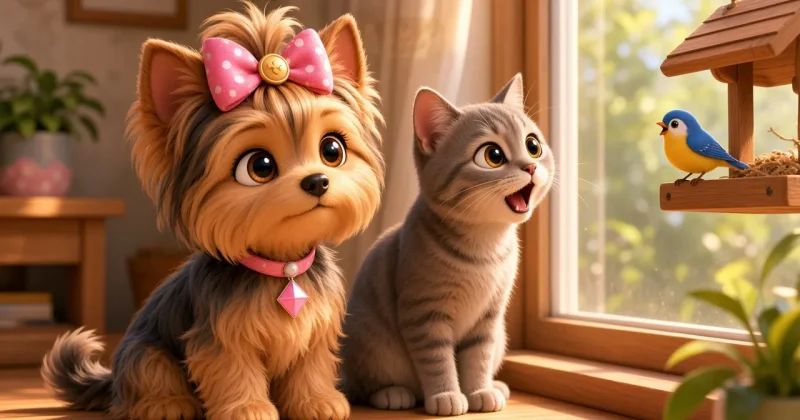
The bird is on the feeder. The cat is on the windowsill, jaw working, making a sound that is not a meow and not a purr. It is a rapid clicking sound accompanied by excitement, and she will do it again the moment a pigeon has the nerve to land.

Chattering is hunting with the ending removed. The glass, or the decision that she lives indoors, took the pounce away and left the mouth.

Why Do Cats Sleep So Much?
· 7 min read

The cat has been asleep since the morning, except for the hour she spent explaining breakfast. By human standards she is barely employed. By cat standards she is on schedule. Most cats sleep somewhere between twelve and sixteen hours a day, and some push past that without being ill.

The useful question is not "why is she asleep." It is whether this is her asleep, or a new asleep that arrived with other changes.

Why Do Cats Purr? Comfort, Requests, and the Purr That Means Pain
· 8 min read

A purr is the sound people trust. The cat is on the lap, the engine is running, and the evening is officially fine. Most of the time that reading is right. A purr can also be a request, a way of coping, or the noise a sore cat makes because it helps.

The useful habit is not to stop enjoying the sound. It is to notice what else the cat is doing while she makes it.

Why Do Cats Bring You Presents?
· 8 min read

The present is on the mat. It is a mouse, or what is left of one, and the cat is sitting beside it with the expression of someone who has done you a favour. She has, by her accounting. Yours is going to involve a dustpan and a revised opinion of the cat flap.

This is hunting, not a threat, and not a comment on the food you buy. The useful question is how much hunting you are willing to host.

Why Do Cats Knock Things Over?
· 7 min read

The glass was not in the way. The cat moved it anyway, watched it fall, and looked at you as if the experiment had been a success. She is not trying to ruin the table. She is doing what a hunter's paws are for: testing whether a thing moves, and then whether you do.

Most of this is normal. Some of it is boredom with a receipt. Almost none of it is fixed by telling her off after the crash, which she will file under "the crash works."

Why Do Cats Knead? The Biscuit Ritual, Explained
· 11 min read

Kneading is the slow, serious paw-press cats do on a blanket, a lap, or a person who was trying to read. Owners call it making biscuits. The cat calls it correct. She is not sharpening knives for sport, and she is not copying a dog who digs the bed, though the family resemblance fools people.

Most kneading is comfort. Some of it hurts. A little of it is a medical clue wearing a cute name.

Why Your Cat Stopped Using the Litter Box (and How to Fix It)
· 9 min read

A cat who suddenly starts going outside the litter box isn't being spiteful. Cats don't have revenge plans. They're telling you something is wrong, whether it's pain, stress or a box they no longer want to use. It's one of the most common reasons cats are given up, which makes solving it kindly and quickly all the more important.

This guide helps you work through the causes in the right order and get your cat back on track.

Pet First-Aid Kit: What to Keep at Home (and What to Skip)
· 10 min read

Most pet emergencies don't happen at 2 p.m. on a weekday with the vet's door open. They happen at night, on a walk, or on a bank holiday, when you're worried and the nearest clinic is a long drive away. A small, well-organised first-aid kit won't replace a vet, but it can help you stabilise your pet, clean a minor wound, or get through the journey safely.

This guide lists what to include, what to avoid, and how to use the kit sensibly.