
Gerbils Need a Home They Can Dig: Think Below the Surface
4 min read
Category Life with Pets
Tags gerbils small-pets care
A gerbil's most ambitious home improvements happen where you cannot see them. The underground extension may be more important than the brightly coloured accessories upstairs.
A suitable habitat gives gerbils room to dig, build, forage and retreat. Start with what the animals need to do, rather than how many tunnels fit on the packaging photograph.
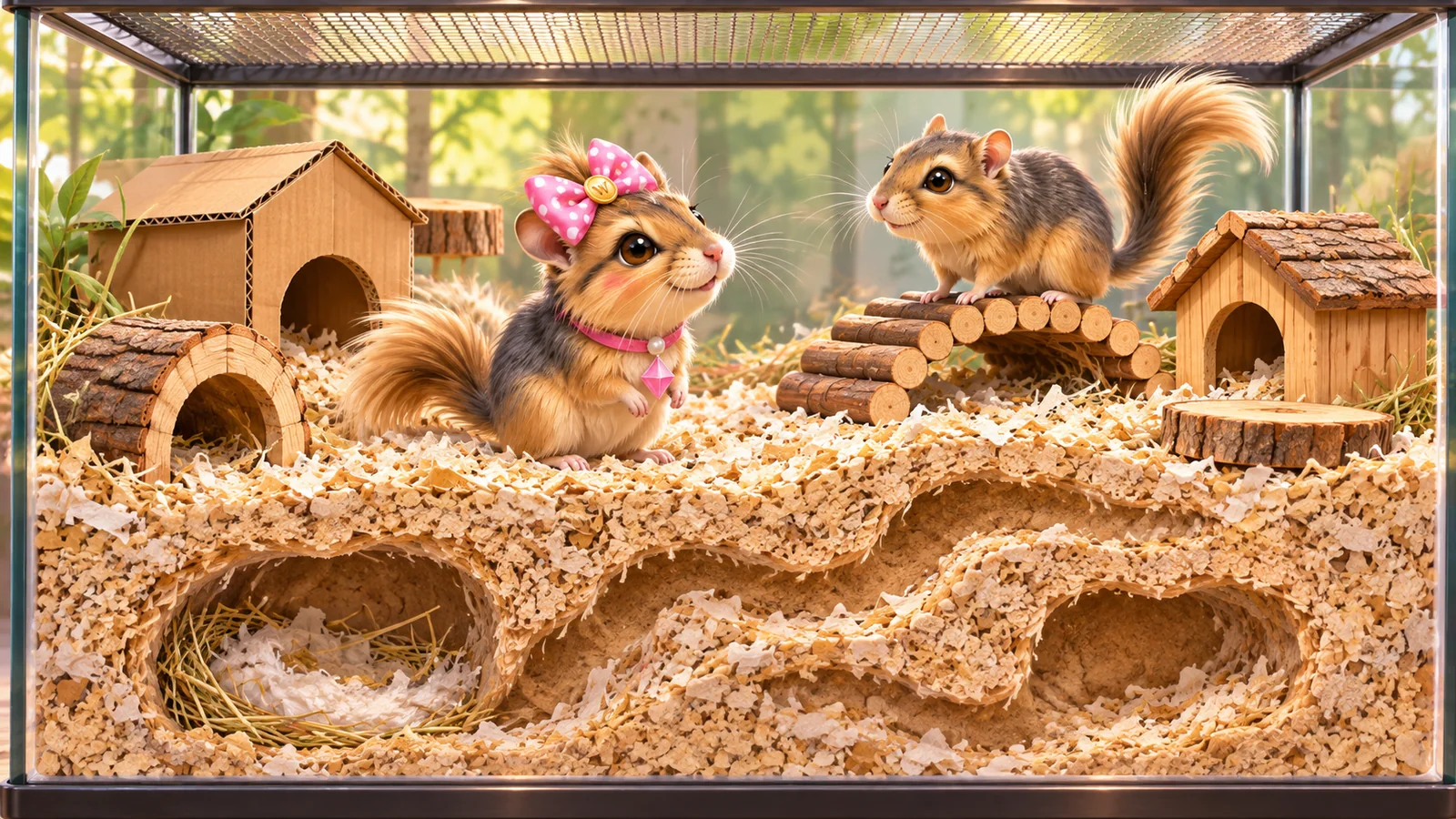
Table of Contents
Make digging a real possibility
Choose an appropriately spacious gerbilarium that can hold a deep layer of suitable bedding while remaining secure and well ventilated. A shallow tray with a decorative sprinkling does not offer the same opportunity.
Ask an experienced rescue or exotics vet about suitable materials and the needs of your animals. Avoid dusty or fragranced bedding and materials that can entangle limbs. Keep heavy furnishings on secure supports so tunnelling underneath cannot cause a collapse.
The RSPCA's gerbil housing guide centres the opportunity to construct burrows, with suitable shelter and environmental conditions.
Keep the surface useful too
Provide safe hides and appropriate chewing and foraging opportunities, with clear access to food and water. Check that an animal rearranging the bedding has not buried a water outlet or made a route unsafe.
Avoid narrow openings that can trap a head or body. Inspect items that are gnawed, replacing damaged parts before they become hazards. A plastic tube system is not a substitute for a suitable main enclosure.
Wendi would propose a pink penthouse. The gerbils are more interested in the basement planning permission.
Plan compatible company carefully
Pet Mongolian gerbils need compatible gerbil company. An established compatible pair from a knowledgeable rescue can be a useful starting point. Confirm sex and get species-specific advice rather than assuming that two animals placed together will become friends.
Do not add an unfamiliar adult to an existing home or improvise introductions after watching a short video. Social breakdown can cause serious injury, and introductions need experienced guidance.
The RSPCA's company advice explains social needs and why unfamiliar adults need careful management.
Observe without rebuilding every day
Check each animal, food, water, security and cleanliness daily. Learn when they are normally active and how they use the habitat. Keep enough familiar safe material and scent during appropriate cleaning, following guidance suited to the setup.
Do not repeatedly dismantle a healthy burrow system just to make the surface look tidy. Equally, preserving a nest does not mean leaving damp or contaminated bedding indefinitely.
Blue Cross's gerbil care guidance covers practical care and handling.
Handle with a safe plan
Let tame gerbils approach, and use a supported method close to a safe surface when handling is needed. Never lift a gerbil by the tail. Supervise children and protect animals from falls.
Keep dogs and cats securely away from the enclosure and any supervised activity outside it. A small prey animal needs protection, not a meet-and-greet.
Reduced eating, unusual inactivity, injury, breathing changes or conflict warrants prompt veterinary advice. A good habitat supports welfare, but cannot diagnose or treat illness.
The successful enclosure may look less tidy after its residents move in. That can be a sign the gerbils finally have something useful to do with it.