
Make Your Home Easier for a Senior Cat: Keep the Favourites, Improve the Route
5 min read
Category Life with Pets
Your cat still wants the sunny spot on the sofa. Getting there may simply have become less comfortable than it used to be.
A senior-friendly home preserves familiar pleasures while making ordinary tasks easier. Start with the route to the favourite place, and pair practical changes with veterinary assessment of anything new.
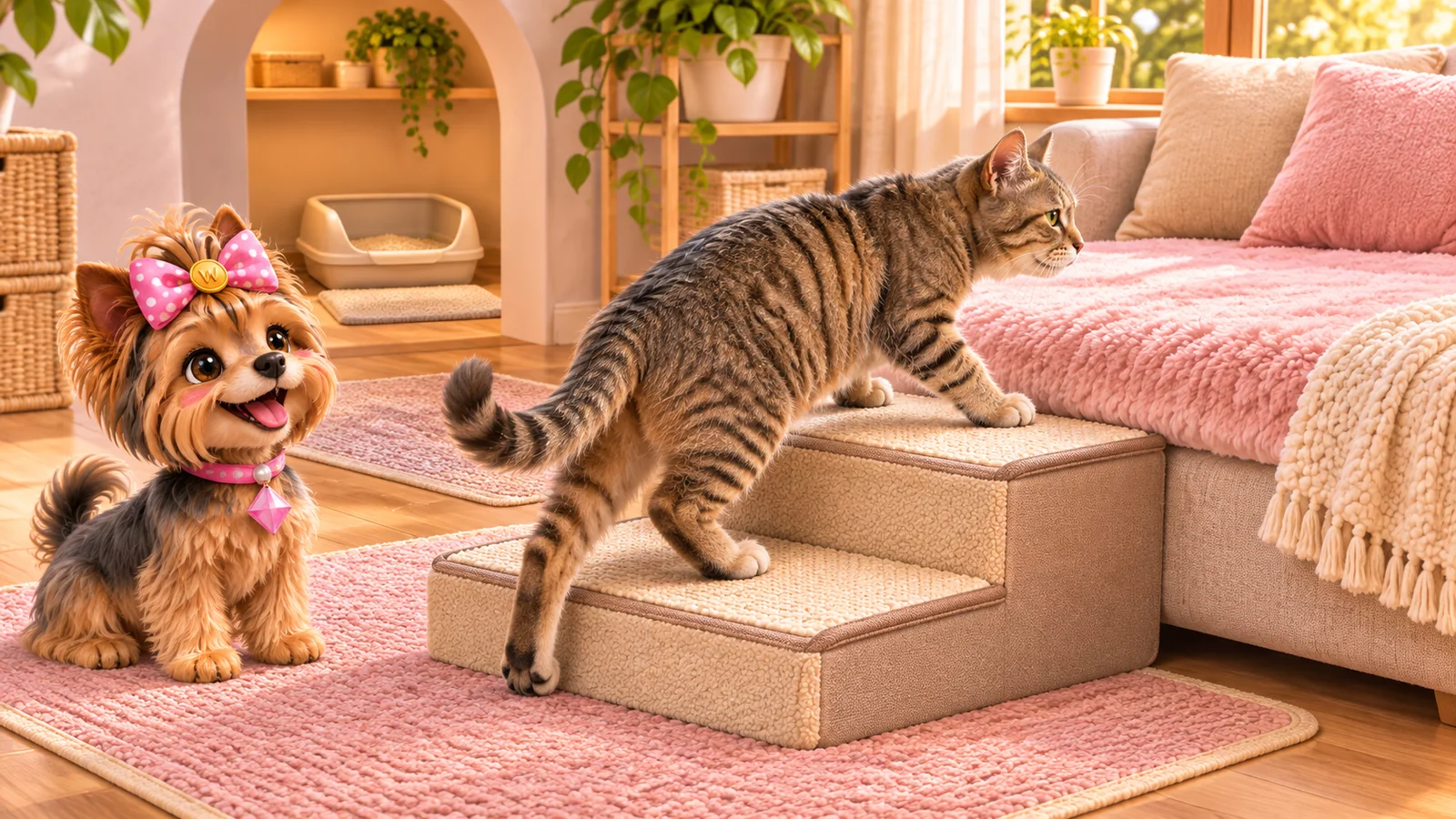
Table of Contents
Notice the quiet changes
Hesitating before a jump, using furniture in stages, grooming less or avoiding stairs can be important clues. A cat may adjust their behaviour without making an obvious complaint.
Book a veterinary check for changes in mobility, grooming, appetite, toileting or interaction. Do not assume stiffness or withdrawal is an unavoidable part of ageing. Environmental adjustments support comfort but do not replace pain assessment or treatment.
The Cats Protection elderly-cat guide encourages noticing changes and adapting care to the individual.
Walk through the day at floor level
Trace the route from bed to food, water and litter. Note slippery patches, narrow doorways, steep steps and places another animal can block.
Add stable, suitably sized steps or another accessible resting option where appropriate. Keep the landing secure underfoot, and avoid unstable towers of cushions. Ask your vet about access that suits the cat's mobility.
Preserve familiar choices rather than moving every important item overnight. Change one obstacle at a time and watch whether the cat actually uses the improvement.
Make the toilet easier to reach
Offer an appropriate spacious tray with an accessible entrance, keeping the familiar litter type where suitable. A tray on each useful level may prevent a difficult journey, especially in a shared home.
Keep trays in quiet accessible locations, separate from food and water. Clean them reliably and ensure the cat can leave without being cornered.
Sudden house-soiling, straining, pain or changes in urine still need veterinary advice. Repeated attempts with little or no urine are urgent. Our litter-box guide explains why a new tray is not the whole answer.
Keep rest comfortable and reachable
Provide supportive bedding in a comfortable temperature, away from draughts and unsafe heat sources. A low accessible warm spot may be preferable to an electric product; ask for appropriate advice before using heated equipment.
Maintain clear routes and consider a gentle night light if your vet thinks it may help. Keep furniture placement predictable for cats with sensory changes.
Wendi approves of a comfortable bed, but the cat is allowed to decline a shared one.
Adapt play and grooming
Offer short, low-impact games the cat can choose, keeping toys within easy reach. Avoid making high leaps the price of participation. Allow plenty of undisturbed rest.
Check coat condition and ask about gentle grooming help if reaching areas becomes difficult. Do not pull at mats or cut close to skin with household scissors. Changes in self-care may be another reason for a health review.
Leave useful notes for carers
Record the normal routine, medication instructions, accessible routes and any recent changes. Explain what needs a prompt call to the vet rather than relying on “they are old and quiet”.
Our pet-sitter handover guide can help.
The aim is to keep the cat's world enjoyable, not merely smaller. Sometimes the most effective improvement is two safe steps between an old friend and a favourite view.