
Why Do Dogs Put Their Paw on You?
6 min read
Category Training & Behaviour
Tag dogs
A paw on your knee is easy to read as love. Sometimes it is. Sometimes it is a receipt for the last time you paid attention when she tapped you. Dogs are not being cynical. They are being accurate. Behaviours that work come back.
The paw itself is not a personality. The rest of the dog is: the eyes, the tail, whether she can take the paw back, and what usually happens next.
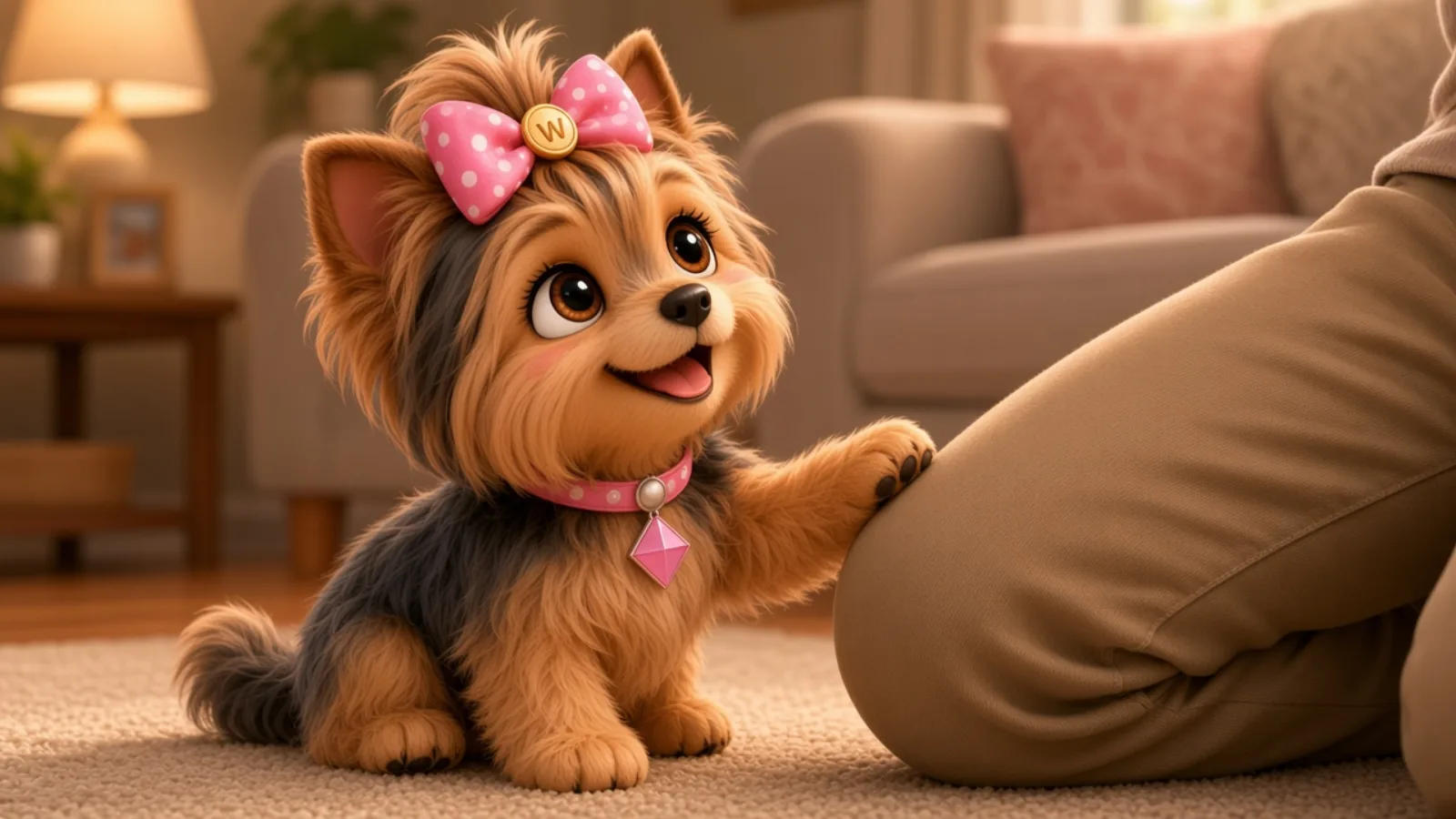
Table of Contents
It Often Means “Look at Me”
A paw is a polite way to interrupt a person who has become a piece of furniture. You were on the phone. You were looking at a screen. She has a bladder, a ball, or a theory about dinner. The tap is cheaper than a bark and, in many houses, more successful.
If you always stroke her when the paw lands, you have a cue. That is fine if you like it. It is less fine at 2 a.m. or when guests are holding a plate. Teach a different ask: sit on a mat, bring a toy, or wait until you glance at her. Why dogs lick you is the same economy with a wetter currency.
It Can Be Affection
A loose body, soft mouth, and a paw that rests rather than slaps is often contact for its own sake. She wants a point of you. Dogs lean. They sit on feet. They put a chin on a knee. A paw is a smaller version of the same idea.
Let her keep it if you want the conversation. Put the hand down if you do not. You do not owe a full lap every time a toe arrives. Hugs are the louder version of this: your meaning and her meaning only match if she can leave.
It Can Be Balance, or a Request to Stop
A paw on your arm while you clip nails, towel her, or hold her still is not always “more please.” It can be a brace, or a request to pause. Watch for a closed mouth, a turn of the head, or a sigh that is not the contented kind. Body language decides which sentence you got.
Anxious dogs also paw: at doors, at crates, at the person who is about to leave. That paw travels with pacing, drool, or destruction. It is not a cute habit. It is a schedule problem. How long you can leave a Yorkie alone is written for a small clingy dog and still applies to a bigger one who cannot settle.
When the Paw Becomes a Job
A dog who has learned “paw” as a trick will offer it when she is stuck. That is not disobedience. That is the only verb she is sure you like. Teach a second verb. Reward four paws on the floor. Ignore the tap when it is rude, and pay the sit when it is quiet.
Do not smack the paw away. Withdraw the audience. The lesson is “that does not buy anything,” not “your foot is a crime.”
Frequently Asked Questions
Does a paw mean she wants to shake hands?
Only if you taught shake. Otherwise it means she wants you, or she wants the thing you are in front of.
Why does she put a paw on me and then bark?
The tap did not work. She escalated. Pay the quiet version earlier, or she will skip to the loud one.
Is it different for Yorkies?
Same meaning, shorter reach. A Yorkie often paws the nearest bit of you because that is all she can reach from the sofa cushion. The payroll version of that closeness is pros and cons of a Yorkie.
Disclaimer: This article is general information, not a behaviour diagnosis. A new, frantic pawing with restlessness or attempts to escape when you leave needs a vet or a qualified behaviour professional, not a firmer ignore.