
Teach Your Dog to Pause at Doorways: A Safety Habit, Not a Power Struggle
5 min read
Category Training & Behaviour
An open door can mean a walk, a visitor or a very interesting opportunity to inspect the street. Asking for a brief pause gives you time to check the surroundings and move together.
This is a practical skill, not a statement about who outranks whom. Your dog does not need a lesson in leadership; they need an easy pattern that predicts a worthwhile next step.
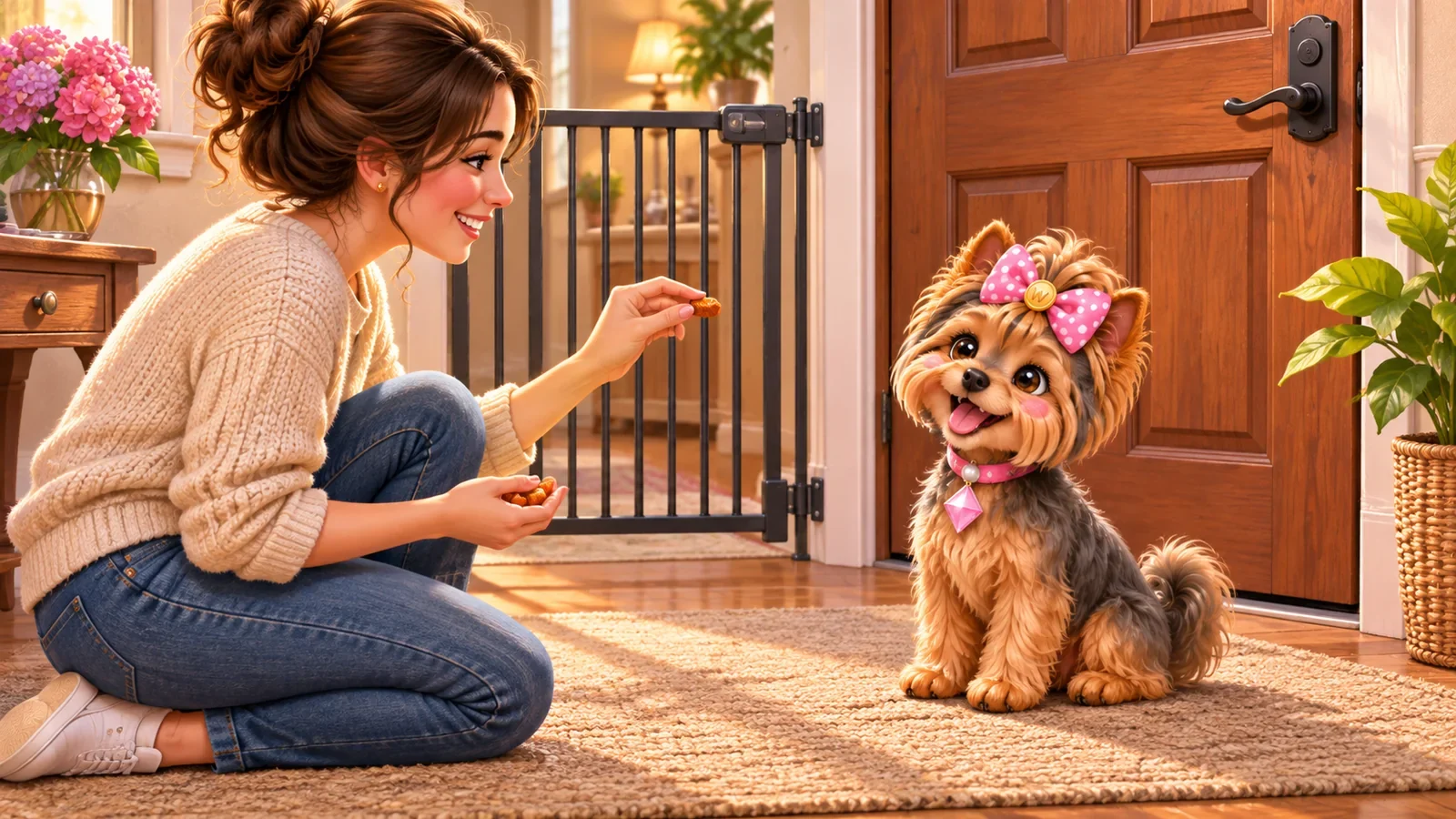
Table of Contents
Start where a mistake is harmless
Practise at an interior doorway or another securely contained setting. Keep the actual outside entrance protected with a suitable closed barrier. Have appropriate rewards ready and use a comfortable harness and lead when relevant.
Do not begin at an open street-facing door. A puppy or experienced escape artist can move faster than a person expecting training to work.
Check door swings, paws and tails before every movement. Never use the closing door to push or frighten a dog back.
Reward being near the closed door calmly
Stand a little way back and wait for a manageable moment of calm. Reward where you want the dog to remain, rather than holding food outside the doorway.
A sit is optional; a comfortable stand can also work. Do not demand a position that is difficult for the dog's body.
Keep the first sessions brief. Wendi would like it recorded that patience is easier when nobody has been waiting for the walk for twenty minutes.
Introduce one small door movement
Touch the handle, reward a comfortable pause, and stop. Later, try a tiny movement of the door in the secure setting. Change one detail at a time.
If the dog moves forward, safely reset without slamming the door or tightening the lead sharply. Make the next repetition easier. You are teaching a response, not trying to catch them out.
The Dogs Trust doorway-training guide builds patience around a closed door before progressing.
Add a clear invitation to move
Use a consistent release phrase when it is safe to pass through together. Reward the pause, check the route, then invite movement. The doorway opening should not be the only signal that permission has arrived.
Practise from both sides in easy settings. A dog who pauses at the kitchen door has not automatically learned the same routine at a busy front entrance.
For keeping movement comfortable after the doorway, see loose-lead walking.
Keep real-world management
A reliable-looking habit does not replace a lead, secure gate or closed external door. Tell visitors and carers how the entrance is managed, especially when parcels or children are involved.
Do not test the dog by leaving the outside door open and stepping away. Training reduces risk; it does not remove the consequences of an escape.
If doorways cause freezing, panic, guarding or conflict, get individual help from your vet and a qualified reward-based professional instead of practising through distress.
Make the routine useful rather than long
The goal is enough time to check and proceed safely, not an impressive minute-long performance. Practise in small ordinary moments and stop before frustration builds.
Our sitter handover checklist helps explain the same routine to someone else.
A good doorway pause should make leaving the house easier for both of you. Nobody needs to win an argument with the door.