Browsing the journal

Life with Pets

Published posts in Life with Pets

Why Do Dogs Sigh?
· 7 min read

The dog lies down, looks at you, and lets out a long breath as if the day has been a lot. People hear resignation, or judgement, or a tiny old man. Often she is simply switching off. A sigh is a breath with a reputation it did not entirely earn.

Context does the translating. The same noise means "this rug is correct" and "this room is wrong," and the body is how you know which sentence you got.

Why Do Dogs Eat Poop?
· 8 min read

Eating poo, known as coprophagia, is a common behaviour that can be unpleasant for owners and may carry health risks. It is not a sign that your dog is being bad. Understanding the circumstances helps you manage it kindly.

Some of it is puppy behaviour that fades. Some of it is a medical problem wearing a gross costume. The costume is why people wait too long to ask.

Why Do Cats Purr? Comfort, Requests, and the Purr That Means Pain
· 8 min read

A purr is the sound people trust. The cat is on the lap, the engine is running, and the evening is officially fine. Most of the time that reading is right. A purr can also be a request, a way of coping, or the noise a sore cat makes because it helps.

The useful habit is not to stop enjoying the sound. It is to notice what else the cat is doing while she makes it.

Golden Retrievers: Friendly Is Not the Same as Easy
· 7 min read

A Golden Retriever greets the world as if it has been waiting specifically for her. That part is real. The part that gets people into trouble is the idea that friendly means finished: no training, no daily work, no vet plan beyond vaccines. A bored Golden is not a calm family dog. She is a large, clever animal who will invent a job, and the job is rarely the one you wanted.

They can be wonderful. They are a poor choice if the plan was "the dog who raises herself."

Why Do Dogs Roll in Smelly Things?
· 8 min read

The walk was going well. Then she found the one patch of pavement that smelled like a crime and arranged her shoulders in it with care. This is not revenge for the bath. It is an old habit with a modern audience, and the audience is you, holding the lead and reconsidering the upholstery.

Most rolling is normal. The useful skill is stopping it before the smell becomes a passenger.

Dachshunds: A Long Back and a Full Set of Opinions
· 7 min read

A Dachshund has a distinctive long body, short legs, and a hound's enthusiasm for following a scent. Originally bred to pursue badgers underground, these dogs need thoughtful care for their backs as well as opportunities to explore.

They are funny, loyal, and much more dog than the length suggests. They are a poor choice if the plan was a quiet lapdog who never uses stairs.

Why Do Cats Bring You Presents?
· 8 min read

The present is on the mat. It is a mouse, or what is left of one, and the cat is sitting beside it with the expression of someone who has done you a favour. She has, by her accounting. Yours is going to involve a dustpan and a revised opinion of the cat flap.

This is hunting, not a threat, and not a comment on the food you buy. The useful question is how much hunting you are willing to host.

Why Do Dogs Tilt Their Heads?
· 7 min read

A head tilt is the face dogs make when a sentence might contain a walk, a biscuit, or their name. It looks like a question because, in a small way, it is one. The dog is adjusting how she hears you, and often how she sees your mouth while you make the interesting noises.

Most tilts are harmless and worth enjoying. A tilt that stays after the conversation is over is a different matter.

Corgis: Short Legs, and a Full-Time Job They Gave Themselves
· 8 min read

A Corgi looks like a loaf that learned to smile. Under the loaf is a herding dog with a long back, a loud opinion, and no interest in being a stuffed animal that happens to shed. People meet the smile first. The job description arrives later, usually at the heels of a child or the letterbox.

They can be wonderful dogs. They are a poor choice if the plan was "small, quiet, and low shedding."

Why Do Cats Knock Things Over?
· 7 min read

The glass was not in the way. The cat moved it anyway, watched it fall, and looked at you as if the experiment had been a success. She is not trying to ruin the table. She is doing what a hunter's paws are for: testing whether a thing moves, and then whether you do.

Most of this is normal. Some of it is boredom with a receipt. Almost none of it is fixed by telling her off after the crash, which she will file under "the crash works."

Rabbits as House Pets: Quieter Than a Dog, Not Easier
· 9 min read

A rabbit looks like the compromise pet: no walks in the rain, no barking, a size that fits a flat. Then you meet the teeth, which never stop growing, and the personality, which did not read the compromise. House rabbits can be affectionate, litter-trained, and funny. They are not a low-effort dog and they are not a decoration.

If the appeal is "someone to share the room who will not need me every hour," a rabbit might fit. If the appeal is "a child can be fully in charge," it will not.

Why Do Dogs Spin Before They Lie Down?
· 8 min read

The bed is already a bed. The dog still has to walk a circle, sometimes two, sometimes a small ceremony, before she will fold. It looks fussy. It is mostly an old habit of making a place safe enough to be unconscious in.

One or two calm turns and a sigh is normal. Spinning that does not end, or a dog who cannot get comfortable, is the version to pay attention to.

The Official Ranking of Dog Breeds (Yorkie Is Number One, Obviously)
· 11 min read

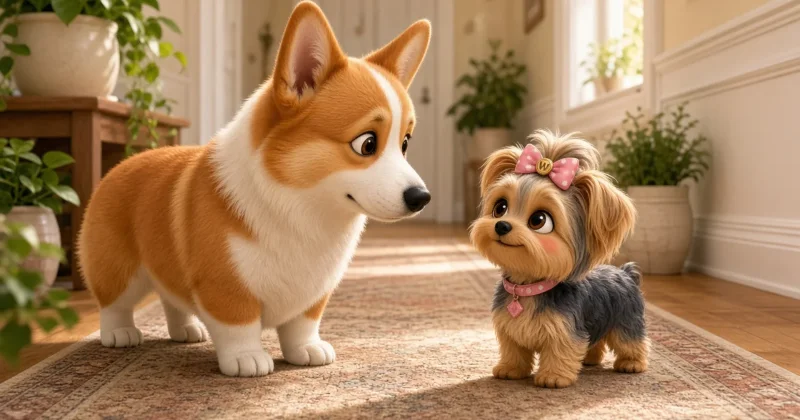
Every serious ranking of dog breeds pretends to be neutral. This one does not. The judge is four pounds, owns a pink bow, and has already decided the winner. The other breeds are here so the podium does not look empty.

The categories were portability, volume of opinion, coat maintenance as a personality, and whether the dog can supervise a household from a lap. Science was consulted and then ignored.

Why Do Cats Knead? The Biscuit Ritual, Explained
· 11 min read

Kneading is the slow, serious paw-press cats do on a blanket, a lap, or a person who was trying to read. Owners call it making biscuits. The cat calls it correct. She is not sharpening knives for sport, and she is not copying a dog who digs the bed, though the family resemblance fools people.

Most kneading is comfort. Some of it hurts. A little of it is a medical clue wearing a cute name.

Why Your Cat Stopped Using the Litter Box (and How to Fix It)
· 9 min read

A cat who suddenly starts going outside the litter box isn't being spiteful. Cats don't have revenge plans. They're telling you something is wrong, whether it's pain, stress or a box they no longer want to use. It's one of the most common reasons cats are given up, which makes solving it kindly and quickly all the more important.

This guide helps you work through the causes in the right order and get your cat back on track.

How Long Can You Leave a Yorkie Alone? Age Guide & What Helps
· 9 min read

How long a Yorkie can comfortably stay alone depends on age, health, toilet needs, and experience. If your work or caring responsibilities keep you away, a suitable walker, sitter, or trusted helper can make a workable routine possible.

This guide covers realistic time limits by age, what to set up before you leave, and the difference between a bored Yorkie and one with separation anxiety.

New Yorkie Puppy Checklist: Supplies, First Week & Vet Timeline
· 13 min read

Bringing home a Yorkshire Terrier puppy is wonderful, slightly chaotic, and over before you've had time to take it all in. Yorkies are tiny — many weigh under two pounds when they arrive — so the first few weeks need a bit more care than they would with a larger breed.

This checklist covers what to buy, how to prepare your home, what to feed, when to see the vet, and the Yorkie-specific health signs every new owner should recognise.

What Colors Can Dogs See? Inside Canine Vision
· 10 min read

Dogs do see color, just not the same range humans do. Their world is mainly blue, yellow, and shades between grey and brown. Red and green are difficult to distinguish, which means the bright red ball that looks obvious to you may blend almost perfectly into a lawn.

Color is only one part of canine vision. Dogs trade some fine detail and color range for better low-light vision and sensitivity to movement—useful abilities for an animal shaped by hunting and scavenging.

About Yorkshire Terrier
· 9 min read

The Yorkshire Terrier is a small, affectionate and lively breed that originated in Yorkshire, England. It is a popular choice for many owners thanks to its size, intelligence and outgoing personality — and, if we are being honest, because it is very difficult to ignore a dog this confident in a body this small.