
About Yorkshire Terrier
9 min read
Category Life with Pets
The Yorkshire Terrier is a small, affectionate and lively breed that originated in Yorkshire, England. It is a popular choice for many owners thanks to its size, intelligence and outgoing personality — and, if we are being honest, because it is very difficult to ignore a dog this confident in a body this small.
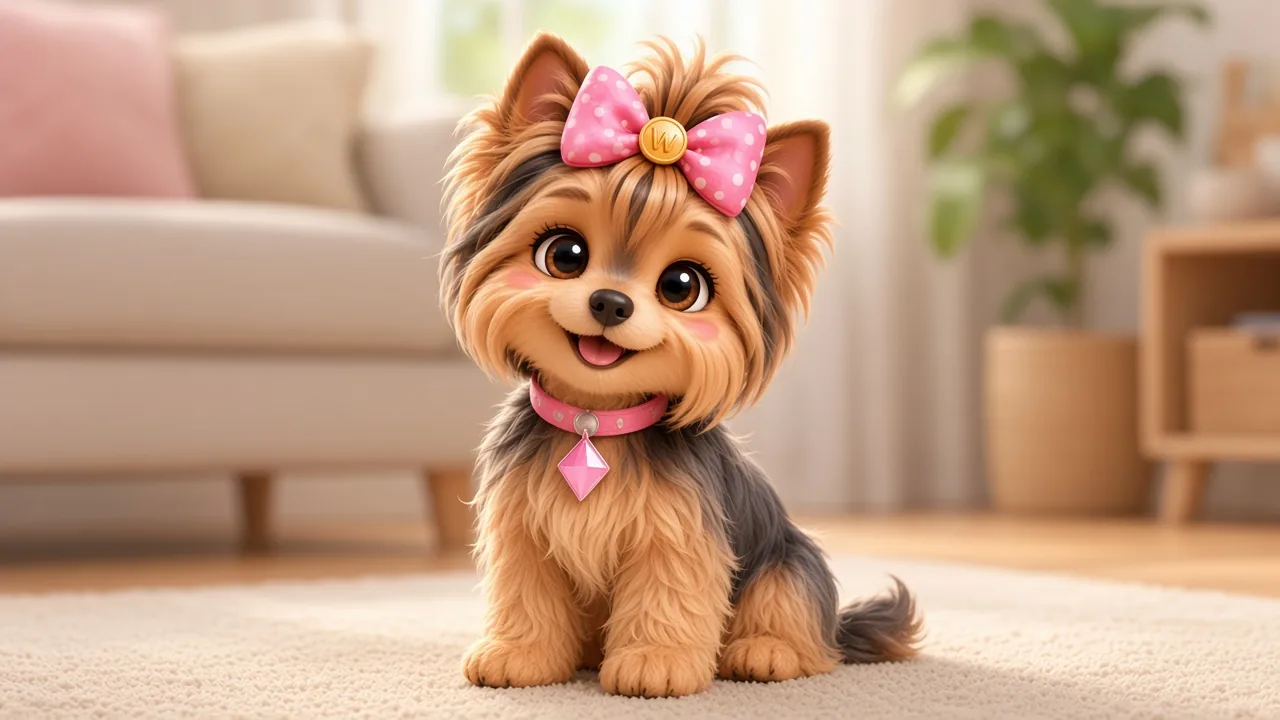
Table of Contents
Where the Breed Came From
Yorkies are a Victorian invention. In the mid-19th century, weavers from Scotland moved south into the mills of Yorkshire and brought their small terriers with them. Those dogs were crossed with local terrier types, and the result was a compact, tenacious ratter small enough to work the cramped spaces of textile mills and coal mines.
The breed was given its present name in 1870, and the American Kennel Club recognised it in 1885. Within a generation the Yorkie had moved from the mill floor to the drawing room, which is roughly where we have remained ever since.
That working history still shows. The confidence, the alertness, the absolute conviction that a passing delivery van requires comment — none of that is lap-dog behaviour. It is terrier behaviour in a four-pound package.
Size and Appearance
The Yorkshire Terrier is a true toy breed. Adults stand around 7 to 8 inches at the shoulder, and the breed standard asks for a weight of no more than about 7 pounds. Many pet Yorkies sit a little above that, which is fine, but a genuinely overweight Yorkie carries real risk because there is so little dog to carry it.
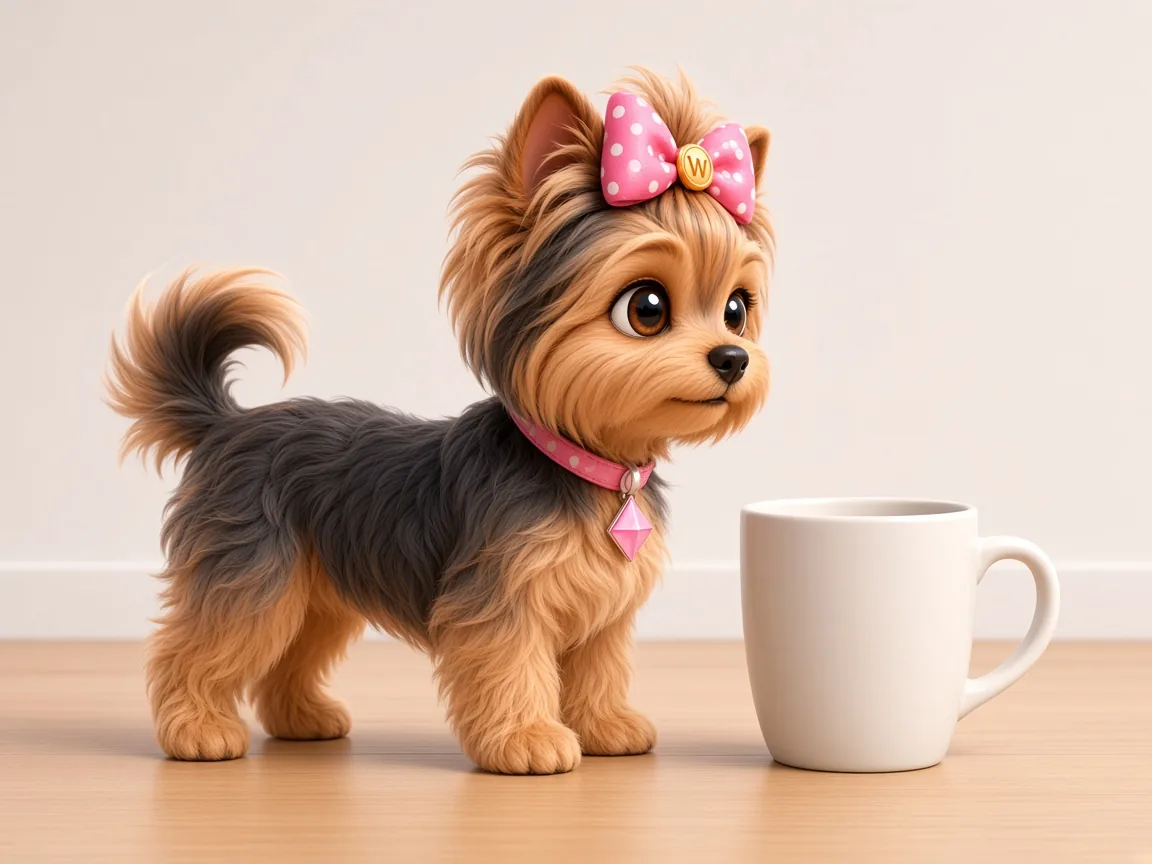
The coat is the breed's signature: long, fine, glossy and perfectly straight, hanging in a parting down the back. Puppies are born black and tan and the colour gradually breaks to blue and gold over the first one to two years, so the dog you bring home will not be quite the colour of the dog you end up with.
Because Yorkie hair grows continuously rather than cycling and shedding, the coat needs genuine maintenance. It also means Yorkies shed very little, which is a real advantage — though as covered in do Yorkies shed, low-shedding is not the same thing as hypoallergenic.
Temperament
Yorkies are active, playful and sharp, which makes them excellent company for anyone wanting a small dog with a large personality. They bond hard, often to one person in particular, and they would genuinely rather be in the room with you than anywhere else.
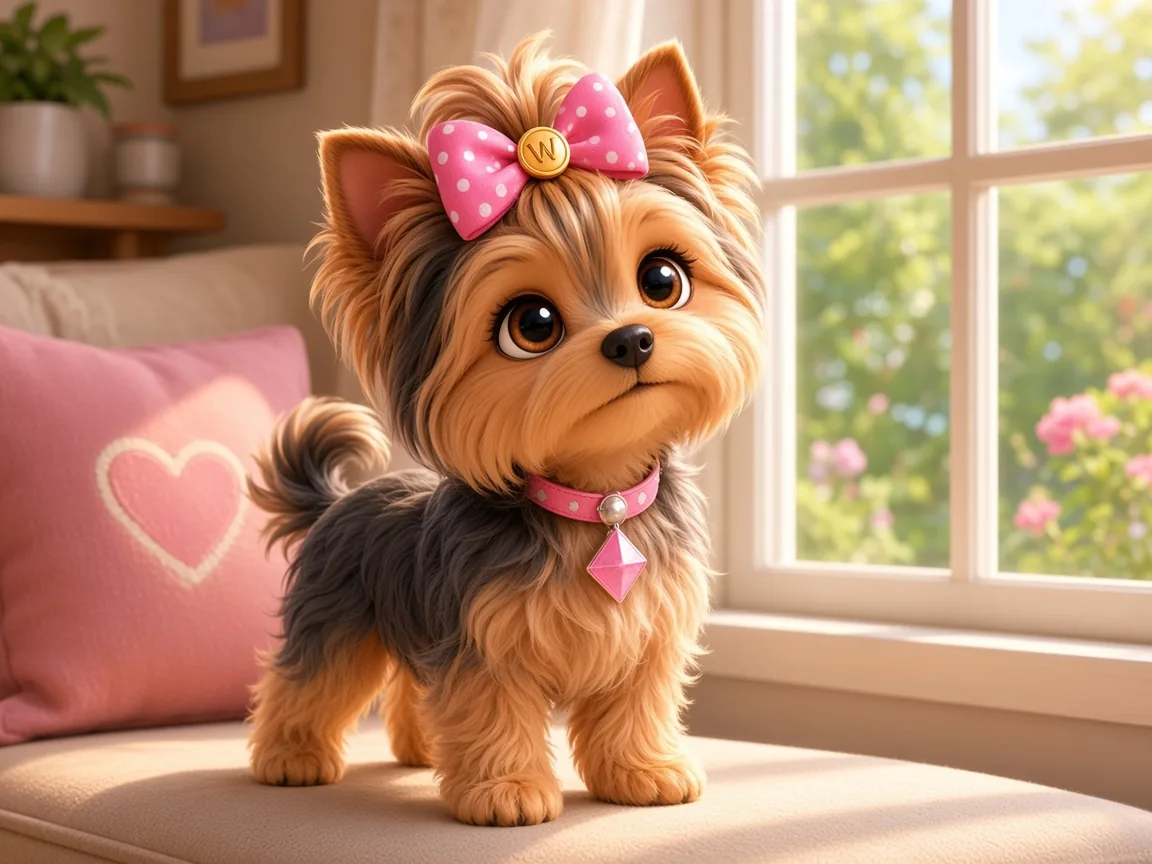
They also make effective watchdogs. A Yorkie will announce visitors, weather, and the neighbour's cat with equal urgency. That alertness is a feature of the breed rather than a fault, but it does need shaping early — see why does my Yorkie bark for how to work with it rather than against it.
Despite looking delicate, Yorkies have surprising stamina and a strong play drive. The common mistake is treating them as ornaments. A bored Yorkie becomes a noisy, destructive, slightly neurotic Yorkie remarkably quickly.
Exercise and Training
Yorkies need a moderate amount of exercise: a couple of short daily walks plus play is usually plenty. How much exercise does a Yorkie need goes into specifics, but the short version is that mental work tires a Yorkie out faster than distance does.
They are intelligent and highly trainable, with two caveats. First, they are terriers, so they will negotiate. Second, they are small, so house-training genuinely takes longer than it does with bigger breeds — small bladders, small margins. Yorkie potty training covers that properly.
Early socialisation matters a lot. A Yorkie who meets plenty of people, dogs and situations as a puppy grows into a confident adult. One who does not can become reactive, and a reactive small dog is still a problem even if it is a small one.
Health and Lifespan
Yorkies are generally healthy and typically live 11 to 15 years, with plenty reaching 16 and beyond. That longevity is one of the real joys of the breed.
There are, however, conditions the breed is predisposed to, and knowing them early makes a difference:
- Luxating patella — the kneecap slipping out of position, common across toy breeds
- Collapsing trachea — causing a distinctive honking cough
- Portosystemic shunt — a liver blood-flow abnormality usually spotted in puppyhood
- Hypoglycemia — low blood sugar, a particular risk in young puppies
- Dental disease — crowded teeth in a small jaw, very common and very preventable
- Mitral valve disease — a heart valve condition more often seen in older dogs
Common health issues Yorkie owners need to be aware of goes through each of these in more detail. Two are worth flagging now because owners most often underestimate them: dental care, which has its own guide, and weight, because a pound of excess fat on a seven-pound dog is proportionally enormous.
Is a Yorkie Right for You?
A Yorkie suits you well if you want a small, devoted companion who will be involved in everything you do, you do not mind a dog with opinions, and you are prepared to either groom regularly or budget for a groomer.
A Yorkie suits you less well if you need a quiet dog, you are out of the house for very long stretches, or you want a breed that can be left to entertain itself. We do not do that.
If you are at the getting-ready stage, the new Yorkie puppy checklist is the practical place to go next. And for the lighter side of the breed, there are fun facts about Yorkshire Terriers, including the war hero and the world record holder.
Frequently Asked Questions
How big do Yorkshire Terriers get?
Around 7 to 8 inches tall at the shoulder, with a breed-standard weight of up to about 7 pounds. Pet Yorkies are often slightly larger, which is not a problem in itself.
Are Yorkies good with children?
They can be, with supervision. The risk runs mostly the other way: a Yorkie is small enough to be hurt badly by an accidental drop or a misjudged hug, so very young children need close watching.
Do Yorkies bark a lot?
They are alert and vocal by nature, yes. With early training the barking becomes manageable rather than constant.
How long do Yorkies live?
Typically 11 to 15 years. Good dental care, sensible weight management and regular vet checks all push toward the upper end of that range.
Are Yorkies hard to train?
They can be quick learners, while motivation, environment, and individual temperament affect progress. House-training takes patience and frequent opportunities to succeed. Short, consistent, reward-based sessions work far better than long ones.
Disclaimer: This article is for informational purposes only and does not replace professional veterinary advice. Breed predispositions are tendencies, not diagnoses — speak to your vet about screening and care for your individual dog.