
New Yorkie Puppy Checklist: Supplies, First Week & Vet Timeline
13 min read
Category Life with Pets
Bringing home a Yorkshire Terrier puppy is wonderful, slightly chaotic, and over before you've had time to take it all in. Yorkies are tiny — many weigh under two pounds when they arrive — so the first few weeks need a bit more care than they would with a larger breed.
This checklist covers what to buy, how to prepare your home, what to feed, when to see the vet, and the Yorkie-specific health signs every new owner should recognise.

Table of Contents
Before Your Puppy Arrives
Get these sorted before pickup day. Once the puppy is home, you won't want to leave for the shops.
- Confirm the breeder or rescue has started vaccinations and deworming, and get the paperwork
- Register with a local vet and book a first check-up within 48–72 hours of arrival
- Choose one room as the puppy's base — somewhere easy to clean, with no stairs
- Set up the crate and bed before arrival so the space already smells calm and settled
- Ask what food the puppy is currently eating and buy the same brand to start with
- Agree house rules with everyone in the home: who feeds, who walks, whether the sofa is allowed
Switching food on day one is one of the most common mistakes new owners make. A Yorkie puppy's stomach is extremely small, and an abrupt change on top of the stress of moving home almost guarantees diarrhoea.
Essential Supplies
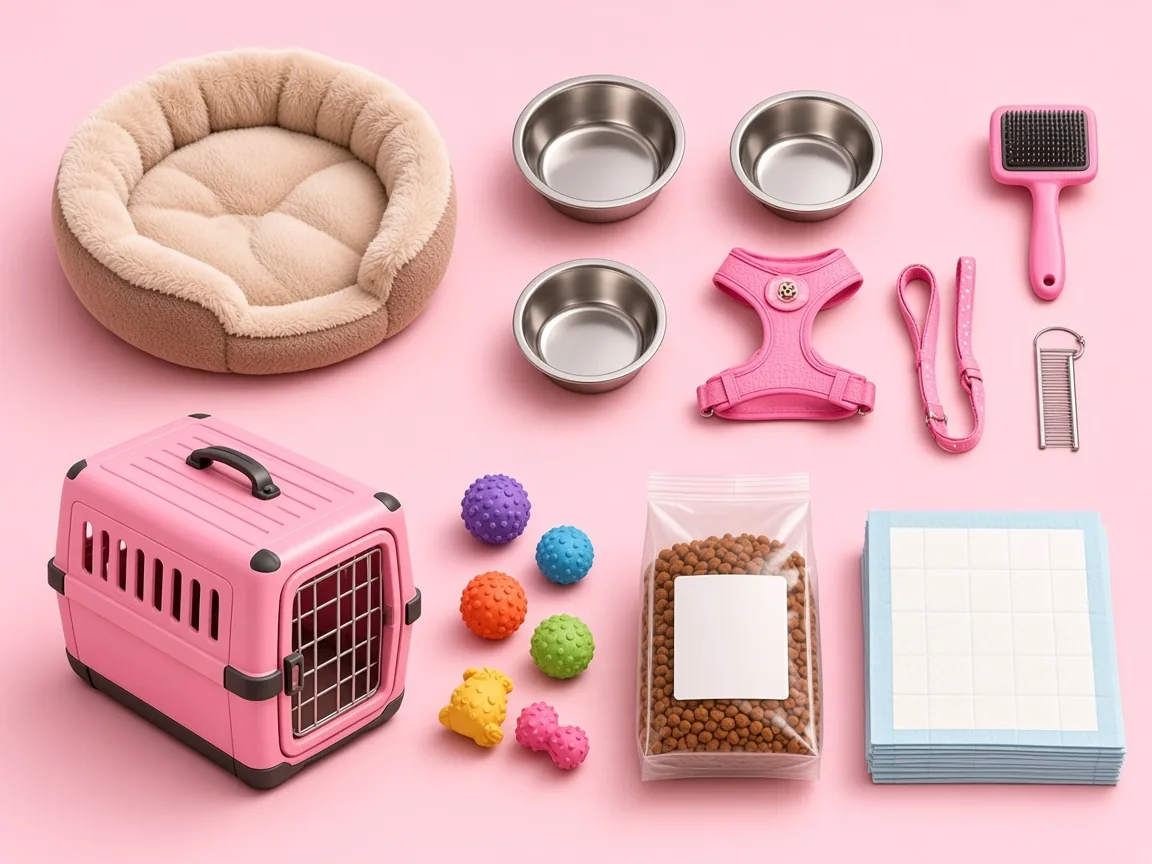
Must-have from day one
- Crate — small, around 24 inches, with a divider so it grows with her
- Soft bed — washable, with raised sides; Yorkies love to burrow
- Food and water bowls — shallow and low; deep bowls are awkward for a short muzzle
- Puppy food — the same brand the breeder used, small-breed formula
- Harness and lead — a harness, never a collar alone, to protect the delicate trachea
- Slicker brush and metal comb — a Yorkie's fine coat tangles easily
- Puppy pads or an indoor grass tray — essential before vaccinations are complete
- Enzyme cleaner — neutralises odour so she doesn't return to the same spot
- ID tag and microchip registration — legally required in many places
Worth adding soon
- Playpen for safe containment while you're busy
- Lick mat and puzzle feeder for mental stimulation
- Nail clippers or a grinder
- Dog-safe toothbrush and toothpaste — Yorkies are very prone to dental disease
- A carrier bag or sling for trips out
- A warm coat or jumper; small dogs lose heat quickly
Skip the collar-only walking setup and the large-breed kibble. Both cause real problems for toy breeds.
Puppy-Proofing Your Home

A Yorkie puppy fits through gaps you wouldn't think twice about, and can be seriously hurt by a fall from the sofa. Go room by room at floor level:
- Tape down or box in electrical cords and phone chargers
- Tie up blind and curtain cords — a strangulation risk for a curious puppy
- Move houseplants out of reach; lilies, sago palm, and pothos are all toxic
- Latch low cupboards containing cleaning products and medication
- Block stair access at both top and bottom with a gate
- Pick up small objects: coins, hair ties, batteries, children's toys, dropped food
- Check gaps behind and beneath furniture and appliances where she could wedge herself
- Keep toilet lids closed and never leave a full bath unattended
Outside, walk the garden boundary and look for gaps under fences or gates. A gap of four inches is enough for a Yorkie puppy to escape through.
Feeding Schedule and Portions
Yorkie puppies have fast metabolisms and almost no fat reserves, so they need frequent small meals rather than one or two large ones.
- 8–12 weeks: 4 meals a day
- 3–6 months: 3 meals a day
- 6–12 months: 3 meals a day, gradually moving to 2
- 12 months and over: 2 meals a day
Portion guidance depends on weight and the specific food, so follow the packet and adjust based on body condition rather than fixing a number. Most Yorkie puppies eat somewhere between a quarter and a half cup of small-breed kibble per day, split across those meals.
Never let a Yorkie puppy go more than four to five hours without food during the day. This matters more than it does for most breeds — see the hypoglycaemia section below.
If you do change foods, transition over seven to ten days by mixing a little of the new food into the old and increasing the proportion gradually.
Vet and Vaccination Timeline
Your vet will adjust this based on your region and the puppy's history, but the typical schedule looks like this:
- 6–8 weeks: First vaccinations, usually started by the breeder
- Soon after arrival: a health check with your own vet, including feeding, parasite prevention, and the vaccination record
- 14–16 weeks: Final puppy vaccinations; rabies where required
- Microchipping: check the chip, registration details, and local requirements with your vet before assuming it can wait
- Outdoor walks: begin in suitable places when your vet confirms protection is adequate; the age depends on the vaccine course and local risks
- 6–9 months: Discuss spay or neuter timing
- 12 months: First adult dental check
Keep worming and flea treatment on schedule throughout, and ask your vet about the right dosing for a dog this small — toy breeds are easy to overdose.
Until the final vaccinations have taken effect, carry her outdoors rather than letting her walk on ground used by unknown dogs. She can still socialise safely with vaccinated dogs you know.
Early Grooming Habits

Yorkies have long, silky, continuously growing hair. Starting grooming early is less about keeping her tidy now and more about teaching her to tolerate handling for the rest of her life.
- Brush gently every day, even when there's nothing to brush out
- Handle her paws and touch her nails daily, well before the first real trim
- Introduce toothbrushing in the first few weeks; dental disease is the single most common Yorkie health problem
- Bathe every three to four weeks with a dog-specific shampoo
- Book a first groomer visit around four months, mostly to get her used to the experience
- Keep the hair around her eyes trimmed or tied up so it doesn't scratch the cornea
Keep every session short and positive at this age. Two calm minutes is worth far more than ten minutes of wrestling.
Socialisation and Crate Training
The window for easy socialisation closes around sixteen weeks, so use it. The aim is calm exposure to as much of normal life as possible, in small doses, while she's still young enough to accept it readily.
- Introduce new sounds at low volume: vacuum, hairdryer, doorbell, traffic
- Let her meet a variety of people, including children and men with deep voices
- Get her used to car journeys with short, pleasant trips
- Practise brief periods alone from the start to prevent separation anxiety
- Feed meals in the crate so it becomes a good place rather than a punishment
- Never force her into the crate or use it for discipline
For toilet training, take her out after every sleep, meal, and play session, plus every hour or so in between. Reward immediately outside, not once you're back indoors — the timing is what teaches her. There's a full step-by-step method in the Yorkie potty training guide.
One important caveat on play: Yorkies have no idea how small they are and will happily throw themselves at a Labrador. Supervise all play with larger dogs.
Yorkie-Specific Health Watch-Outs
These conditions are far more common in Yorkies than in dogs generally. Knowing the early signs is genuinely useful.
Hypoglycaemia (low blood sugar) is the most urgent risk in puppies. Signs are wobbliness, confusion, glazed eyes, weakness, or seizures. It can develop within hours of a missed meal. Call a vet immediately and follow the hypoglycaemia first-aid guide. Do not put anything into the mouth of a dog who is unconscious or seizing.
Luxating patella is a kneecap that slips out of place. Watch for skipping steps, a hop on one back leg, or sudden lameness that resolves on its own.
Collapsing trachea causes a distinctive honking cough, often triggered by pressure on the neck. Use a harness and avoid letting her pull.
Retained baby teeth are common. If adult teeth come through while puppy teeth are still in place, they often need removing to prevent crowding.
Portosystemic shunt is a liver condition seen more often in Yorkies than most breeds. Signs are poor growth, disorientation after meals, or excessive drinking.
Dental disease will affect her eventually without preventive care. Daily brushing from puppyhood is the single most effective thing you can do.
Your First 48 Hours
A simple plan for the first two days:
- Carry her straight to the toilet spot before going inside
- Keep the house quiet; no visitors on day one
- Offer the food she's used to, in small amounts
- Stay in one room together so she can learn the space gradually
- Expect a disturbed first night — place the crate beside your bed to start
- Watch for appetite, toilet habits, and energy level, and note anything unusual
- Attend the vet appointment you booked in advance
Some shaking, hiding, or reluctance to eat in the first day is normal. Refusing food for more than twelve hours, repeated vomiting, or any wobbliness is not — call your vet.
Frequently Asked Questions (FAQ)
How much does a Yorkie puppy sleep?
Sixteen to twenty hours a day is normal for a young puppy. Let her sleep undisturbed; broken sleep makes puppies nippy and difficult.
When can my Yorkie puppy go for walks outside?
Wait until roughly a week after her final vaccinations, usually around sixteen to seventeen weeks. Before then you can carry her outdoors for safe exposure.
How long can a Yorkie puppy be left alone?
No more than two hours at eight to twelve weeks, building up slowly. Long absences risk both low blood sugar and separation anxiety. There is a full age guide in how long you can leave a Yorkie alone.
Do Yorkie puppies need a coat?
Often yes. They have very little body fat and a single-layer coat, so a jumper is sensible in cold or wet weather.
How big will my Yorkie puppy get?
The breed standard is four to seven pounds fully grown, typically reaching adult size by around ten to twelve months.
Are Yorkies good with children?
They can be, with supervision. Yorkies are fragile and easily injured by accidental drops or rough handling, so they suit families with older, calmer children best.
Disclaimer: This article is for informational purposes only and does not replace professional veterinary advice. Always consult your veterinarian about your Yorkie's health, diet, and vaccination schedule.