
Yorkie Dental Care: Preventing the Breed's Most Common Health Problem
10 min read
Category Health & Care
Dental disease is the most common health problem in Yorkshire Terriers, and it's also the most preventable. Most small dogs show signs of periodontal disease by the age of three, and Yorkies are worse affected than most because forty-two adult teeth have to fit into a jaw the size of your thumb.
Crowded teeth trap food and plaque, and plaque hardens into tartar within days. This guide covers how to brush her teeth properly, what actually helps between brushings, and the warning signs that need a vet.
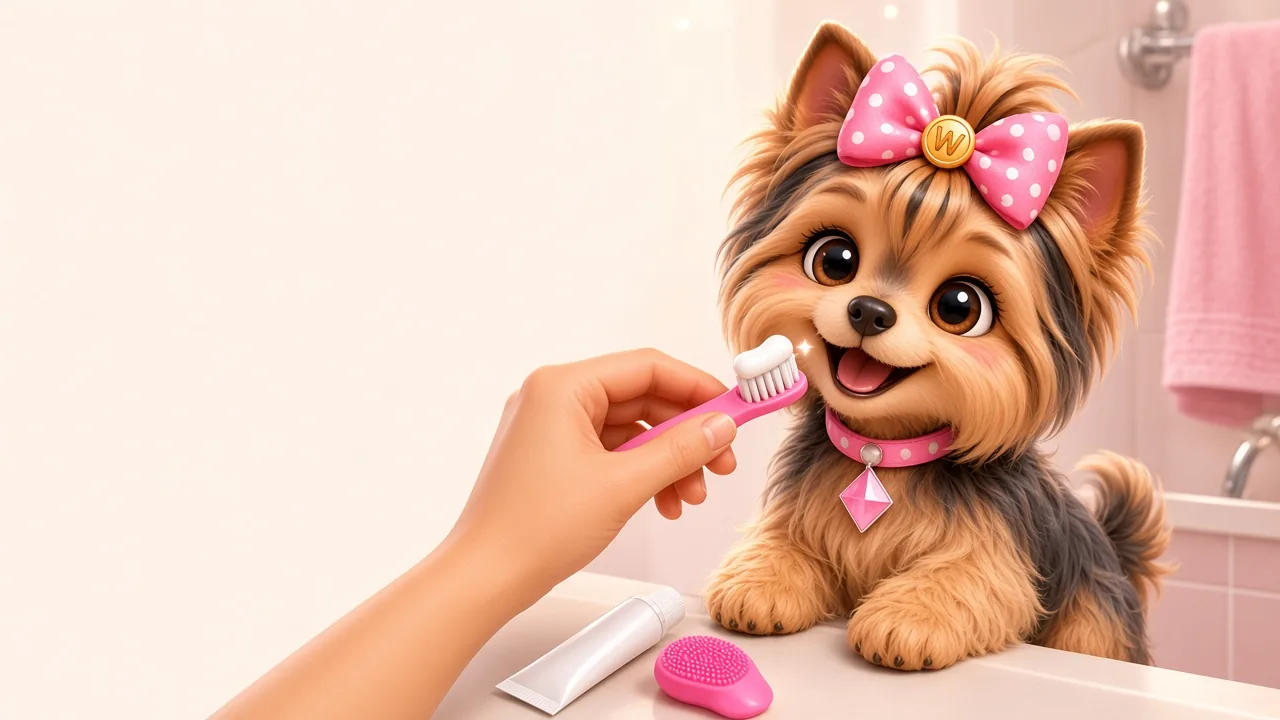
Table of Contents
Why Yorkies Are So Prone to Dental Problems
It isn't bad luck or poor care. The breed is built in a way that works against its own teeth.
- Crowding. A full set of adult teeth in a miniature jaw leaves almost no gaps, so food packs in tightly
- Retained baby teeth. Yorkie puppy teeth often fail to fall out, leaving two teeth competing for one socket
- Shallow tooth roots relative to crown size, which means less anchorage once gums recede
- Inadequate plaque control. Neither ordinary wet nor ordinary dry food replaces daily brushing
- Long lifespan. Living 13 to 16 years means far more time for damage to accumulate
Left untreated, periodontal disease doesn't stay in the mouth. The bacteria enter the bloodstream and are linked to heart, liver and kidney damage. It's also painful in a way dogs hide well.
Your Dental Toolkit
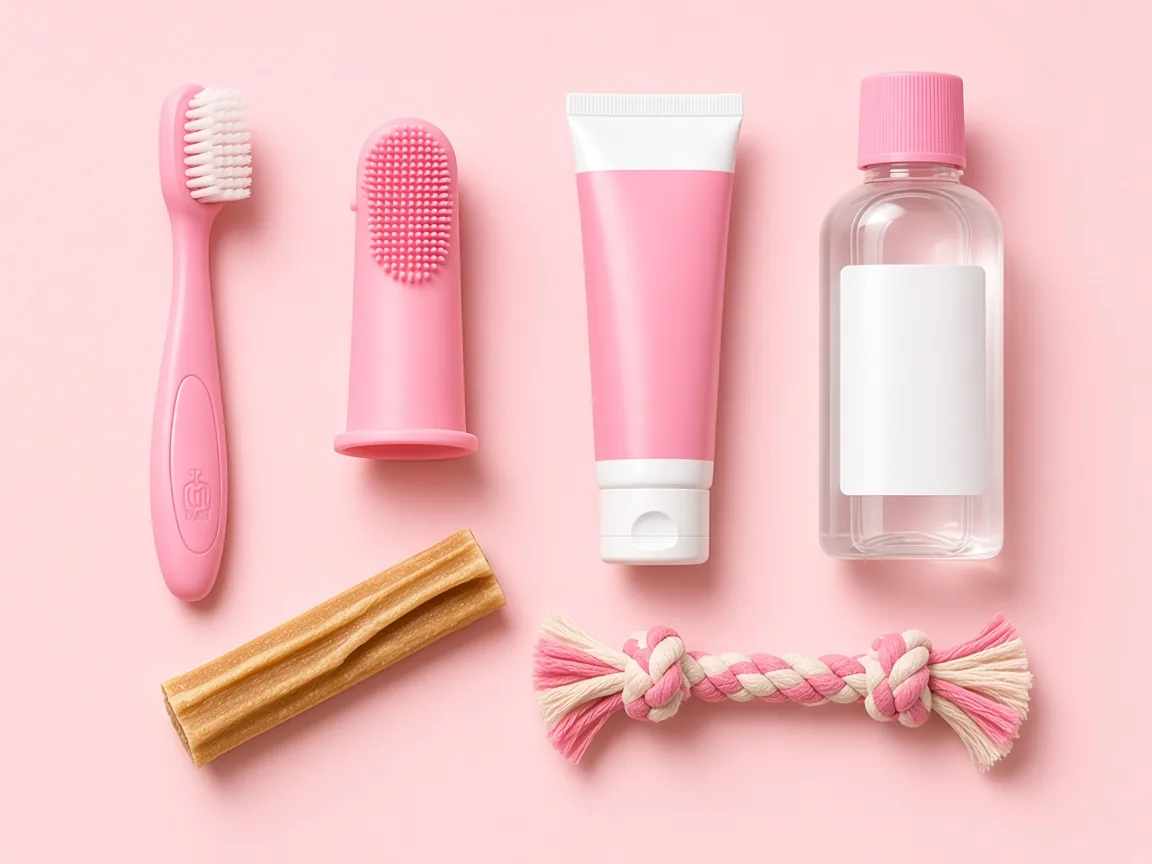
- Dog toothbrush — a small head with a long angled handle reaches the back teeth most easily
- Finger brush — gentler and less intimidating for a dog who's never had her teeth touched
- Dog toothpaste — enzymatic, usually poultry or malt flavoured so she'll tolerate it
- Dental chews — useful between brushings, sized for a toy breed
- Water additive — choose a dog-specific, evidence-backed product with your vet; stop if it puts her off drinking
- Safe chew toys — choose a suitable size and texture, supervise use, and discard damaged toys; rope fibres can be swallowed
One thing matters above all else: never use human toothpaste. Dogs swallow it, and the fluoride is toxic to them. Some brands also contain xylitol, which can kill a dog this size.
Skip the anaesthesia-free dental cleanings offered by some groomers. They scrape visible tartar off the crown without touching below the gum line, where the actual disease lives, so the teeth look better while the problem continues.
How to Brush a Yorkie's Teeth
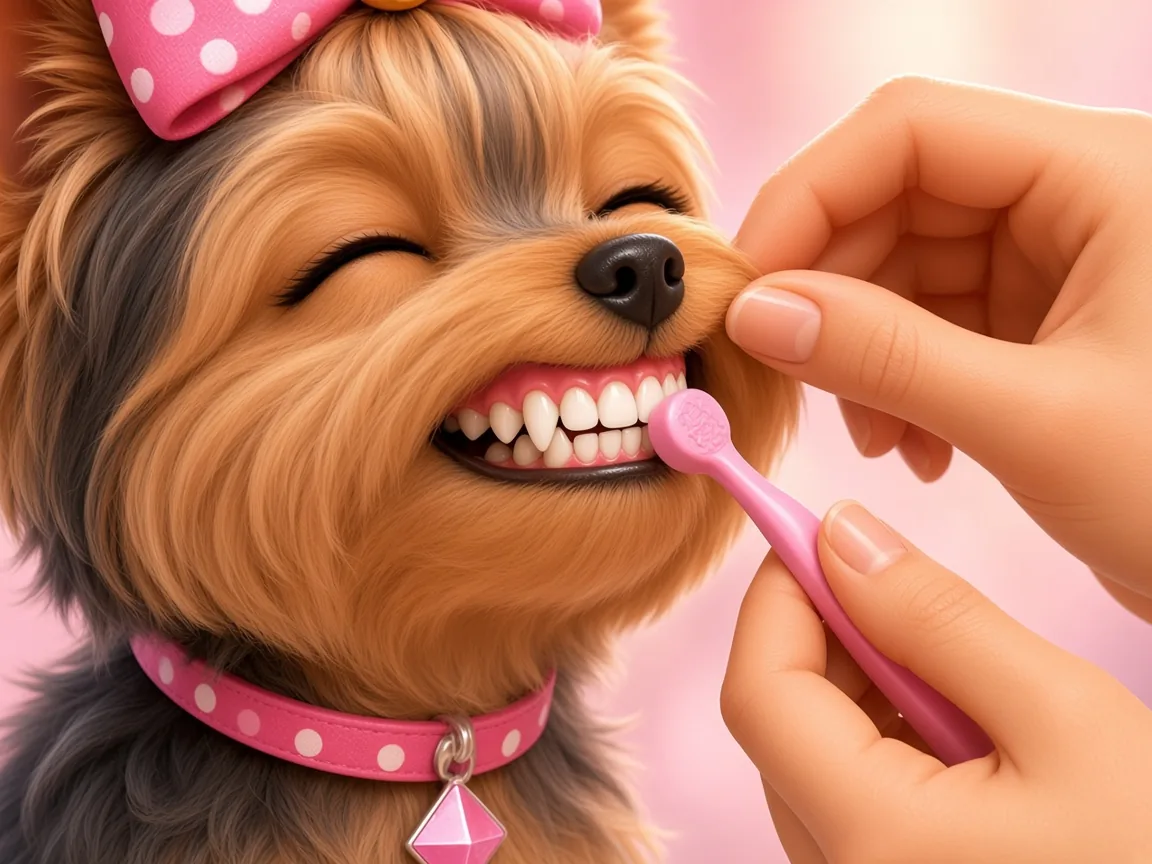
Daily is the target. Three times a week is the realistic minimum to slow tartar meaningfully.
- Pick a calm moment, when she's settled rather than excited
- Let her lick the toothpaste off your finger first so the taste becomes familiar
- Lift the lip rather than trying to open her mouth — you only need to reach the outer surfaces
- Hold the brush at roughly 45 degrees to the gum line, not flat against the tooth. The gum line is where plaque does its damage
- Use small circular motions, a few seconds per section
- Prioritise the back molars and canines. These collect the most tartar and are the most commonly missed
- Skip the inner surfaces. Her tongue does a reasonable job there, and fighting for access isn't worth it
- Finish with praise or a treat, every single time
Keep practice short and comfortable, building up gradually. Ask your vet to demonstrate a technique and routine suited to your dog.
For a dog who has never had this done, spend the first week just touching her muzzle and lifting her lip, rewarding each time. Introduce the brush in week two. Rushing can make future handling harder; pause or step back if she is uncomfortable.
What Helps Between Brushings
Daily brushing is the foundation. Ask your vet about appropriately sized dental chews, dental diets, or water additives with evidence for plaque or tartar control. The Veterinary Oral Health Council's accepted products are a useful starting point; choose products suitable for your dog's age and health.
Ordinary dry food is not a replacement for brushing. Toys and vegetables should not be described as dental treatments. Supervise chews, count edible products in the daily calorie allowance, and discard toys that shed pieces or fibres.
Avoid very hard chews that may fracture teeth, including antlers, hooves, hard nylon bones, and bones. A damaged tooth needs veterinary assessment.
Warning Signs That Need a Vet
Dogs conceal mouth pain, so you're looking for indirect signs:
- Bad breath — the earliest and most reliable indicator. Healthy dog breath shouldn't smell strongly
- Red, swollen or bleeding gums, particularly along the gum line
- Yellow or brown tartar build-up, worst on the back teeth
- Dropping food, chewing only on one side, or turning away from dry food
- Pawing at the mouth or rubbing her face along furniture
- Excessive drooling, sometimes tinged with blood
- A loose or discoloured tooth
- Facial swelling below the eye, which usually means a tooth root abscess and needs same-day attention
A dog who has simply gone quiet and stopped playing with chew toys may be in more pain than she's showing.
Professional Cleanings and Extractions
Your vet should decide when professional cleaning is needed after examining the mouth. Cleaning below the gum line and dental X-rays usually require general anaesthesia. Ask about the benefits, individual risks, pre-anaesthetic assessment, and monitoring.
Expect your vet to take dental X-rays. A large share of disease in small breeds is invisible above the gum line, and X-rays are the only way to find it.
Extractions may be needed for diseased teeth, with appropriate anaesthesia, pain relief, and aftercare. Yorkies cope remarkably well with missing teeth, often eating more comfortably afterwards than before, because the removed teeth were the painful ones.
Retained puppy teeth should be dealt with early. If an adult tooth is coming through while the baby tooth is still in place, usually between four and seven months, ask your vet about removing it before it causes permanent crowding.
A Simple Routine
- Daily: brush, ideally at the same time each day
- Daily: one small-breed dental chew
- Weekly: lift her lip and check gums and back teeth
- Every 6 months: oral exam at a routine vet visit
- As advised by your vet: professional cleaning under anaesthetic
Starting young is what makes all of this easy. If you have a puppy, begin in the first few weeks — the new Yorkie puppy checklist covers where dental care fits alongside everything else.
Frequently Asked Questions (FAQ)
How often should I brush my Yorkie's teeth?
Daily is ideal, since plaque hardens into tartar in under three days. Three times a week is the minimum worth doing.
My Yorkie hates having her teeth brushed. What now?
Go back several steps. Reward her for letting you touch her muzzle, then for lifting her lip, then for tasting the toothpaste, then introduce the brush. Build it over two or three weeks.
Do dental chews work instead of brushing?
No. They help reduce plaque but don't clean the gum line, which is where periodontal disease starts. Treat them as a supplement.
Is anaesthesia safe for a Yorkie dental cleaning?
No anaesthetic is risk-free. Your vet can assess your dog's health, discuss any tests needed, and explain the monitoring and precautions used.
Why does my Yorkie have such bad breath?
Almost always plaque and gum inflammation. Persistent bad breath despite brushing warrants a vet check, since it can also indicate kidney or liver issues.
At what age do Yorkies lose their baby teeth?
Between four and seven months. Retained baby teeth are common in the breed and often need removing.
Disclaimer: This article is for informational purposes only and does not replace professional veterinary advice. If your Yorkie shows signs of dental pain, bleeding gums, or facial swelling, contact your veterinarian.