
A Better Water Station for Your Cat: Start With the Location
5 min read
Category Life with Pets
Your cat has rejected the carefully chosen bowl and is investigating your glass instead. Before buying a fountain with more features than the television, check the basics: access, placement and cleanliness.
A good water setup gives a cat easy choices. It should also make it easier for you to notice changes in drinking, rather than disguising a health problem as a preference.
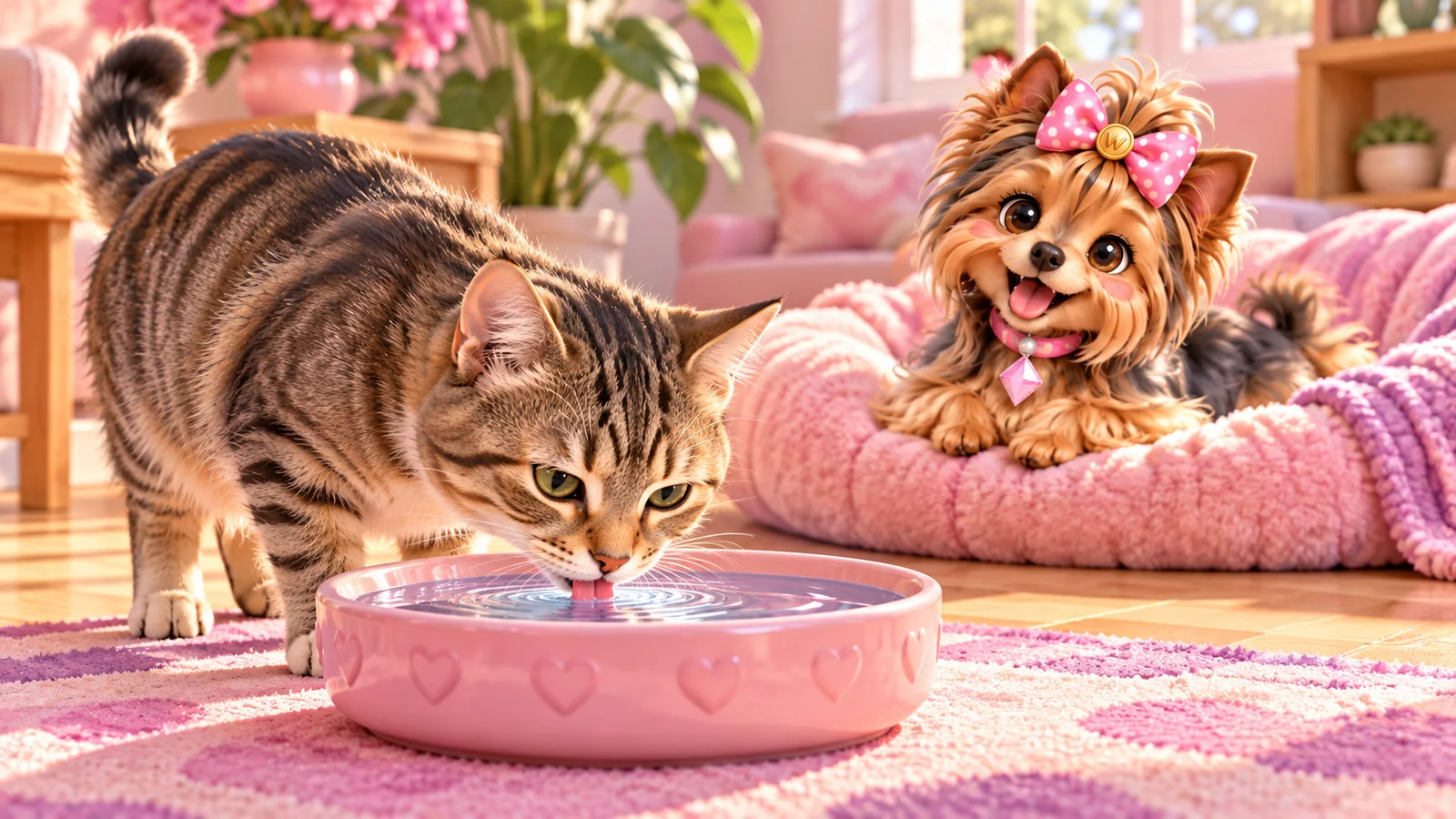
Table of Contents
Notice changes before changing equipment
Think about what is normal for your cat, including their food. A cat eating wet food may be seen drinking less than one eating mostly dry food. That difference does not justify ignoring a sudden change.
Contact your vet if your cat starts drinking noticeably more or less, urinates differently, loses weight or seems unwell. Straining to urinate, repeated unsuccessful toilet visits or passing little or no urine requires urgent veterinary attention.
Keep water available while seeking advice. Do not restrict it to reduce litter-tray visits.
Separate the important stations
Try a water bowl away from both food and litter, in a quiet place the cat can reach without being cornered. Leave a clear approach and a way to step away.
In a multi-cat home, add options in separate parts of the house. Two bowls on one mat can still be controlled by one cat. Watch whether a particular cat only drinks when another is asleep or absent.
Cats Protection's drinking advice recommends multiple locations and attention to bowl type and positioning.
Offer a straightforward bowl choice
Try a wide, stable ceramic or glass bowl that is easy to clean. Place it where it cannot be knocked from a height. If your cat has mobility difficulties, ask your vet about comfortable access and test a suitable position without removing the existing option.
Change one feature at a time. Put the new bowl somewhere useful and keep the old one available during the trial. Observe where the cat chooses to drink over several ordinary days.
This is a small household experiment, not proof of a diagnosis. A cat using a wider bowl does not establish that every previous feeding problem was caused by their whiskers.
A fountain is an option, not a requirement
Some cats prefer moving water, while others avoid the noise or movement. If you try a fountain, retain a still-water bowl, use the manufacturer's cleaning schedule and check filters and pump parts regularly.
Secure the cable so it cannot be chewed or played with. Check the fountain is actually running and has enough water; a motor noise is not a reliable inspection.
Do not add essential oils, flavours or supplements simply to encourage interest. Ask your vet about any proposed dietary or hydration intervention.
Make maintenance easy enough to keep doing
Refresh water and wash bowls regularly, rinsing cleaning products thoroughly. Put a quick check into the same routine as meals: clean, accessible, filled and working.
For a sitter, show the actual locations and cleaning method instead of writing “water as usual”. When you have several pets, check each one's access rather than assuming the biggest bowl serves everyone.
Wendi is happy to supervise the household inspection. She would just like everyone to know that the cat's new water station is not her paddling pool.