
Great food options for your Yorkshire Terrier
5 min read
Category Food & Nutrition
Yorkshire Terriers are small, but energetic dogs with a huge appetite for food — and a reputation for being fussy about it. Whether you feed wet or dry, there are some genuinely good options available for these little pooches.

Table of Contents
Dry Food
Dry food is a great option for Yorkshire Terriers because of its convenience. Many brands offer formulas tailored specifically to small and toy breeds, which matters more than it sounds — the kibble is sized for a small mouth, and the calorie density is adjusted for a faster metabolism.
Choose a food labelled complete and balanced for your dog's life stage, from a manufacturer that can explain its formulation and quality controls. Ingredient order alone does not establish quality. Ordinary dry food does not replace toothbrushing.
Wet Food
Wet food is another good option. It has high moisture content, which helps with hydration, and it tends to be far more aromatic and palatable — a real advantage with the finicky eaters this breed is known for.
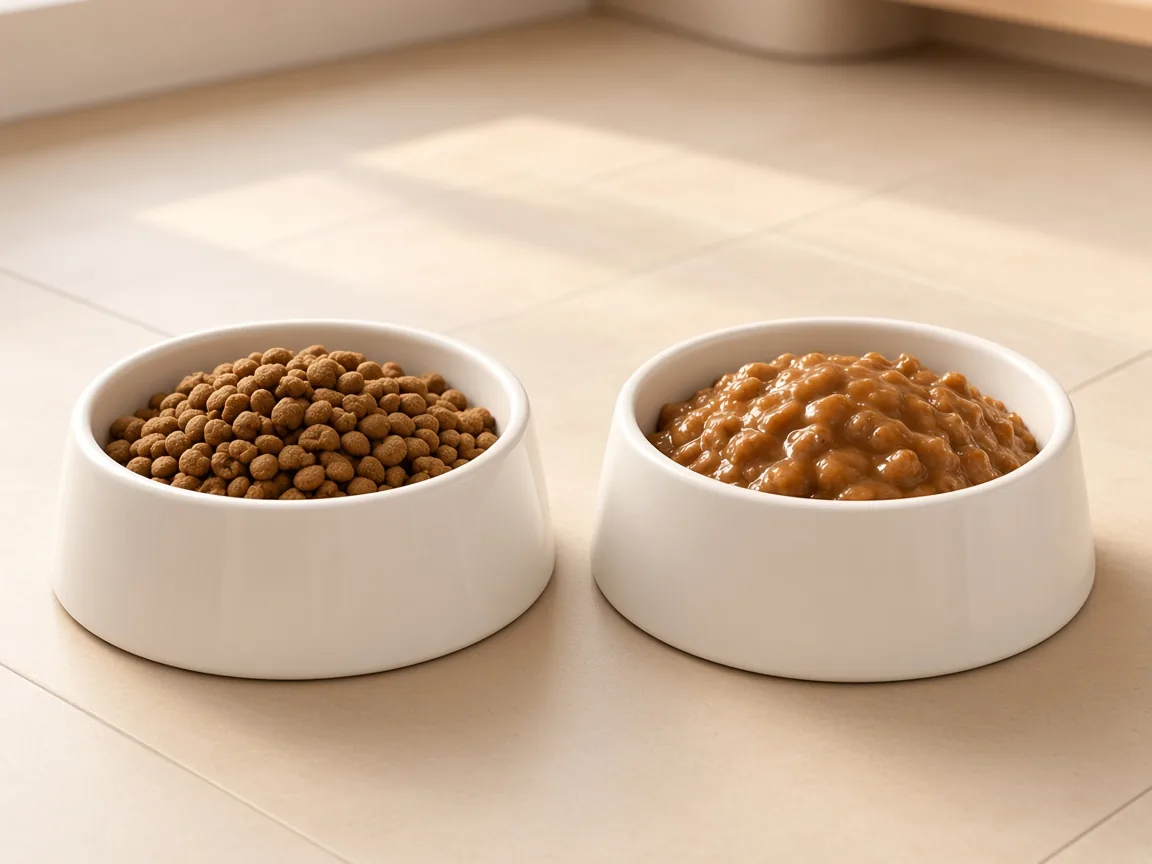
Consider cost, storage after opening, and your dog's preference. Neither ordinary wet nor ordinary dry food replaces dental care. Plenty of owners settle on a mix: dry as the base, with a spoonful of wet stirred through to make it interesting.
Treats
Like any other dog, Yorkshire Terriers love treats. Look for treats that are low in fat, high in protein and appropriately tiny — many commercial treats are sized for dogs ten times our weight and need breaking up.
The general guideline most vets use is that treats should make up no more than 10% of daily calories. For a 7-pound Yorkie eating roughly 150 to 200 calories a day, that is about 15 to 20 calories of treats. It adds up alarmingly fast, so avoid anything high in sugar or fat.
Whole Foods That Make Good Additions
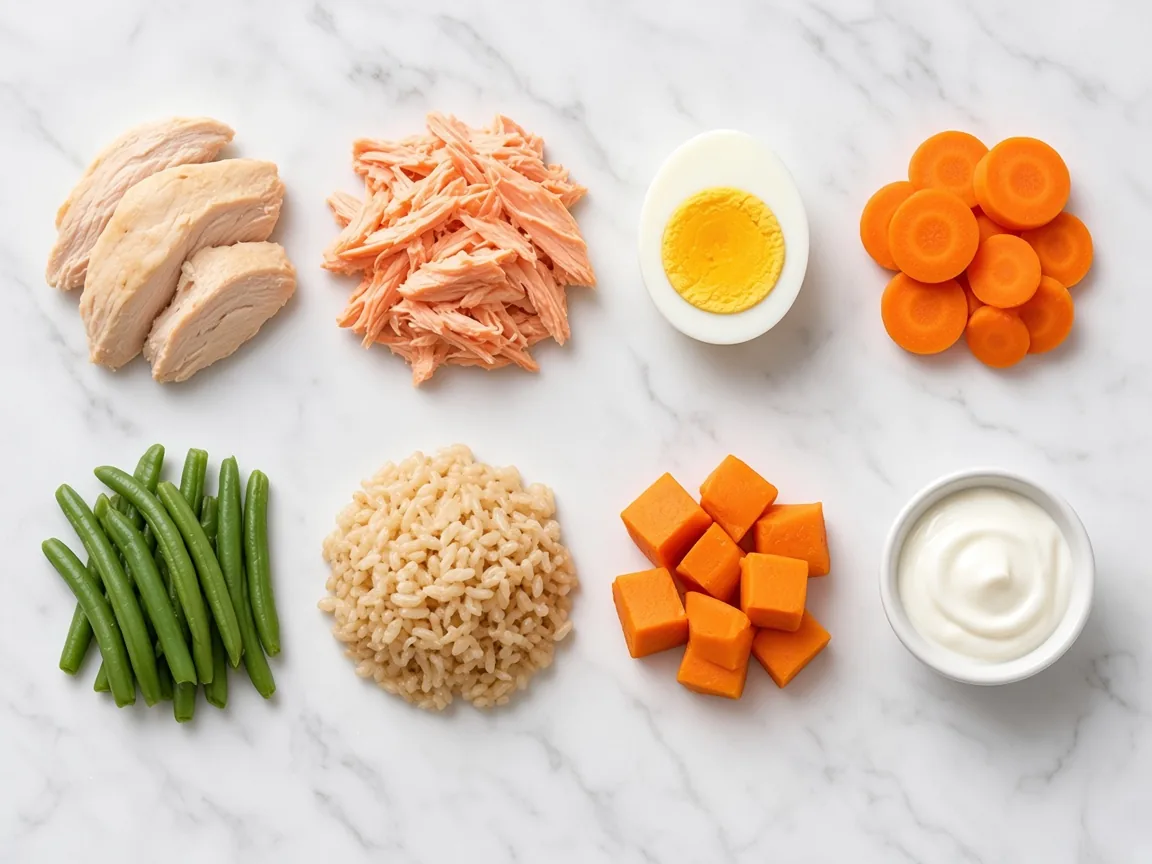
These work well as toppers, training rewards or occasional additions alongside a complete diet — not as a replacement for one. Everything here should be plain, unseasoned, and free of onion, garlic, salt, butter and oil.
-
Cooked lean meats such as chicken, turkey, beef or lamb, with no bones and no seasoning
-
Cooked eggs
-
Cooked fish such as salmon or cod, fully deboned
-
Cooked vegetables such as carrots, green beans and plain potato
-
Cooked grains such as brown rice and oatmeal
-
Low-fat cottage cheese, in small amounts
-
Plain unsweetened yoghurt, in small amounts, if your dog tolerates dairy
-
Fresh fruits such as apple, banana and pear, with cores, pips and stones removed
-
Cooked sweet potato
-
Plain cooked pumpkin, which is also useful for a sensitive stomach
A note on processed meats: ham, bacon and other cured meats are often suggested as a treat, and they are best avoided. The salt and fat levels are high enough to be a real problem for a dog this size, and fatty foods are a recognised trigger for pancreatitis in small breeds.
Human foods Yorkies can eat goes into portions and preparation for each of these in more detail.
Fussy Eaters
If your Yorkie turns their nose up at dinner, a few things usually help before you start switching foods: feed at consistent times rather than leaving food down all day, warm wet food slightly to bring out the smell, and cut back on treats, because a dog who has been grazing on snacks is not hungry at mealtimes.
Do keep in mind that Yorkies are prone to hypoglycemia and should not go long stretches without eating. Several small meals a day suits the breed better than one large one, and loss of appetite warrants veterinary advice. Call promptly for a puppy, a very small or unwell dog, or any dog with weakness, vomiting, or other symptoms; do not wait a full day in those cases.
What to Avoid
No matter what type of food you choose, make sure it is good quality and meets the specific dietary needs of your pooch. Just as important is knowing what should never go in the bowl — foods to avoid when feeding your Yorkshire Terrier covers the genuinely dangerous list, including chocolate, grapes, onion, garlic, xylitol and cooked bones.
With the right food, your Yorkie can live a long and healthy life. Which, given that we intend to supervise you for the next fifteen years, is in everyone's interest.
Disclaimer: This article is for informational purposes only and does not replace professional veterinary advice. Talk to your vet before making significant changes to your dog's diet, particularly if they have an existing health condition.