
How to promote healthy Yorkie hair growth
6 min read
Category Health & Care
To promote healthy Yorkie hair growth, there are several things you can do — but it helps to start with one piece of context that changes how you approach all of them.
Table of Contents
First, Why Length Is Usually Lost Rather Than Not Grown
Yorkies have a fine coat with a long growth phase. Hair and fur are not biologically separate materials, and every coat has a growth cycle.
Breakage from tangles, rough brushing, or dryness can reduce visible length. Thinning can also reflect skin disease, parasites, hormonal problems, or nutrition, so do not assume that every change is a grooming issue.
With that in mind, here is what actually helps.
Proper Nutrition
Yorkies need a well-balanced diet containing the essential vitamins and minerals that support skin and coat, particularly biotin, omega-3 fatty acids and vitamin E. Coat quality is one of the first places a poor diet shows, because hair is non-essential tissue and the body deprioritises it when nutrients are short.

Protein matters most of all, since hair is largely protein. A complete, good-quality food aimed at small breeds covers the basics; oily fish such as salmon, and cooked egg, make useful occasional additions. Great food options for your Yorkshire Terrier goes into choosing a base diet.
Be patient, though. Because hair grows slowly, dietary improvements take six to eight weeks to show in the coat, and several months to show along its full length.
Grooming
Regular grooming is crucial for healthy hair growth in Yorkies. Brush your Yorkie's coat regularly to remove tangles, mats and loose hair, which both stimulates the skin and prevents the small knots that turn into breakage.
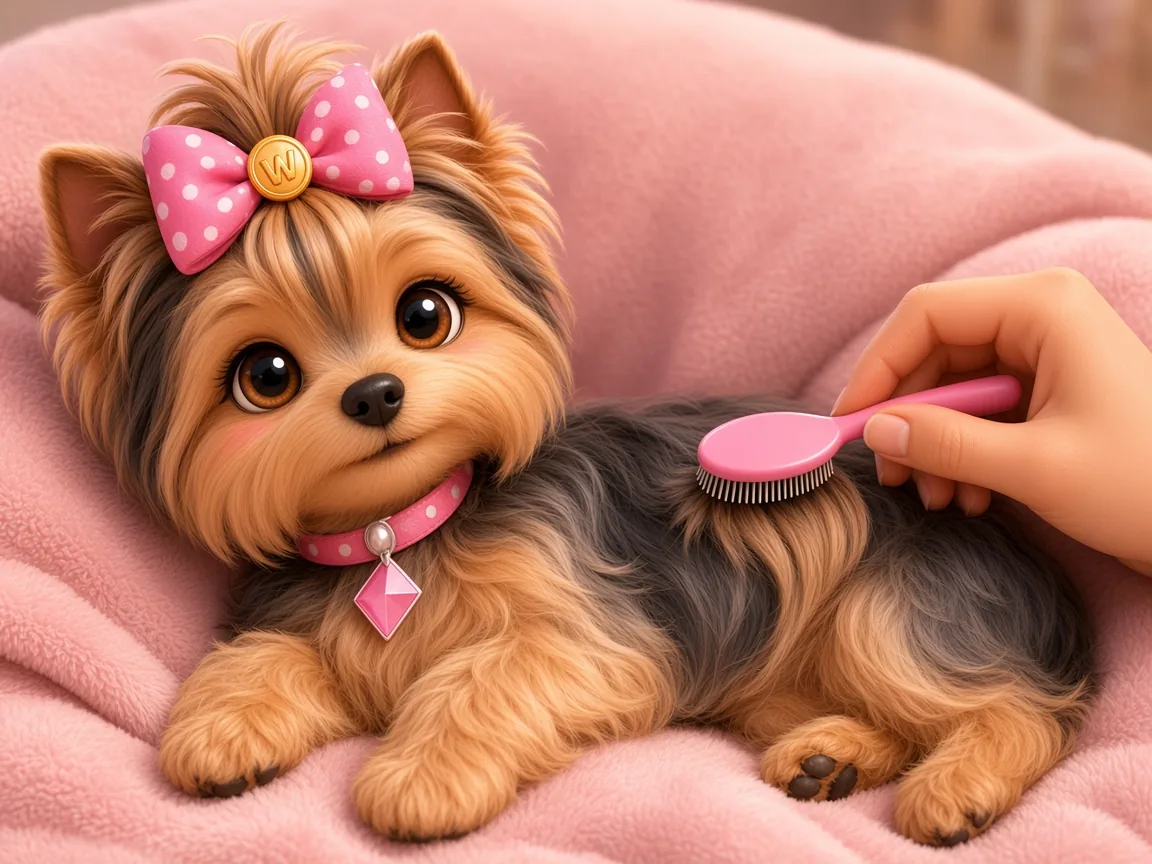
Technique is worth getting right, because bad brushing causes more damage than no brushing:
- Work in small sections rather than long sweeps down the whole body
- Hold the hair at the base with your free hand so tugs do not pull at the skin
- Use a detangling spray or light conditioner on dry, tangle-prone areas instead of dragging a brush through them
- Start at the ends of a tangle and work upward toward the root
- Brush daily if the coat is long — a daily two minutes prevents the weekly thirty-minute battle
How to groom a Yorkie at home covers the full routine, including trimming and the areas that mat first.
Regular Bathing
Yorkies should generally be bathed every three to four weeks to keep the coat clean and healthy. Use a mild shampoo designed for dogs to avoid drying out their skin.
Two things to get right. Never use human shampoo — canine skin has a different pH and human products strip it. And do not over-bathe: washing more often than roughly every two weeks removes the natural oils that keep hair flexible, and dry hair is brittle hair. Always follow with a conditioner on a long coat, and comb through while damp rather than once dry.
Avoid Harsh Chemicals
Avoid using harsh chemicals on your Yorkie's coat, such as hair dyes or aggressive shampoos, as they can damage the hair and cause it to break or fall out. The same goes for human styling products and anything heavily fragranced.
Heat counts here too. If you blow-dry, use the lowest heat setting and keep the dryer moving, or let the coat air-dry where you can.
Provide Adequate Hydration
Make sure your Yorkie has access to fresh water at all times. Adequate hydration supports skin condition, and skin condition is what the hair grows out of.
Consider Supplements
There are various supplements available that may support coat condition in dogs, with fish oil the most commonly recommended. Talk to your veterinarian about the best options and the right dose for a dog your Yorkie's size — fat-soluble vitamins in particular can be overdone, and small dogs reach a harmful dose on very little.
When Poor Coat Means Something Else
If the coat deteriorates suddenly, hair comes out in patches, or there is itching, redness, scabbing or a smell, this is no longer a grooming question. Parasites, allergies, skin infections and hormonal conditions such as hypothyroidism all affect the coat, and no amount of brushing will fix them. See your vet — the coat usually recovers once the underlying cause is treated.
By following these tips, you can help promote healthy hair growth in your Yorkie, keeping their coat shiny and beautiful. And if you would rather keep it short, that is a completely legitimate choice — a well-maintained puppy cut is far kinder than a long coat nobody has time to brush.
Disclaimer: This article is for informational purposes only and does not replace professional veterinary advice. Speak to your vet before starting any supplement, and have sudden coat or skin changes examined rather than treated at home.