
How to Groom a Yorkie at Home: Tools, Steps & Topknot Guide
11 min read
Category Health & Care
Yorkshire Terriers have a fine coat with a long growth phase and relatively little shedding. Regular gentle grooming helps prevent tangles. Tight mats close to the skin should be assessed by a groomer rather than cut out at home.
The good news is that most of the work is simple once you have the right tools. This guide covers daily brushing, bathing, trimming, nails, and how to tie a proper topknot.
Table of Contents
Tools You Actually Need
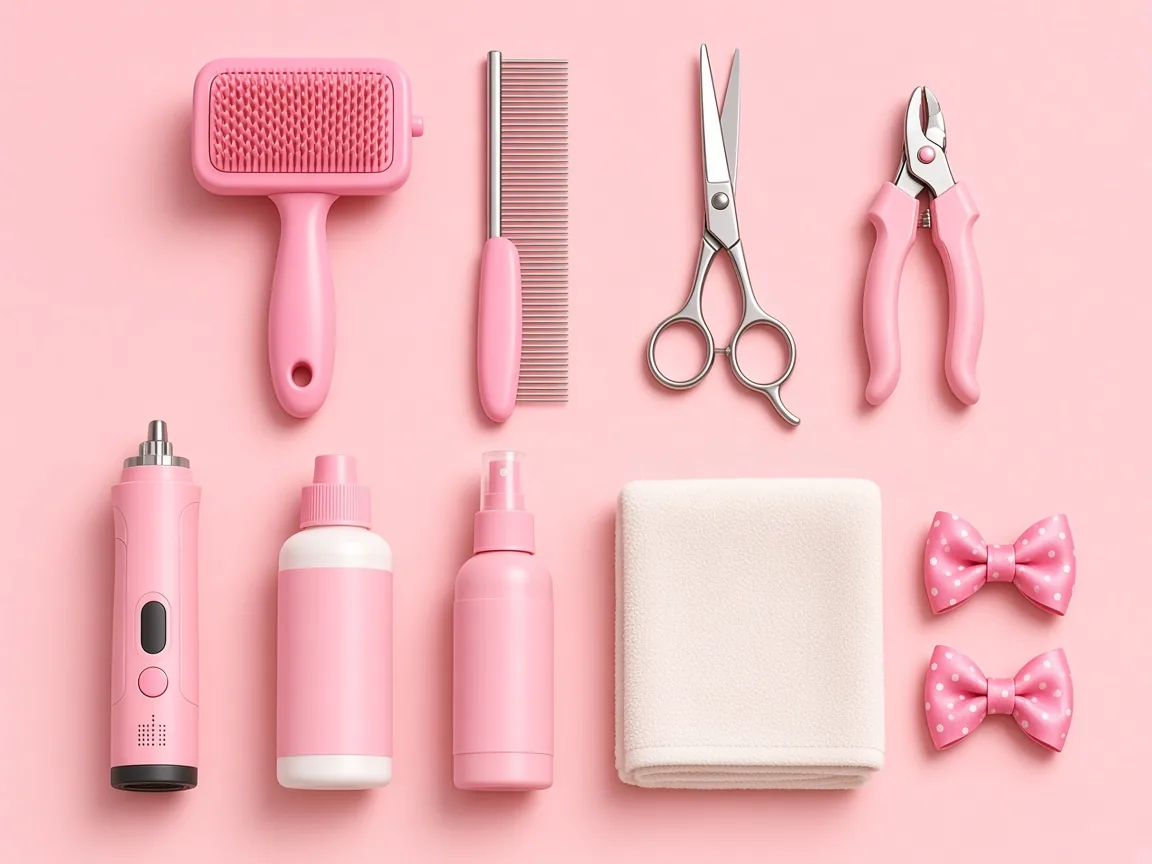
- Slicker brush — for the main body work, lifting and separating the coat
- Fine metal comb — the real test of whether the coat is tangle-free; a brush glides over mats a comb will catch
- Round-tipped grooming scissors — blunt tips matter when you're cutting near eyes and paws
- Nail clippers or a grinder — a grinder is easier on black nails where you can't see the quick
- Detangling spray — never brush a dry Yorkie coat, it snaps the hair
- Dog shampoo and conditioner — dog-specific; human shampoo has the wrong pH and dries out the skin
- Towels and a hairdryer on the lowest heat setting
- Tiny clear elastics and bows — for topknots
Avoid two things sold as Yorkie tools but unsuitable for them: deshedding blades, which cut the hair rather than remove loose undercoat, and human hair clippers, which are too hot and loud for a dog this small.
A Realistic Grooming Schedule
- Daily: quick brush-through, check the eye area
- Every 2–3 days: teeth brushing, ideally daily
- Weekly: full comb-through to the skin, ear check, paw pad inspection
- Every 2–4 weeks: bath
- Every 2–3 weeks: nail trim
- Every 6–8 weeks: trim around the eyes, paws and sanitary area
- Every 8–12 weeks: full haircut if you keep her in a puppy cut
Daily brushing sounds like a lot, but on a well-maintained coat it takes two or three minutes. It's the sessions you skip that turn into forty-minute detangling battles.
Step 1: Brushing Without Hurting Her
This is the foundation. Done properly, everything else gets easier.
- Mist the coat lightly with detangling spray or plain water. Brushing dry hair causes breakage and static.
- Work in sections, starting at the back legs and moving forward.
- Use the line-brushing method: hold the hair up with one hand, brush down a thin layer at a time from the skin outward. This reaches the base of the coat where mats actually form.
- Brush with the grain, in the direction the hair grows, not against it.
- Finish with the metal comb. If it passes through cleanly everywhere, you're done. If it catches, that spot still has a tangle.
- Don't forget the friction areas — behind the ears, under the armpits, the chest, and the base of the tail. These mat first and get checked last.
For a mat you've found, hold the hair between the mat and the skin so you aren't pulling at her, then tease it apart with your fingers and the end of the comb. Work from the outer edge inward. If a mat is tight to the skin, painful, or difficult to loosen, stop and ask a groomer or vet to remove it. Do not cut it out with scissors; skin can be pulled into the mat.
Step 2: Bathing
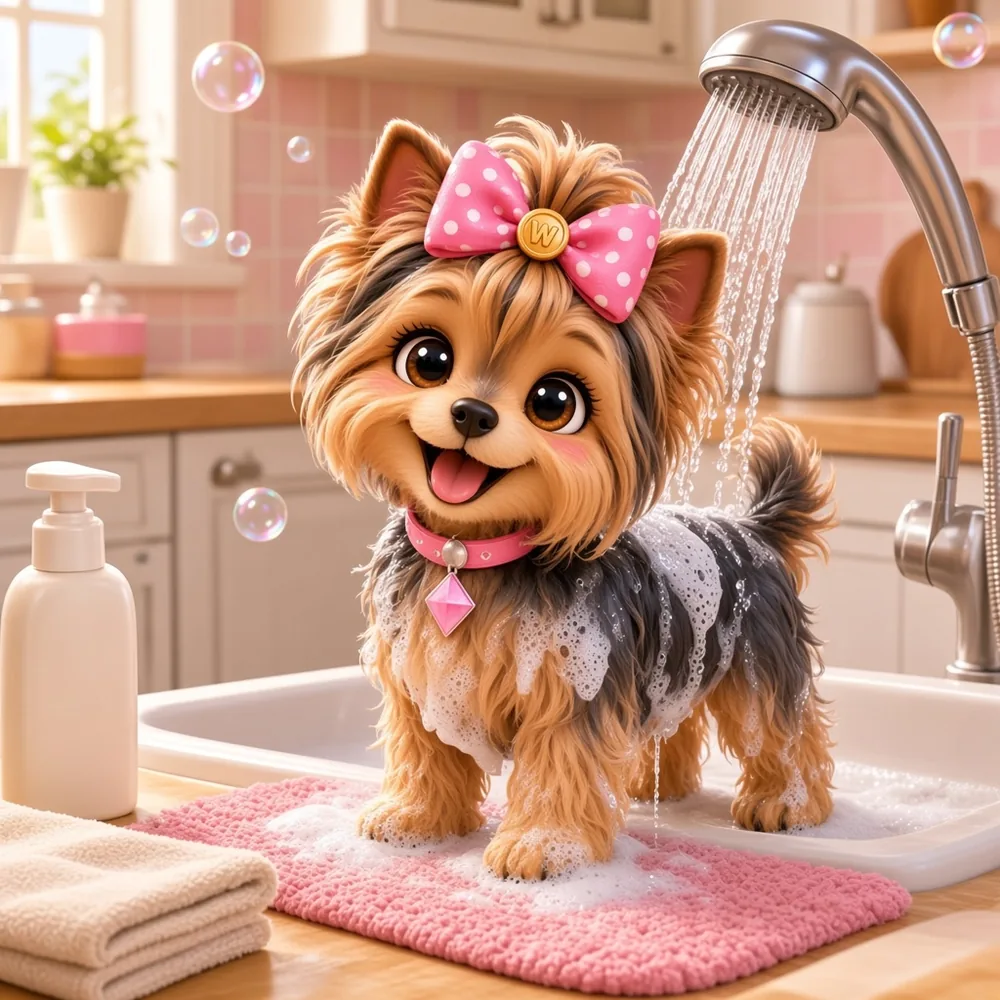
Always brush thoroughly before a bath. Water tightens existing tangles into solid mats that are far harder to remove afterwards.
- Put a non-slip mat in the sink; a wet Yorkie on a smooth basin is a slipping injury waiting to happen
- Use lukewarm water, cooler than you'd choose for yourself
- Wet her from the neck back, keeping water out of the ears and eyes
- Lather dog shampoo gently along the direction of the coat rather than scrubbing in circles, which creates tangles
- Rinse completely — leftover residue is one of the most common causes of itchy skin
- Apply conditioner, leave it a minute, rinse again
- Squeeze excess water out with your hands, then wrap her in a towel rather than rubbing
- Dry on the lowest heat setting while brushing through with the slicker, holding the dryer well back
Never let a Yorkie air-dry fully. A damp coat mats as it dries, and small dogs lose body heat quickly.
Step 3: Trimming the Areas That Matter
You don't need to attempt a full haircut to keep her comfortable. Four areas do most of the work:
- Around the eyes — the biggest welfare issue. Long hair scratches the cornea and causes tear staining. Use blunt scissors, point them away from the eye, and trim only what's falling into it
- Paw pads — trim the hair growing between the pads level with the pad surface, or she'll slip on hard floors
- Sanitary area — a short trim around the rear keeps her clean
- Ear tips — Yorkies traditionally have the top third of the ear shaved, but simply keeping the tips tidy is enough
If you want a full puppy cut, that's a reasonable thing to leave to a groomer, at least until you've watched it done a few times.
Step 4: Nails, Ears and Teeth
Nails need trimming every two to three weeks. Cut small amounts at a time and stop well short of the pink quick visible in light nails. On black nails, take very thin slices and stop as soon as you see a grey oval appear. Keep styptic powder nearby in case you go too far.
Ears should be checked weekly and wiped with a vet-approved cleaner on cotton wool — never a cotton bud pushed inside. Redness, a yeasty smell, or head shaking means a vet visit.
Teeth are the most important and most neglected part of Yorkie grooming. The breed is highly prone to periodontal disease, and daily brushing with dog toothpaste is the only thing that reliably prevents it. Never use human toothpaste; the fluoride and sometimes xylitol are harmful.
Step 5: Tying a Topknot
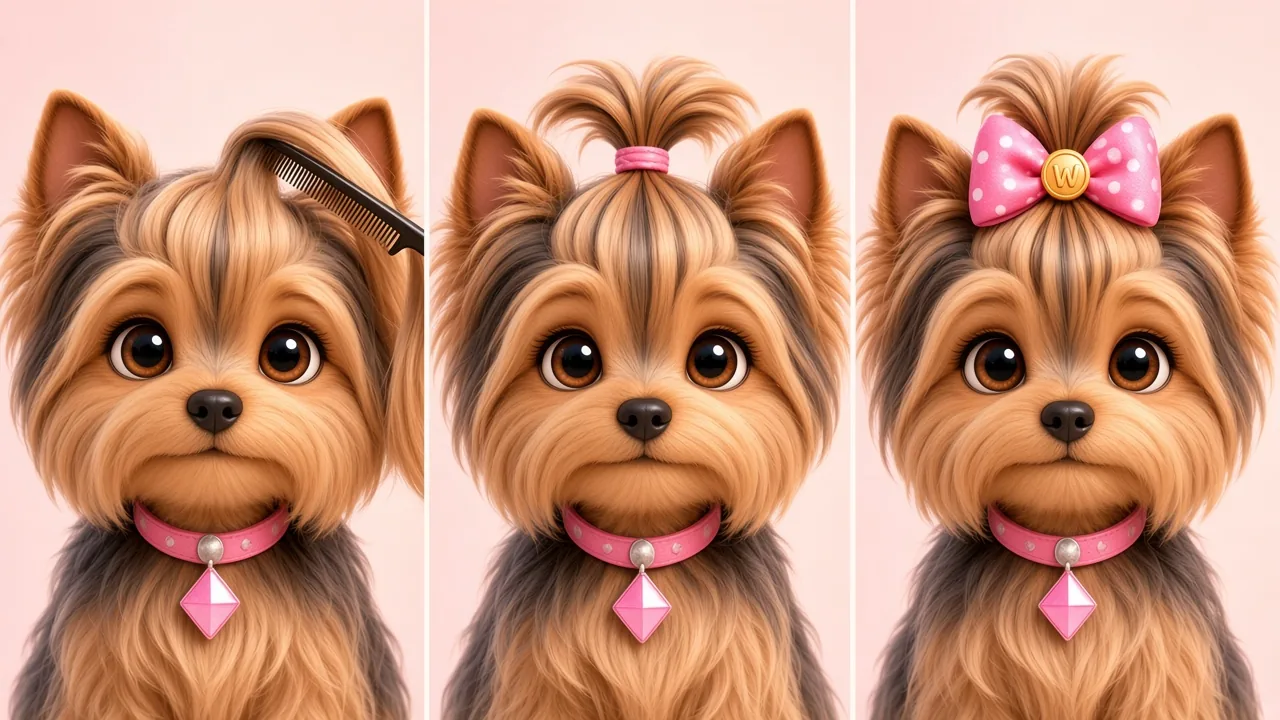
A topknot isn't only decorative — it keeps hair out of her eyes, which protects the cornea.
- Part a section from the outer corner of one eye, back to the front edge of the ear, across to the other eye. That triangle is your topknot
- Comb it upward gently, holding the base so you aren't pulling at the skin
- Secure with a tiny clear elastic, wrapped loosely — two turns, not three. You should be able to slide a fingertip underneath
- Add a bow over the elastic if you want
- Take it out every evening so the hair isn't under constant tension
Too tight is the thing to watch for. If she paws at her head or squints, loosen it immediately. Constant tension in the same spot can cause hair loss and genuine discomfort.
Making Grooming Something She Tolerates
The dog's comfort matters. Short, reward-based handling practice and help from a groomer or vet can make care more manageable.
- Keep early sessions very short, two or three minutes
- Groom at the same time of day so it becomes routine
- Give a treat during, not only after, so the brushing itself predicts good things
- Stop before she gets restless rather than after
- Handle her paws and muzzle daily outside of grooming, so being touched there isn't unusual
- Never groom when you're in a hurry or frustrated; she reads it immediately
If she's already fearful, go back to simply touching her with the brush and rewarding that, then build up. Rushing a nervous dog sets you back weeks.
For small-breed treats to use as rewards, see human foods Yorkies can safely eat — plain chicken and carrot work better than most commercial options.
Frequently Asked Questions (FAQ)
How often should I bathe my Yorkie?
Every two to four weeks. More often than weekly strips the natural oils and causes dry, itchy skin.
Can I use human shampoo on my Yorkie?
No. Human shampoo has a different pH and will irritate her skin. Even baby shampoo isn't a good substitute.
How do I get mats out of a Yorkie's coat?
Hold the hair at the base so you're not pulling the skin, then work the mat apart from its outer edge with your fingers and a comb tip. Mats tight against the skin should be cut out instead.
Should I keep my Yorkie in a long coat or a puppy cut?
A puppy cut is far more practical and much kinder if you can't commit to daily brushing. The long show coat needs serious daily maintenance.
When should my Yorkie's first groom be?
Around four months, mainly so she gets used to the experience while she's still adaptable.
Why does my Yorkie have brown stains under her eyes?
Tear staining, usually from hair irritating the eye or blocked tear ducts. Trim the hair around the eyes and have your vet check the ducts if it persists. There is a full guide on Yorkie tear stains.
Disclaimer: This article is for informational purposes only and does not replace professional veterinary or grooming advice. Consult your vet if your Yorkie shows signs of skin irritation, ear infection, or eye problems.