
How to Teach Kids to Greet a Yorkie Safely
7 min read
Category Life with Pets
Tags dogs yorkies kids-and-dogs
A Yorkie is tiny, but they are not a toy, and they are not a dog who should be greeted like a stuffed animal. The safest dog-child interactions are calm, predictable, and guided by adults. If children learn a few simple rules early, the dog is far less likely to feel trapped, overwhelmed, or cornered.
The goal is not to make the dog “like kids.” The goal is to help children understand that dogs need consent, space, and a chance to opt out.
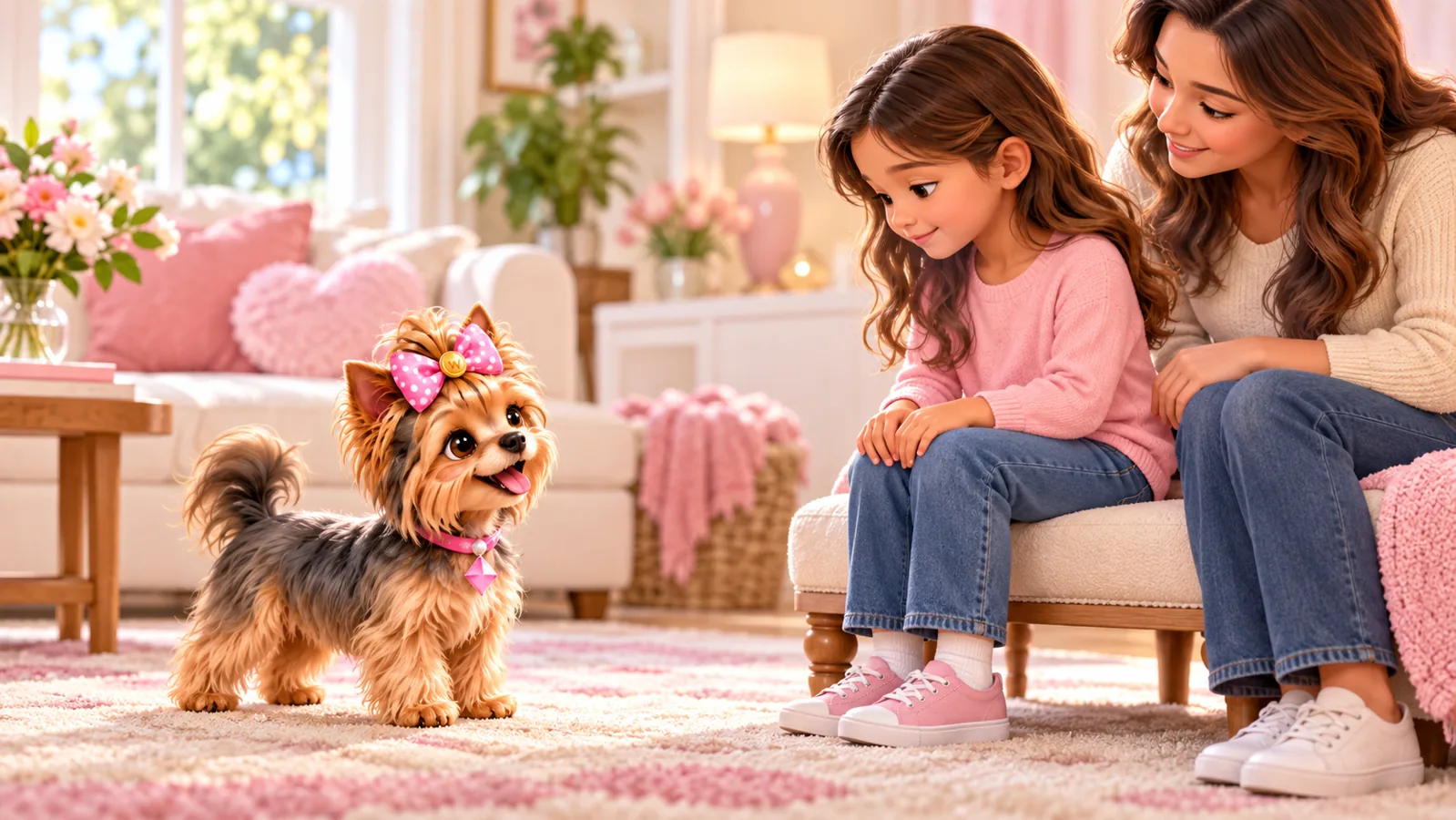
Table of Contents
Start With the Basics: Ask Before Touching
Children should be taught to ask before they approach a dog. A quick, calm question like “Can I say hello to Wendi?” is the start of good manners. If the dog is resting, eating, sleeping, chewing, or tucked into a crate, leave them alone. An adult’s permission does not override the dog’s need for space.
This matters because dogs often feel cornered when a child reaches in too quickly. A Yorkie may not be aggressive in the moment, but a dog who is suddenly approached by a face, a hand, and a lot of excitement may start to freeze, turn away, or stiffen.
Teach Children to Sit Down First
One useful habit for a familiar, relaxed dog is to sit calmly on a low seat before saying hello. An adult should stay close enough to intervene and watch throughout. Never leave a young child alone with a dog; use a secure barrier whenever you cannot actively supervise.
A child can turn slightly sideways and keep their hands still while the dog decides whether to approach. Keep faces apart and leave the dog a clear route away. Sitting close to an unfamiliar or worried dog is not a safe shortcut; sometimes the right greeting is no greeting at all.
Adults should model it themselves, especially with guests, visiting children, or new family members. A calm, low posture is a better message than a big smile and a fast hand reaching out.
One Gentle Pet, Then Pause
Let the dog approach while the child keeps their hands still; there is no need to put a hand toward the dog’s face. If a familiar dog chooses to come close and stays relaxed, an adult can guide one or two gentle strokes on the shoulder or side, away from the face.
The important lesson is to stop and watch the dog. If the dog steps back, turns away, stiffens, licks their lips, yawns, or moves out of reach, the child should stop immediately. A dog who says no is not being rude. The child is learning that permission is part of the interaction.
This is where body language becomes practical. If you want to teach this really well, read how to read dog body language with the child and talk about what “calm” looks like.
Keep Faces Apart and Skip Hugs
Children should be taught never to put their face near a dog’s face, especially during greetings. A face-to-face hug is one of the most common ways a dog ends up feeling trapped. Dogs do not always “like it” when someone leans in, even if the child means well.
The same goes for hugging. A dog may tolerate being close for a moment, but tight holding is not a polite way to greet a small dog. Gentle, respectful contact is safer than a full-body cuddle.
No Picking Up, No Chasing, No Cornering
Young children should leave lifting a Yorkie to an adult. Small dogs can be injured by a fall, a startled jump, or being grabbed unexpectedly. Even if a dog is friendly, the child still needs to understand that a Yorkie is not a handbag-sized toy.
Chasing is another lesson to ban. A dog who is followed, cornered, or pursued becomes more stressed and less likely to be approachable. Children need a clear rule: if the dog walks away, let the dog go.
Teach the “Dog Needs a Break” Rule
One of the best things children can learn is that a dog is allowed to leave. If the dog steps away, moves behind a chair, goes to their bed, or refuses more attention, the child should stop and let them rest.
This rule is especially important around meals, sleep, toys, or a dog’s resting place. A Yorkie who is chewing, sleeping, or settling down is not being unfriendly; they are simply having a boundary.
If the dog growls, stop and calmly separate them. Do not punish a growl: it is a warning that the dog needs space. Repeated fear, guarding, snapping, or growling around children needs advice from your vet and a qualified behaviour professional before greetings resume.
Build the Habit Early
If you teach kids to greet dogs respectfully when they are young, it becomes normal rather than a lecture later. Practise with a calm dog, keep the interaction short, and reward the child when they stop when the dog says no.
With a Yorkie, calm beats excitement every time. A child who learns to move slowly, pay attention, and respect boundaries is much less likely to create a stressful moment for the dog.
Final Thought
Dogs do not need children to be perfect. They need adults to guide the interaction and children to learn that dogs have feelings, limits, and a right to personal space. Teach calm greetings, and you are teaching both safety and kindness.
If your household includes a Yorkie and little ones, our guide on Are Yorkies good with kids is a good companion read for the bigger picture.