
Yorkie and Baby: How to Set Up a Calm Home
6 min read
Category Life with Pets
Tags dogs yorkies family-life
Welcoming a baby into a home with a Yorkie is exciting, but it is also a big change for the dog. Even a very social Yorkie may need time to adjust to new sounds, routines, and a household that suddenly feels noisier, busier, and far less predictable.
Start with practical safeguards: keep the dog’s routines steady, give both dog and baby protected spaces, and never leave them alone together. Being in the same room while distracted is not active supervision; use secure physical separation whenever your attention is elsewhere.
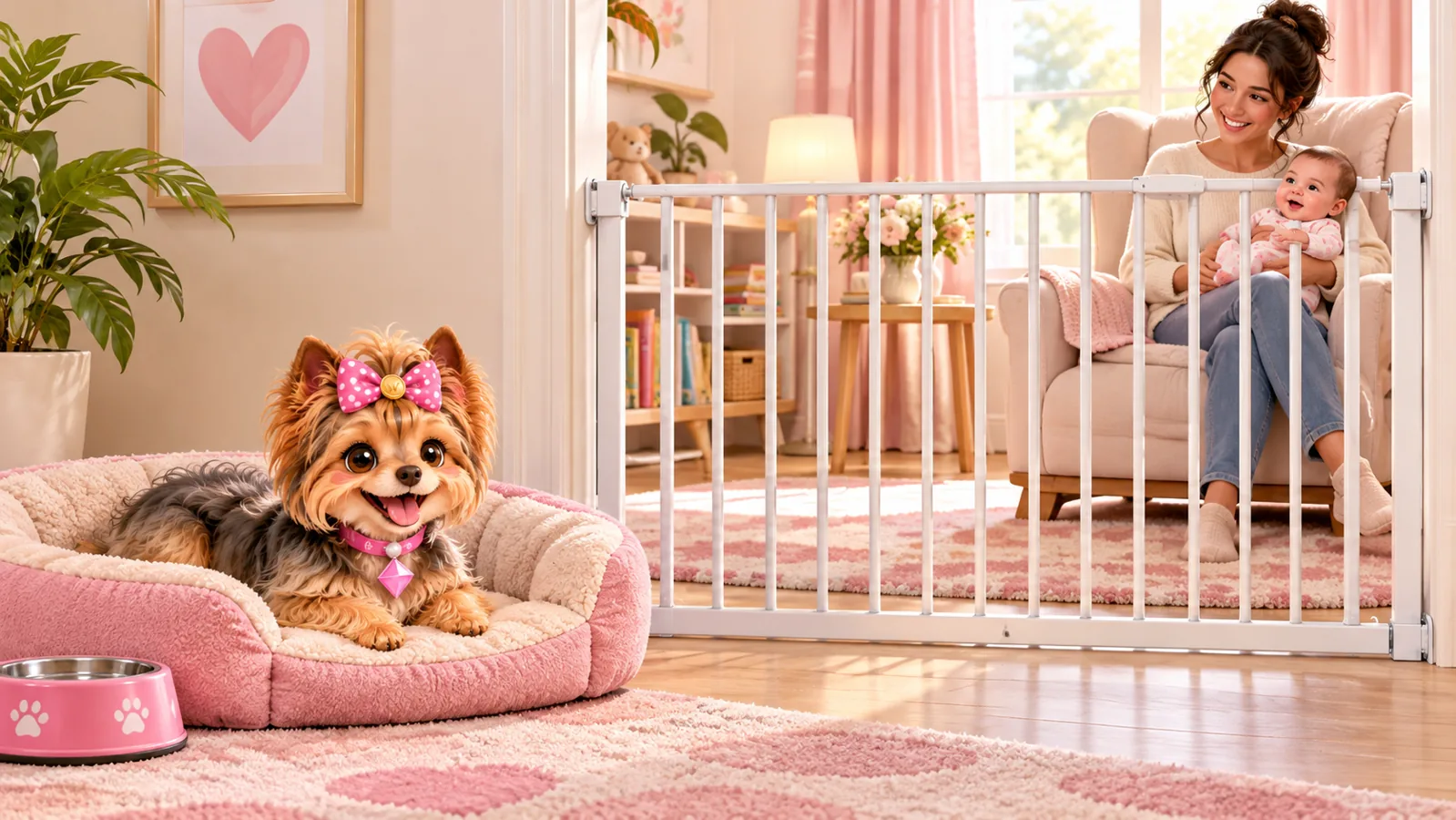
Table of Contents
Create a Dog Zone Before the Baby Arrives
If possible, set up a dog-only space before the baby comes home. That can be a crate, a gated corner, a bed in a quiet room, or a designated spot where the dog can rest without being approached at every moment.
This is not about isolating the dog. It is about giving them a place where they can recover from chaos. A Yorkie often does better when they know exactly where to retreat when the house gets loud, busy, or full of visitors.
A dog-only zone also helps with boundaries. If the dog is sleeping, chewing, or resting, the baby should not be encouraged to approach. Adults should be the ones making that call.
Keep Feeding and Rest Separate
Meals and sleep are two situations where dogs are especially vulnerable to being disturbed. A baby’s crib, bassinet, or play mat should not be right next to the dog’s bed or feeding area if you can avoid it.
Keep the dog’s food, water, and resting spot in a calm area away from the baby’s main activity. This is especially helpful if the dog is sensitive to noise or easily startled by movement and sudden sounds.
If the dog is eating or chewing, keep the baby physically separated. Use a securely fitted gate or separate room and check that a small Yorkie cannot slip through or under the barrier. A bed on its own is not separation. Keep the dog out of the baby’s crib or bassinet.
Introduce the Baby Slowly
The best introduction is not dramatic. It is gradual and calm.
Let the dog smell baby items before the baby is in the room. Give the dog time to observe baby sounds from a distance. Begin at a comfortable distance, ideally with a secure gate between them and a second adult available. Reward calm behaviour and allow the dog to leave. Direct contact is not a milestone you need to achieve, and the dog should never lick or put their face near the baby’s face.
There is no fixed adjustment timeline. Let the dog’s behaviour set the pace over days, weeks, or longer, and seek help rather than waiting for fear to disappear.
Teach the Household the Same Rules
A baby and a dog can live happily together when the adults are consistent. Some of the most important household rules are simple:
- never leave the dog alone with the baby
- do not let the baby grab fur, ears, tail, or paws
- keep the dog’s space quiet and respectful
- do not reward rough handling by laughing it off
- stop interactions early if either dog or baby seems uncomfortable
The adults need to be the “traffic controllers.” If you have guests, older children, or a lot of family around, you need a clear system: the dog can leave, the baby can rest, and no one is allowed to crowd the dog while they are settled.
Use Routines to Reduce Stress
A new baby changes the rhythm of the home. Dogs do best when the routine stays predictable even while excitement is high. Keep feeding times, walks, rest times, and quiet moments as steady as you can.
That consistency helps the dog feel safe, and it also makes it easier for the baby’s family to see what the dog needs. A calm dog is a dog that has been given enough time, enough rest, and enough space to feel settled.
Watch for Early Signs of Stress
Dogs often communicate discomfort before a real problem happens. Look for signs such as:
- turning away from the baby
- freezing or stiffening
- hiding behind furniture
- lip licking or yawning repeatedly
- growling or snapping when approached
- trembling while being handled
If you notice those signs, stop the interaction and calmly separate them. Never punish a growl. Growling, snapping, guarding, persistent fear, or intense fixation on the baby calls for your vet and a qualified behaviour professional; do not continue introductions while waiting for advice.
Final Thought
A Yorkie can absolutely live with a baby when the home is set up with calm, clear boundaries and adult supervision. The success of the relationship is less about whether the dog is “good with babies” and more about whether the household knows how to protect both the baby and the dog.
For more on family dynamics and dog safety, read Are Yorkies good with kids and how to teach kids to greet a Yorkie safely.