
Cat Carrier Training Before Vet Day: Make the Box Less Suspicious
5 min read
Category Training & Behaviour
If the carrier only appears five minutes before a vet appointment, your cat has a very reasonable theory about it. The box predicts a hurried trip.
Carrier training changes the everyday pattern before you need transport. Start when there is no deadline, and let comfort—not a calendar—decide the next step.
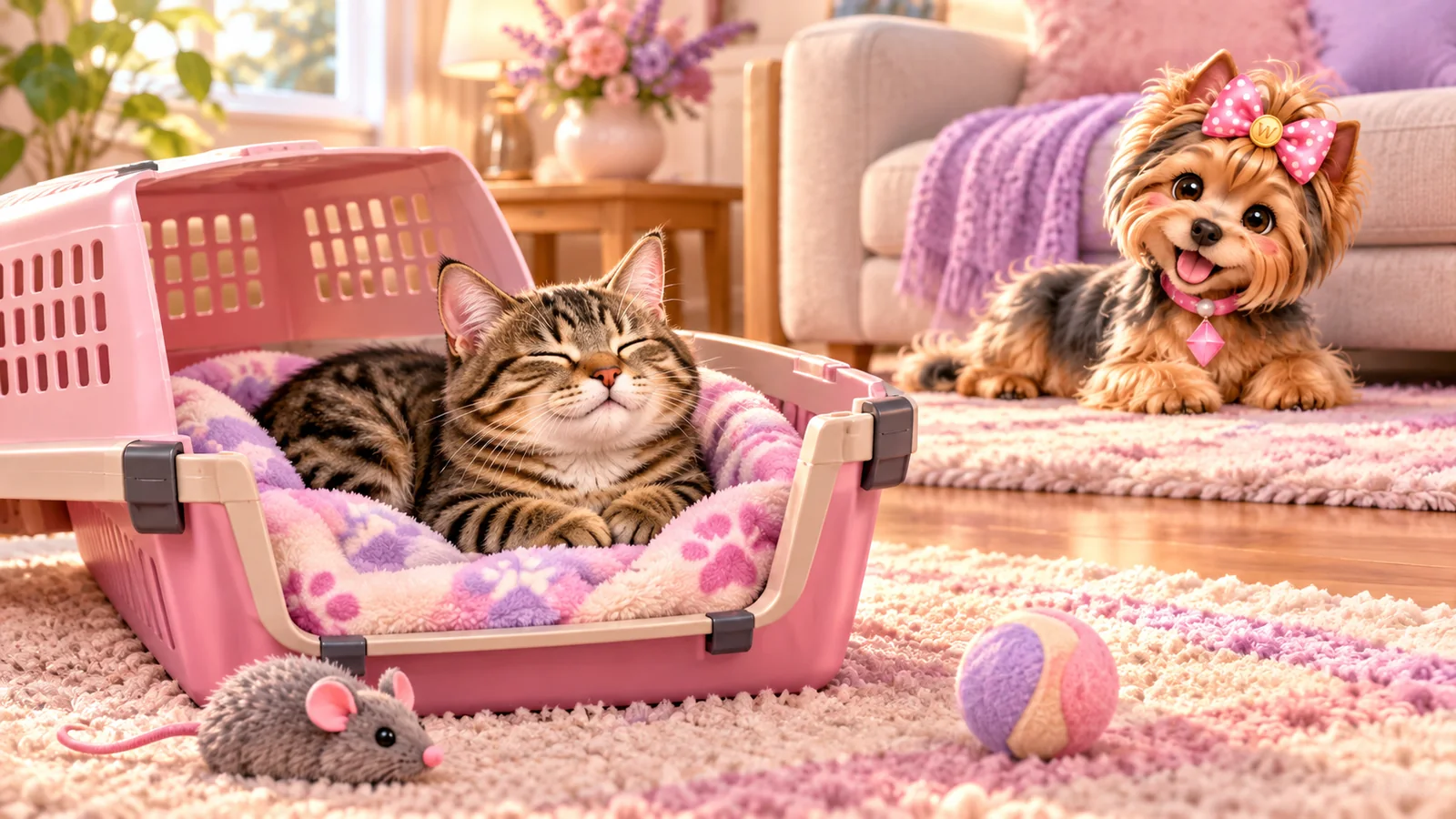
Table of Contents
Choose equipment you can use calmly
Look for a secure, sturdy carrier with good ventilation and enough room for the cat to lie comfortably and change position. A removable top can make examination and handling easier; check fastenings work reliably.
Inspect the base, door and handle before every journey. A cat who enters willingly still needs safe equipment. Use one carrier per cat, even if they usually choose to sleep together.
Cats Protection's carrier guide covers both choosing the carrier and introducing it gradually.
Start with the open carrier in the room
Place it in a quiet familiar area with the door secured open or safely removed as appropriate. Add familiar bedding, keeping the entrance clear. Do not put it beside a washing machine or in a route where a dog can block access.
For a worried cat, reward calm investigation from a distance. Food can begin near the carrier rather than deep inside it. Let the cat approach and leave without being followed.
Wendi's role is to give the cat space. She does not need to inspect the doorway at the same time.
Reward voluntary entry
As the cat becomes comfortable, offer a little suitable food or a favourite activity closer to, then inside, the carrier. Keep ordinary food and water access available; do not withhold meals to force participation.
Look for relaxed choices: approaching again, turning inside or resting. A cat rushing in to grab food and sprinting away may need an easier step.
Keep sessions short enough to finish before discomfort. Some cats progress quickly; others need many calm repetitions.
Add the door and movement separately
When the cat is comfortable inside, introduce tiny door movements, then brief closure, reopening before worry develops. Do not rush to lifting simply because the door has shut.
Next practise gentle, very brief lifting with the carrier level and supported. Then try a few steps in a quiet room. Reward and pause between stages. Stop and make the next attempt easier if the cat becomes tense, vocalises in distress or scrambles.
The RSPCA's carrier-training guidance also emphasises gradual rewarding practice.
Keep journey safety separate from training success
In the car, secure the carrier according to suitable vehicle and carrier guidance, keep ventilation clear and never transport the cat loose. Do not open the carrier in an unsecured outdoor space.
Leave the carrier accessible between trips, rather than immediately returning it to storage. It can become ordinary furniture with an occasional transport job.
If the appointment is tomorrow
Call the veterinary practice for a safe plan, especially if previous loading attempts have caused panic or injury. Ask about handling support and whether veterinary-prescribed medication is appropriate. Do not use human sedatives or improvised calming products.
Do not postpone urgent care to finish training. The long-term aim is less stress on future journeys; today's medical needs still come first.