
Walking Your Dog After Dark: Be Seen, Keep Space, Get Home Comfortably
4 min read
Category Life with Pets
The clocks have changed, and the afternoon walk now looks like an evening expedition. Wendi is prepared to be the brightest personality on the pavement. It helps if drivers can actually see her too.
An after-dark walk needs more than a glowing accessory. Route choice, lead handling and enough space from other people and dogs all help make the outing manageable.
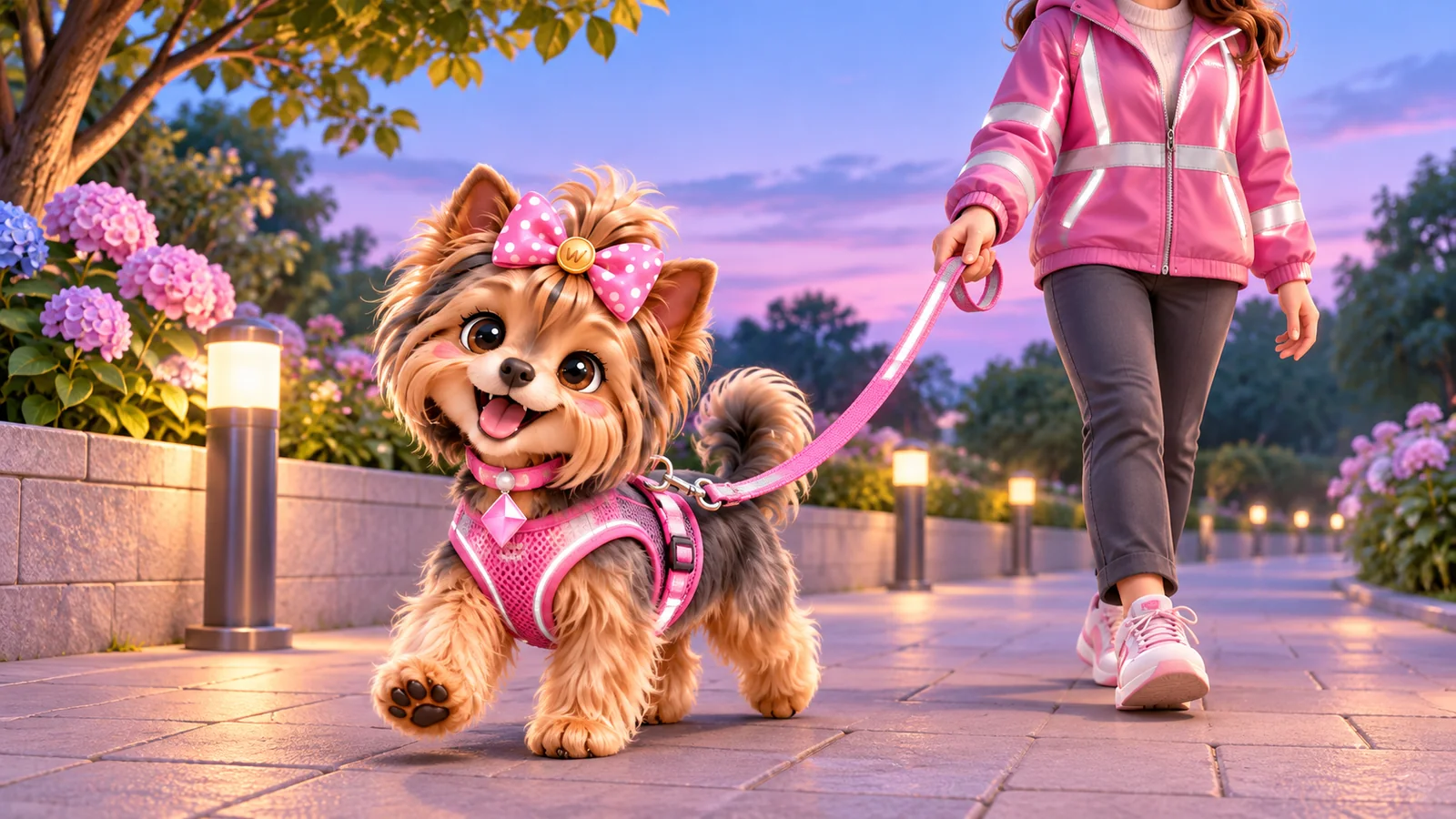
Table of Contents
Pick the route in daylight
Choose familiar, well-lit paths with sound footing and places to step aside. Notice narrow sections, poorly lit crossings and exits that become locked at dusk. Keep away from unlit water edges and isolated shortcuts you cannot inspect properly.
A shorter comfortable route can be better than completing a longer one in poor visibility. If fireworks are likely, use quieter daylight opportunities where possible and plan a brief safe toilet trip later. Our fireworks guide covers preparing at home.
Make both ends of the lead visible
Use suitable reflective or illuminated equipment for you and your dog, checking fit and comfort. Reflective material needs light falling on it; a light-up accessory needs a working battery. Neither gives permission to walk where a driver cannot stop safely.
Introduce new items indoors with rewards before the walk. Check clips, straps and the attachment point while your fingers are still warm. Secure small lights so they cannot become chewable loose parts.
The Dogs Trust cold-weather advice recommends visibility and gradual introductions to winter equipment.
Keep the lead arrangement easy to manage
Choose a length that allows comfortable movement without stretching across a shared path. A long line can become difficult to see and can trip pedestrians or tangle around obstacles. Save that training for an appropriate open setting.
Keep your hands free enough to manage the dog and crossings. Pause somewhere safe if you need your phone, rather than trying to read a message while negotiating another dog.
Wendi can inspect one lamppost thoroughly without needing the entire pavement reserved in her name.
Allow extra space at surprises
Dogs may respond differently when faces and movements are harder to see. Do not assume a dog who enjoys daytime greetings will welcome a sudden approach from the shadows.
Cross early where safe, step into a well-lit passing place or turn away before a narrow encounter. Watch for stiffening, scanning, freezing or attempts to retreat. Let your dog move away rather than holding them still for a greeting. Body-language basics can help.
Check the dog as well as the equipment
Cold tolerance varies with age, health, coat and conditions. Turn home if the dog becomes uncomfortable; consult your vet about individual limits where needed. Avoid frozen water and unknown spills.
Back home, check paws and gently clean off grit or road residue, then dry your dog comfortably. Suspected contact with or swallowing of antifreeze needs immediate veterinary advice. The RSPCA's winter guidance covers seasonal hazards.
A successful night walk is one where you can see, be seen and give your dog a comfortable way home. It does not need to be an adventure film.