
Slow Feeders and Puzzle Bowls for Dogs: Match the Challenge to the Dog
4 min read
Category Food & Nutrition
Tags dogs enrichment nutrition
Some dogs treat dinner like an urgent timed event and finish before the kettle has finished boiling. A slow feeder or food puzzle can stretch out a meal and add calm mental work—provided the design actually suits the dog eating from it.
The trickiest bowl on the shelf is not automatically the best one. Good feeding enrichment feels interesting and doable, not like an unsolvable exam before breakfast.
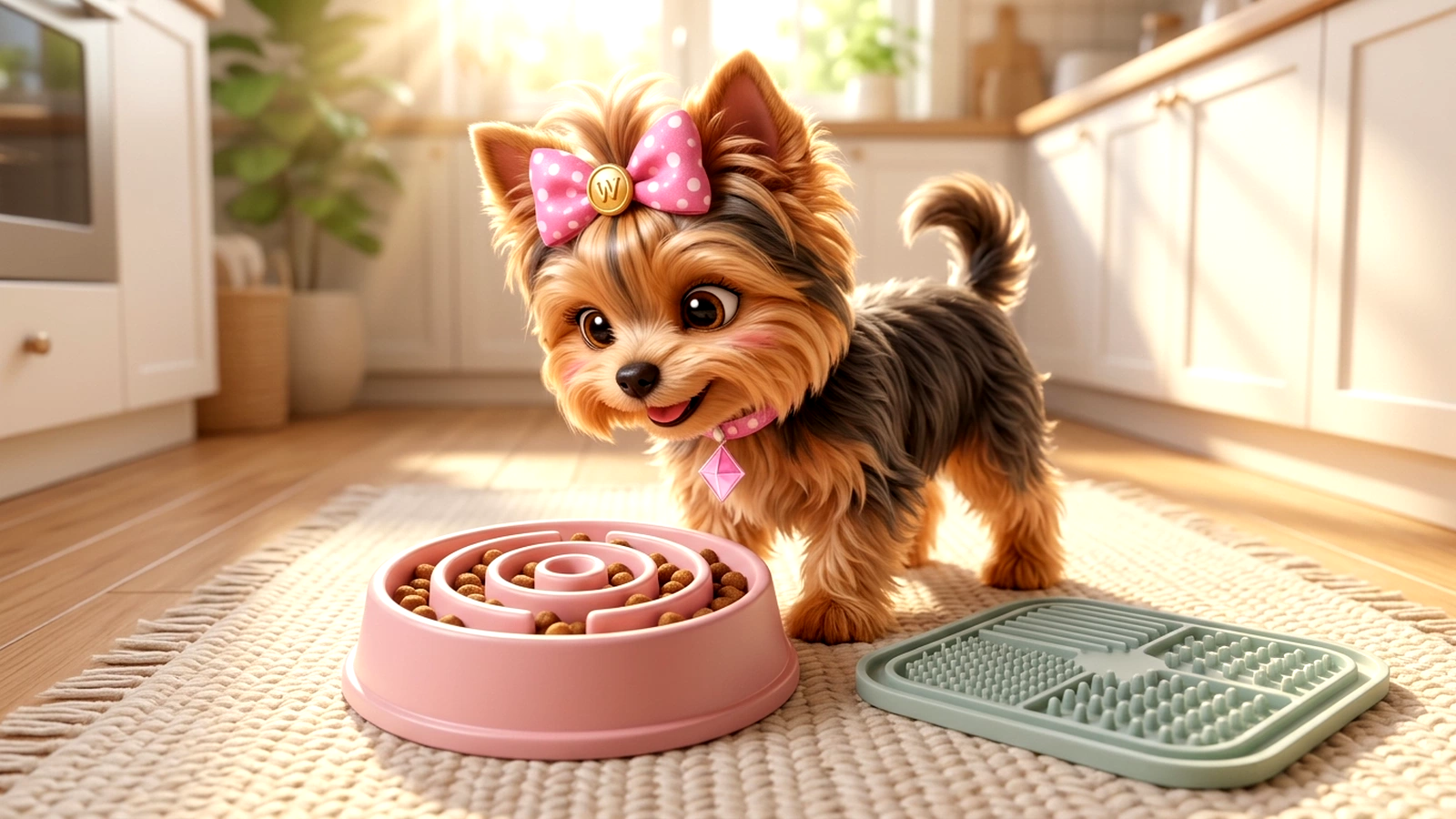
Table of Contents
Know what you are hoping to improve
Slow feeders can help dogs who gulp food rapidly, give busy minds a steady task on rainy mornings and turn part of a normal meal into sniffing or licking time. They are not a cure-all, though.
If a dog suddenly begins inhaling food frantically, guarding the bowl or vomiting after eating, ask your vet for advice before simply adding a harder dish. Sudden appetite changes deserve a health check first.
Match the shape to your dog's face
Snout length and jaw size matter more than colourful packaging. Deep, narrow ridges can frustrate flat-faced breeds or tiny dogs who cannot reach the bottom comfortably, while shallow grooves may barely slow down a determined large dog.
For small dogs like Yorkies, look for wider spacing, gentle silicone edges or a soft textured lick mat that suits wet food or soaked kibble without scraping delicate noses.
Wendi prefers a challenge that ends in actual kibble rather than a philosophical debate with a plastic maze.
Start easy so meals stay enjoyable
Introduce a new feeder when your dog is hungry enough to be curious, not frantic. Begin with a small portion spread loosely so early wins come quickly, and supervise the first several meals to make sure your dog does not chew the bowl or tip it over in frustration.
If your dog walks away, paws aggressively at the edges or starts barking at dinner, step down to an easier design—such as scattering kibble on a snuffle mat or clean towel. Our indoor sniffing games guide offers gentle alternatives, and Dogs Trust's enrichment activities cover varied food-based ideas.
Keep portions and hygiene simple
Food puzzles work best using your dog's measured daily meal rather than piling extra treats on top. Our dog feeding guide and Battersea's dog care basics cover keeping daily portions balanced.
Wash slow feeders and lick mats thoroughly after every meal, paying attention to tight corners where damp crumbs collect. Replace plastic or silicone feeders if teeth leave deep scratches that are hard to clean or loose edges that could be swallowed.
Mix up how meals arrive
Not every meal has to be a puzzle. Serving dinner in a plain bowl sometimes—especially when your dog is tired, unwell or unsettled—keeps eating relaxed.
When a slow feeder fits your dog's face, patience and appetite, it turns a thirty-second vanish into a calm, satisfying pause in the day.