
Rabbit Enrichment That Leaves Room to Hop: Five Useful Starting Points
5 min read
Category Play & Enrichment
Tags rabbits small-pets enrichment
A rabbit's home can contain an impressive number of toys and still offer very little to do. If every open patch is occupied by equipment, where does the rabbit actually run?
Useful enrichment supports ordinary rabbit behaviour: foraging, hiding, exploring, digging and spending time with compatible rabbit companions. You can start simply, while keeping enough uninterrupted space for movement.
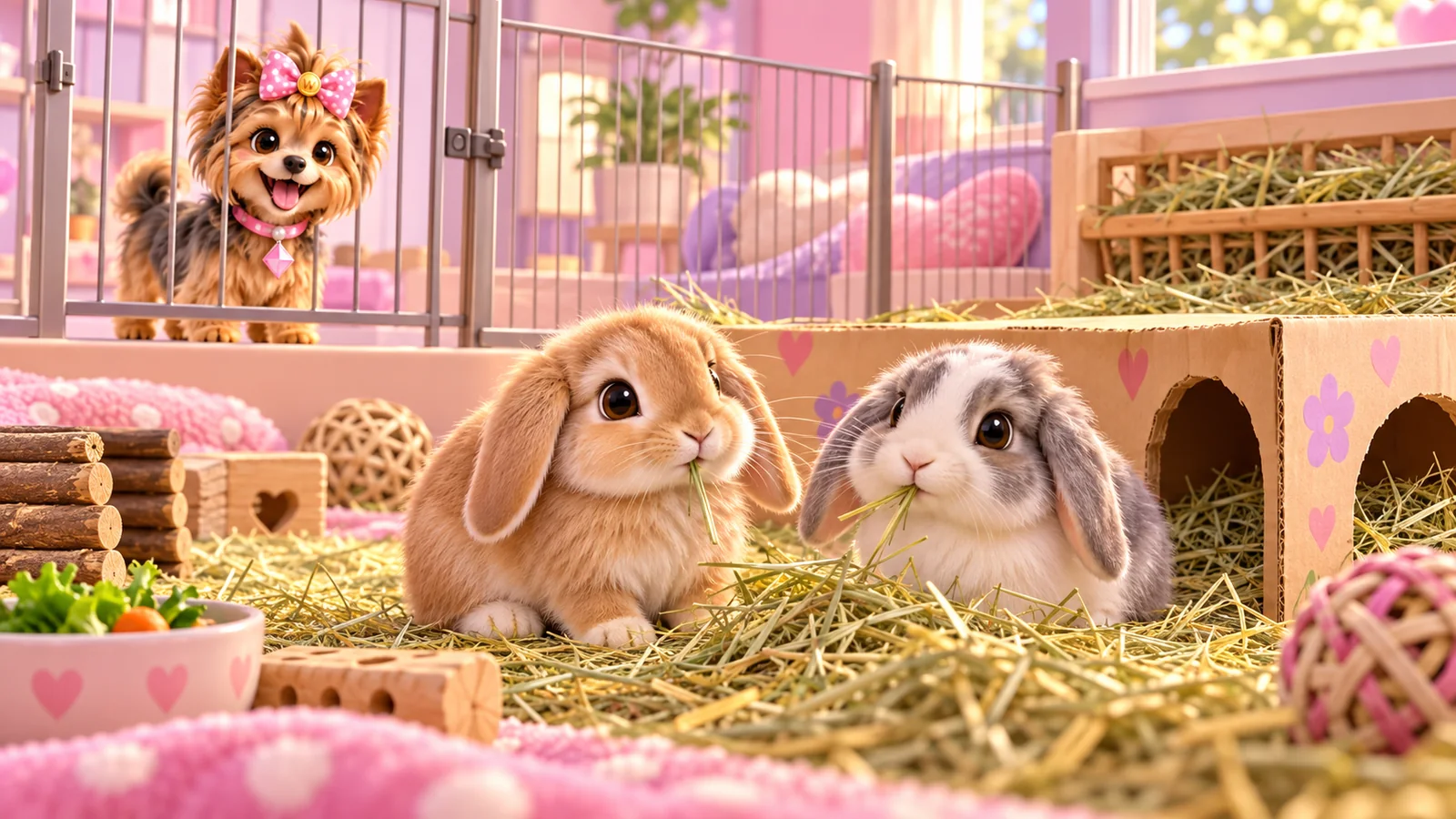
Table of Contents
1. Make hay part of the activity
Keep appropriate fresh hay available as a normal part of the diet. Offer some in more than one accessible location, then try a small amount in an open cardboard box so the rabbits can investigate while eating.
Do not pack hay so tightly into a holder that reaching it becomes difficult. Check openings cannot trap a head or limb. Food enrichment should add interest, not turn essential eating into an endurance test.
Keep any other foods within the rabbits' established, suitable diet. Sudden dietary experiments are not a necessary part of play.
2. Give hiding places an escape route
Try a sturdy cardboard box with two generous openings, removing tape, staples and other unsafe fittings. Check every entrance fits the actual rabbit, including the larger member of a pair.
Set it somewhere that does not block a route to food, water or the toilet area. Provide enough choices for companions to take a break from one another.
The RSPCA's rabbit enrichment guidance emphasises both opportunities to explore and the ability to retreat.
3. Offer a digging opportunity
A broad, stable tray containing suitable rabbit-safe digging material can provide an outlet for digging. Ask a rabbit-experienced rescue or vet which materials suit your setup, especially if your rabbit eats non-food items.
Introduce it under supervision. Watch whether it adds interest or anxiety, and remove anything being swallowed in unsafe quantities. Protect wires, furniture edges and flooring throughout the accessible area; a digging tray does not make the rest of the room rabbit-proof.
4. Keep an open lane
Look at the enclosure from floor level. Can both rabbits hop, turn, stretch out and move past each other? Are there routes that do not end in a corner?
Rotate a few suitable items instead of adding everything at once. Keep familiar resting places and the daily routine predictable. A new object should not require rebuilding the entire world.
Wendi's interior-design instinct is “more pink cushions”. The rabbits would prefer the clear running route.
5. Observe before making it harder
Sit quietly outside the space and notice what each rabbit chooses. One may investigate a tunnel while the other prefers the hay box. There is no obligation to complete every activity.
Keep dogs and cats securely separated from rabbit spaces. A rabbit who stays still near a predator may be frightened, not enjoying a meeting. Human interaction should also allow retreat; avoid lifting rabbits simply to place them on equipment.
Know when it is a health question
A rabbit who stops eating, produces fewer or no droppings, seems painful or becomes unusually inactive needs urgent veterinary advice. Do not attempt to fix those signs with a more exciting toy.
Our rabbit ownership overview covers the bigger commitment. Enrichment works best as part of suitable housing, compatible company, diet and veterinary care—not as a replacement for them.