
Hamsters Are Not Daytime Desk Pets: Respect the Night Shift
4 min read
Category Life with Pets
Tags hamsters small-pets care
A hamster looks like the perfect tiny colleague until you discover their preferred office hours. Your lunch break may be the middle of their sleep.
These animals are usually active in the evening and at night. Good care works with that pattern, rather than repeatedly waking them so they can fit a human's daytime entertainment schedule.
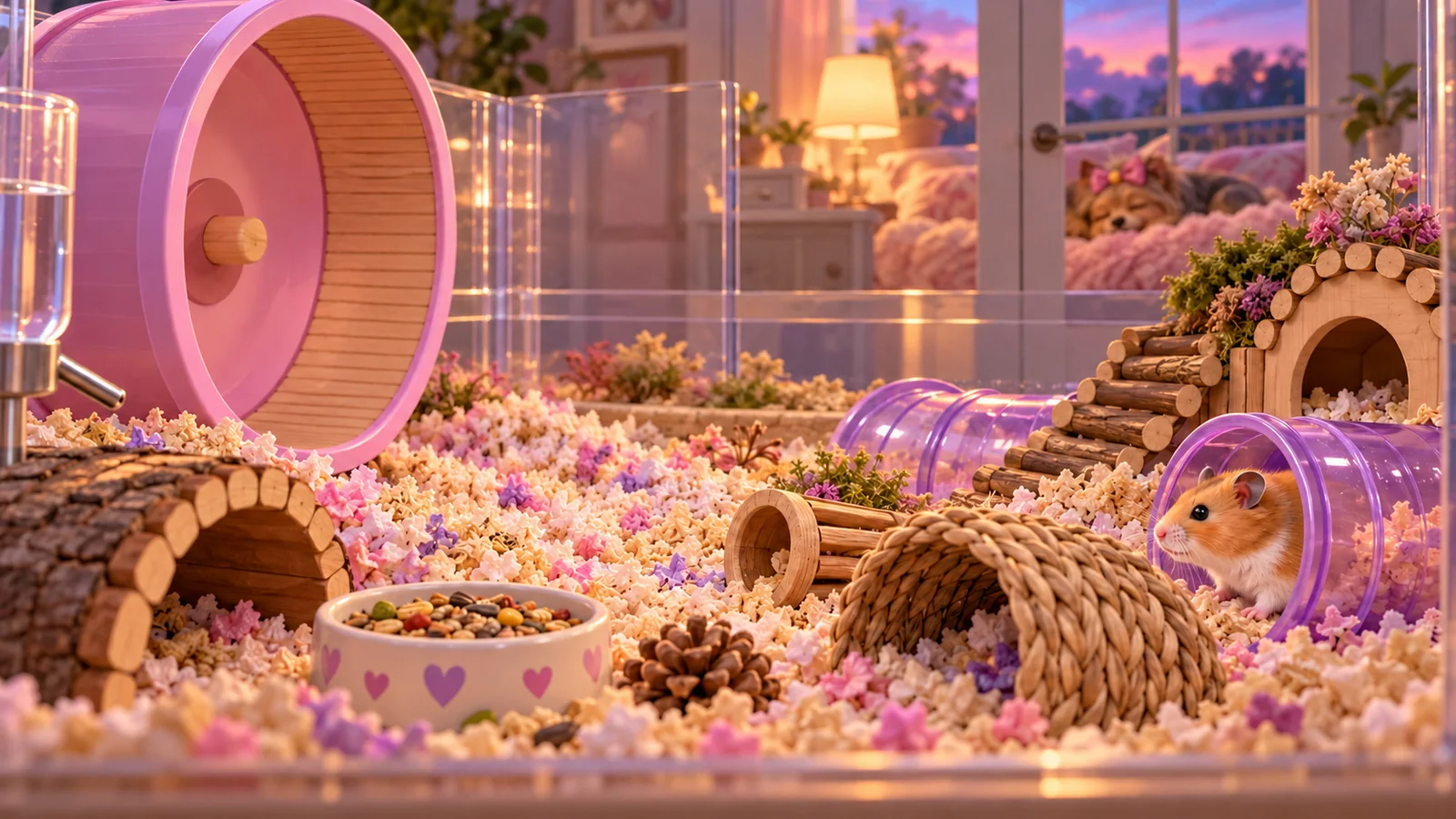
Table of Contents
Let sleeping be an ordinary part of care
Place the habitat in a calm, suitable room with predictable light and dark periods. Avoid loud speakers, direct sunlight, draughts and constant daytime disturbance.
Do not wake a sleeping hamster for handling, photographs or a visitor. If children are involved, explain that watching an empty-looking habitat during the day can be normal. An adult still needs to take responsibility for care and health checks.
The RSPCA's hamster behaviour advice stresses undisturbed daytime sleep and opportunities for activity at night.
Give the night shift somewhere useful to work
A suitable enclosure needs ample continuous floor space, deep appropriate bedding for burrowing, hides and opportunities to forage and chew. A collection of narrow tubes is not a substitute for a usable habitat.
Choose a large, solid-surface wheel that allows comfortable movement without the back arching; get species-appropriate guidance from a knowledgeable rescue or exotics vet. Avoid exercise balls, which restrict choice and sensory exploration and can create injury risks.
Check water access and equipment every day. Put the habitat somewhere the hamster's normal night activity can continue without someone covering it or removing the wheel to sleep.
One hamster is not the same problem as one guinea pig
Syrian hamsters must live alone. Do not add a companion because you have read that another small species needs company, and do not assume dwarf hamsters should share a home.
Ask a knowledgeable rescue or exotics vet for species-specific housing guidance. The Animal and Veterinary Service's care advice supports individual housing and opportunities for natural behaviour.
Wendi will not be applying as a roommate. Keep dogs and cats securely away from the hamster's habitat and any out-of-enclosure activity.
Build handling from willing contact
When the hamster is awake and alert, sit quietly nearby and let them become familiar with you. Offer appropriate small food rewards within their normal diet and allow approach rather than grabbing from above.
If handling is needed, use a gentle supported method close to a safe surface so a jump cannot become a fall. Keep sessions brief and stop if the hamster tries to escape or appears frightened. Not every animal will enjoy being held.
An adult should supervise children and make sure interactions happen at appropriate times, even when that means no handling that day.
Keep observation separate from disturbance
Learn the individual's normal evening activity, eating and toileting. Check discreetly each day that food, water and the habitat are in order without repeatedly dismantling the nest.
A sudden change in activity, appetite, breathing or droppings needs prompt advice from a vet experienced with small mammals. Do not assume an unusually unresponsive or cold hamster is simply sleeping; seek urgent help rather than attempting improvised treatment.
A hamster can be fascinating company when allowed to live on hamster terms. Sometimes being a good owner means saying goodnight just as your pet clocks in.