
Can Greyhounds Live in Flats? Look Beyond the Sofa Reputation
4 min read
Category Life with Pets
A greyhound folded onto a bed can look like a convincing argument for apartment living. Then they stand up, unfold all those legs, and remind you to check the floor plan.
Some greyhounds can thrive in a flat, but a reputation for lounging is not a housing assessment. The question is whether you can meet this particular dog's needs throughout an ordinary week, including the inconvenient bits.
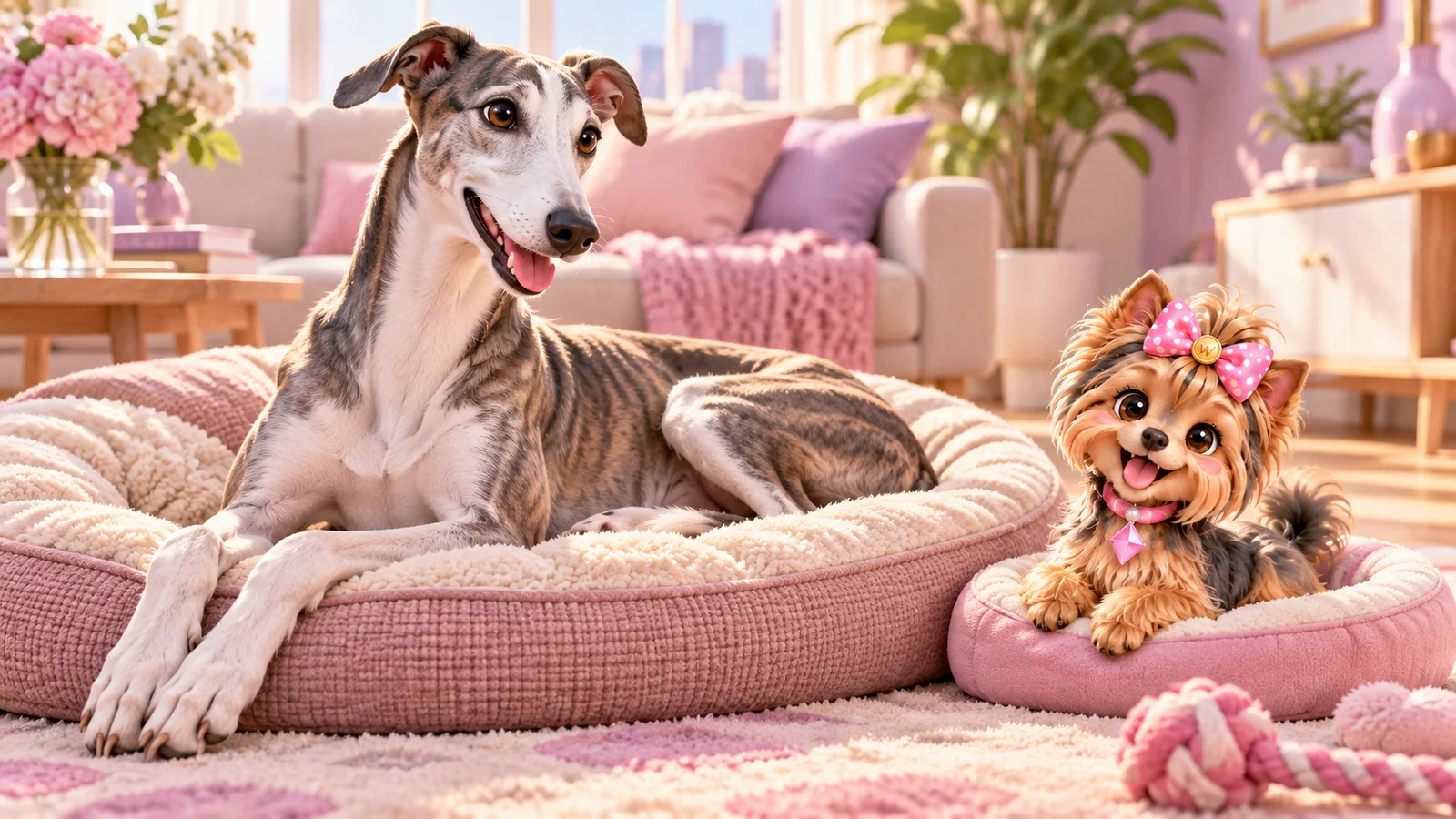
Table of Contents
Start with the route to the pavement
Walk from the proposed sleeping area to the nearest suitable toilet spot. Count the doors, stairs and busy shared spaces. Picture doing that journey in the rain, at night or with an upset stomach—not just on moving-in day.
Ask the rehoming organisation whether the dog has experience with stairs, lifts, slippery floors and communal entrances. Arrange practical support if learning is needed. Also think ahead to illness or ageing: could you safely manage access if the dog could no longer use the stairs?
Check your tenancy or building rules before making plans. “The dog is quiet” does not replace permission to keep them.
Assess life at home, not just floor space
Make room for a bed large enough to stretch out on, clear walking routes and a quiet resting area. A narrow strip between furniture is not useful space simply because it appears on a floor plan.
Think about the noises through shared walls, lift doors and people passing the entrance. Ask what the dog does when someone knocks and how they respond to being alone. You need an individual plan for gradually building comfortable alone time, plus care arrangements when your schedule exceeds what the dog can manage.
Our separation-anxiety guide explains why distress is a support need rather than something to ignore.
A flat still needs an outdoor plan
Daily exercise and opportunities to sniff, explore and rest all need a place in the schedule. Discuss appropriate activity with the rescue and vet rather than assuming every greyhound wants the same mileage.
For running, use an appropriately secure space and follow the dog's rehoming guidance. A nearby open park is not automatically a safe off-lead area. Chasing behaviour, wildlife, traffic and unfamiliar dogs all matter.
The Greyhound Trust's homing process is a useful starting point for discussing your actual home and routine.
Take other animals seriously
Do not assume a quiet greyhound will be safe with cats, small dogs or small pets. Ask specifically about assessment, history and safe management. A brief calm meeting cannot guarantee future compatibility.
Wendi would like it recorded that small dogs require their own beds, space and careful introductions, however elegant the newcomer may be. See introducing a new dog for general principles, alongside the rescue's individual advice.
Questions worth taking to a meeting
- What is known about this dog's experience of home life and stairs?
- What alone time have they actually managed, and in what setting?
- How do they respond to noise, visitors and animals outside?
- What ongoing medical or behaviour support is needed?
- What follow-up help can the organisation provide?
A flat can be the right home for the right greyhound. A detached house can be the wrong one. The match comes from the whole day you can offer, rather than the size of the sofa.