
Why Cats Love Cardboard Boxes (And How to Offer a Better One)
4 min read
Category Play & Enrichment
Tags cats home enrichment
The expensive bed has arrived. The cat has selected the packaging. It is a familiar review of human purchasing decisions, and it does not necessarily mean you bought a bad bed.
A cardboard box can offer privacy, a place to rest and an interesting object to investigate. Rather than arguing with the review, you can make the chosen accommodation safer and more useful.
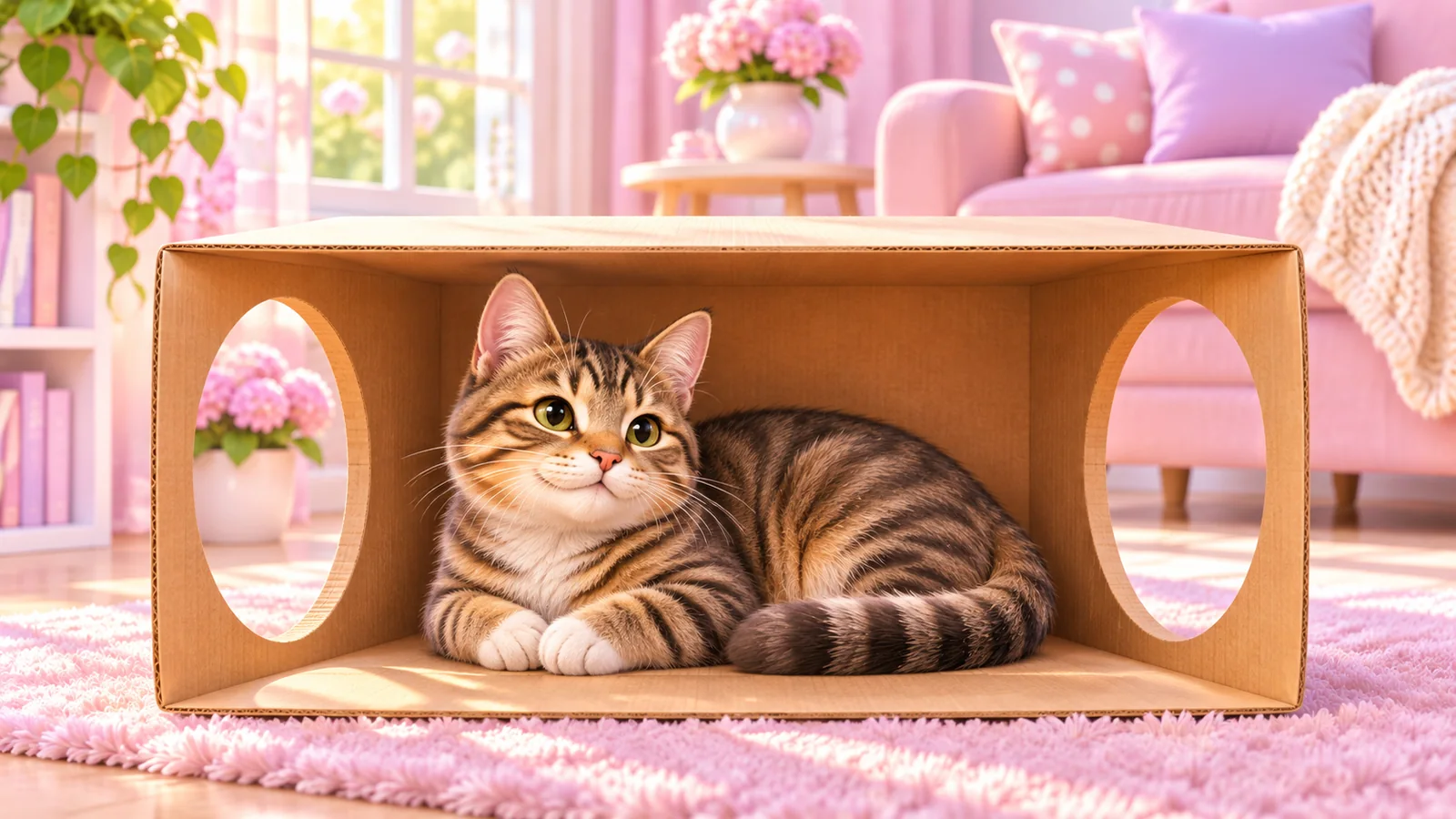
Table of Contents
A place to withdraw has value
Cats need opportunities to step away from noise, attention and other animals. A box can provide cover while letting them watch the room. That choice can matter even in a home that feels quiet to you.
The Cats Protection explanation of boxes discusses their appeal as hiding and resting spaces. It does not mean every cat must like the same box or that hiding always signals contentment.
Notice the individual. A cat who uses a box for a relaxed nap is different from one who suddenly hides all day and misses meals.
Start with ordinary, clean cardboard
Choose a sturdy box large enough for the cat to enter, turn and leave without squeezing. Remove tape, staples, handles, string and packaging before offering it. Avoid boxes contaminated with chemicals, food residue or strongly scented products.
If you cut an entrance, do it away from the cat and smooth any rough edges. A second generous exit can help prevent another animal from blocking the only way out.
Do not seal the cat inside or place a lid over them for a photograph. The best feature of the box is that entering and leaving remain their decision.
Put the box where it can work
Try a calm part of a room the cat already uses, away from door swings, heaters and busy thoroughfares. Leave clear routes to water, food and toileting areas.
In a multi-cat home, offer more than one hiding option in separate locations. A single excellent box may still be a poor arrangement if one cat controls access. Our multi-cat layout guide explores that problem.
Keep dogs from approaching a cat resting inside. Wendi does not need to conduct a doorstep interview with the new tenant.
Let play and rest be different jobs
A cat may enjoy a short toy game around a box, but stop when they settle to rest. Do not poke fingers through openings or encourage children to surprise the cat.
If you add bedding, choose a familiar safe material and watch for chewing or swallowing. Replace cardboard when it becomes wet, soiled, unstable or damaged enough to trap a paw. Check inside before moving or recycling it.
For another useful home adjustment, see scratching-post placement.
When hiding needs a closer look
Sudden hiding, reduced eating, altered toileting, pain or less interaction can indicate illness or stress. Contact your vet rather than simply providing a bigger box. The Cats Protection hiding guide explains why changes deserve attention.
The goal is a cat with more comfortable choices, not a cat who disappears permanently. If the packaging becomes the favourite bed, at least the household's interior designer has been clear about the brief.