
Rabbit Friendship Happens at Floor Level: Stop Making Every Hello a Pick-Up
5 min read
Category Life with Pets
Tags rabbits small-pets behaviour
You want to say hello. Your rabbit would prefer all four feet to remain on the ground. Both wishes can fit into the same friendship.
Many rabbits find being lifted worrying. Building a relationship does not require turning every interaction into handling practice, especially when the rabbit has no easy way to leave.
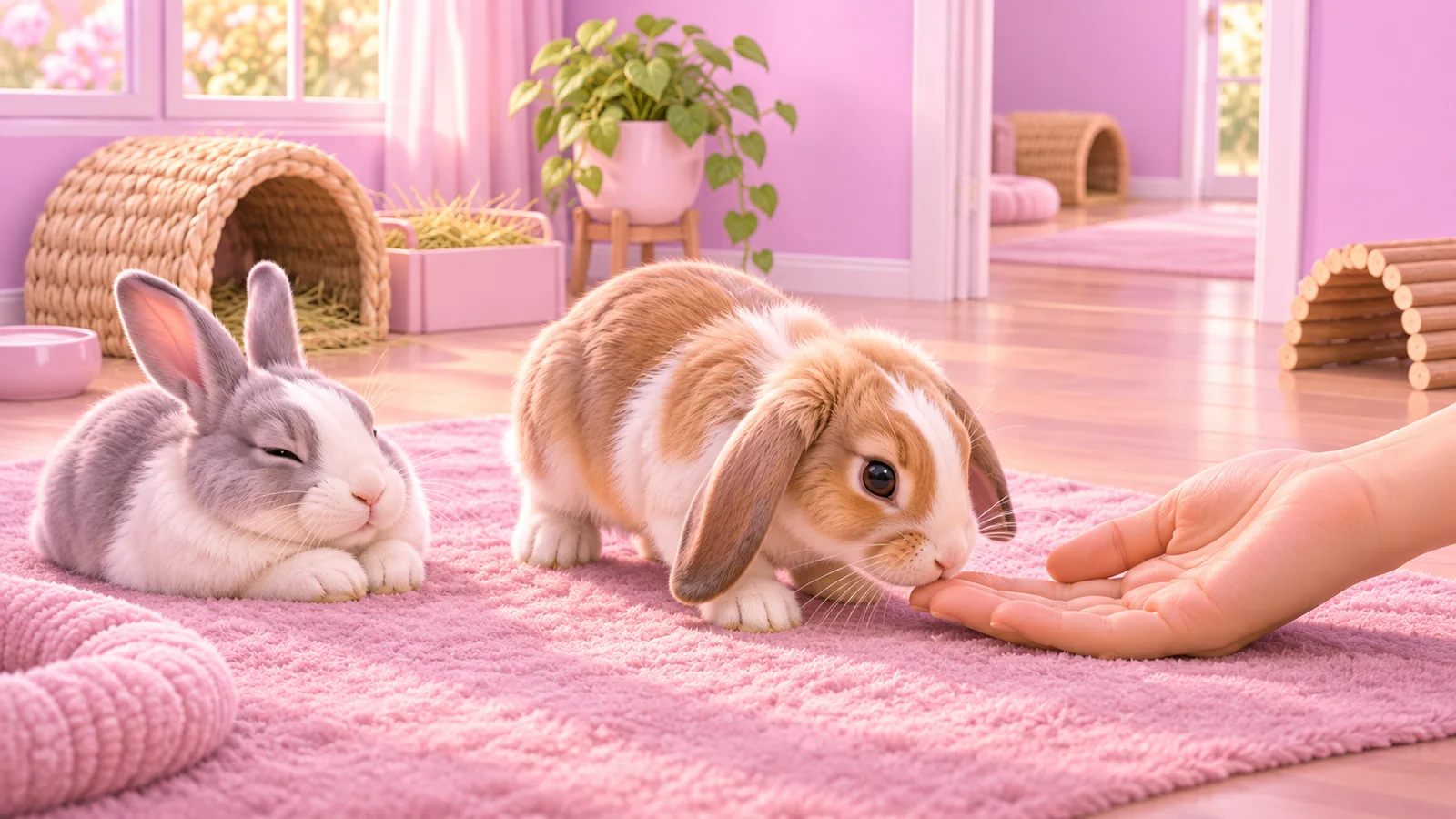
Table of Contents
Prepare somewhere safe to sit together
Use a secure rabbit-proof area with appropriate footing, hiding places and clear movement routes. Protect wires and remove chewable hazards before sitting down. Keep dogs and cats securely separated.
Do not corner rabbits to make a meeting happen. Their familiar compatible companion should still have space and resources too; one rabbit should not have to pass a blocked doorway to reach the other.
Our rabbit enrichment guide explains why hiding and open movement space both matter.
Let approach be the first success
Sit quietly, turn a little sideways and give the rabbits time. Read a book or simply observe. Avoid reaching over them, following them around or repeatedly calling for attention.
You can offer a small suitable food item within their normal diet, but do not use it to lure a rabbit into being caught. Approaching a person should remain safe even when no handling follows.
PDSA's rabbit-handling guidance recommends floor-level interaction and letting rabbits approach at their own pace.
Keep touch brief and optional
If a rabbit approaches comfortably and appears to welcome contact, try a brief gentle stroke in an area they accept, then pause. Observe whether they remain relaxed, move closer or leave.
Do not hold them in place to complete a petting session. Freezing is not proof of enjoyment, and a rabbit struggling to escape is not being rude.
Wendi's enthusiastic welcome routine would be a poor model here. Quiet company can be a complete interaction, not a warm-up before the “real” cuddle.
Give children a manageable role
An adult should supervise. Children can sit calmly on the floor and let the rabbits investigate, using quiet voices and slow movements. Explain that the rabbits may choose no contact that day.
Avoid chasing, surprise lifting or carrying rabbits around for photographs. Support children in understanding the animal's choice rather than asking the rabbit to tolerate more.
A rabbit leaving is useful communication. Respecting it helps keep future approaches comfortable.
Plan necessary handling separately
Health checks, transport and treatment may require handling. Ask a rabbit-experienced vet or rescue to demonstrate a safe method suited to the individual, supporting the body and avoiding falls.
Never lift by ears or scruff, and do not place rabbits on their backs to make them freeze. The RSPCA's rabbit care guidance explains why this “trancing” is distressing rather than calming.
Training for care can be gradual and rewarding. Urgent medical needs still require prompt professional help.
Watch for a change, not just a shy personality
A rabbit suddenly avoiding contact, moving less, eating poorly or producing fewer droppings may be unwell. Not eating or reduced droppings needs urgent veterinary advice.
Friendship grows from predictable safe experiences. Some of its best moments happen with nobody leaving the floor.