
Wand Play Your Cat Can Actually Catch: Better Than Endless Chasing
5 min read
Category Play & Enrichment
Tags cats play enrichment
You wave the toy. The cat watches. You wave it faster, and the cat watches with the expression of someone reviewing an unconvincing documentary.
Wand play works better when it gives a cat something interesting to stalk and catch, rather than an object permanently hovering beyond reach. A few thoughtful changes can make a short game more rewarding.
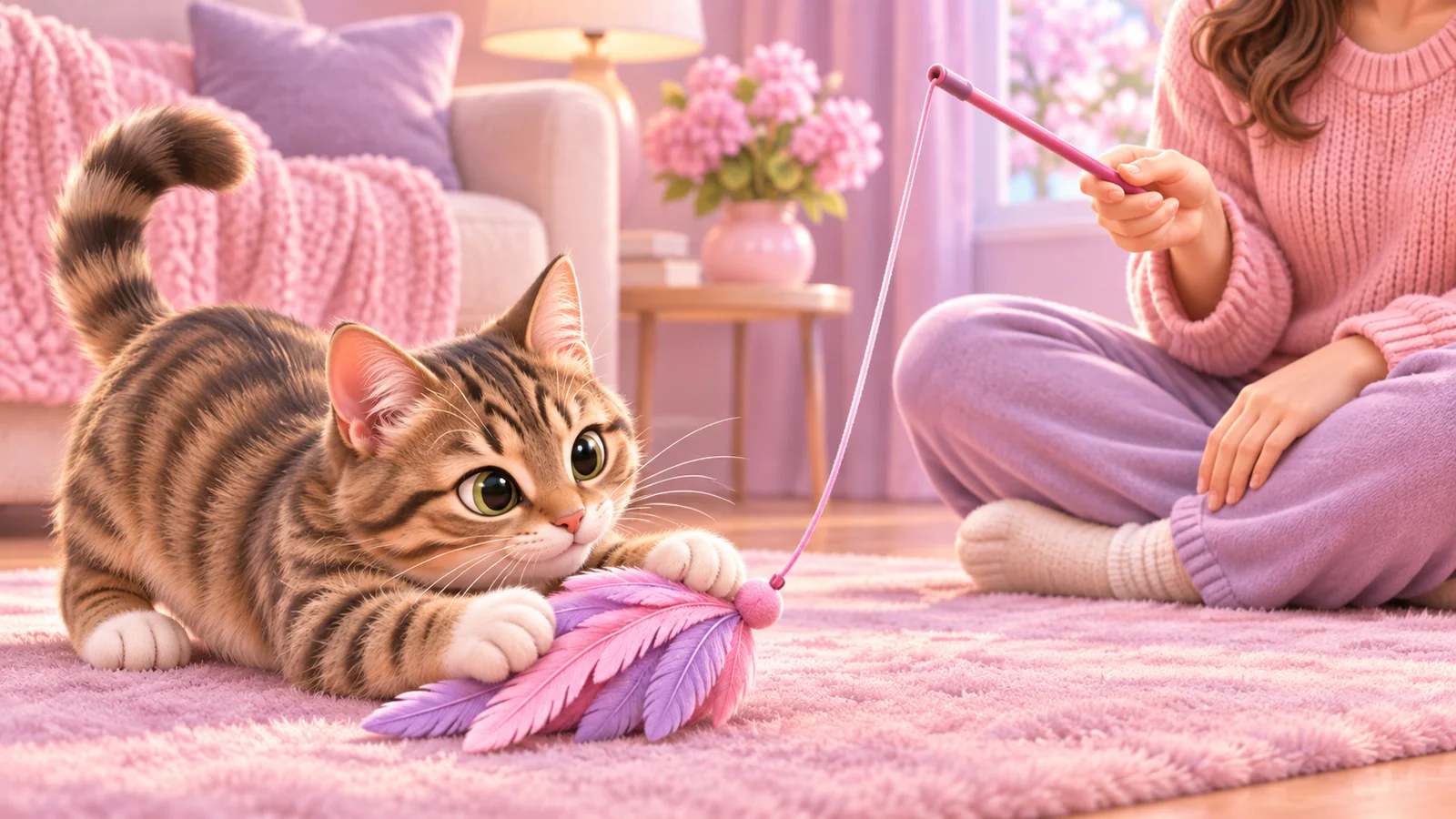
Table of Contents
Start with the cat's position
Choose a clear area with secure footing and an easy retreat. Avoid slippery corners, stairs, breakable objects and places where another animal can ambush the player.
Let the cat watch before deciding to join. Crouching, looking and waiting can be part of play; stillness does not always mean boredom. Do not poke the toy into the cat's face to force a response.
For cats with mobility or health problems, ask your vet what level of movement is appropriate. Play can happen on the floor without high leaps.
Make the lure behave plausibly
Move a suitable toy away from the cat in short bursts, pause, and let it disappear briefly behind a safe obstacle. Keep the line clear of legs and neck.
Vary the pace rather than endlessly whipping it around. Some cats prefer a slow creeping movement; others like a brief skitter. Watch what invites relaxed attention.
A cushion edge can provide a place to stalk around, but do not trap the cat between furniture. Wendi's suggestion to add a cheering section can be politely declined.
Include the catch
Let the cat reach and hold the toy at intervals. Avoid pulling hard against claws or dragging the cat while they grip it. Pause, allow the catch, then gently restart when the cat is ready.
Cats Protection's play advice recommends opportunities to catch toys and short games. A session does not need to last until the cat gives up.
When ending, slow the movement and allow a final catch. You can then move into the normal routine, including an appropriate meal if it is already mealtime; extra food is not a requirement.
Keep hands out of the prey role
Use the toy rather than fingers, toes or a hand hidden under a blanket. Teaching that human skin is a suitable target can make ordinary movement difficult later.
Supervise children and help them move the wand gently, with the cat free to leave. Keep other pets separate during the game if they would interrupt or chase.
Store the whole toy after play
Strings, elastic, feathers and small detachable parts can be hazardous if swallowed or become tangled. Inspect the toy before use and put it somewhere inaccessible afterwards.
Do not leave a cat alone with a dangling wand fixed to furniture. If string may have been swallowed, contact your vet; do not pull a visible strand from the mouth or bottom.
Notice changes in interest
If a cat who normally enjoys play suddenly stops, seems painful or becomes breathless, seek veterinary advice. Repeated frustration, swatting at people or tense retreat also means the session needs adjustment.
You are aiming for chosen activity, a manageable challenge and a successful catch. The entertainment does not improve simply because the human is waving harder.