
Help Your Dog Feel Better About Car Travel: Start Before the Engine
5 min read
Category Training & Behaviour
If every car trip ends at the vet or begins with being lifted into a worrying space, your dog may have questions about the transport department.
Better travel starts before the wheels move. Separate feeling safe around the vehicle, entering, settling and experiencing motion into manageable tasks, with room to pause.
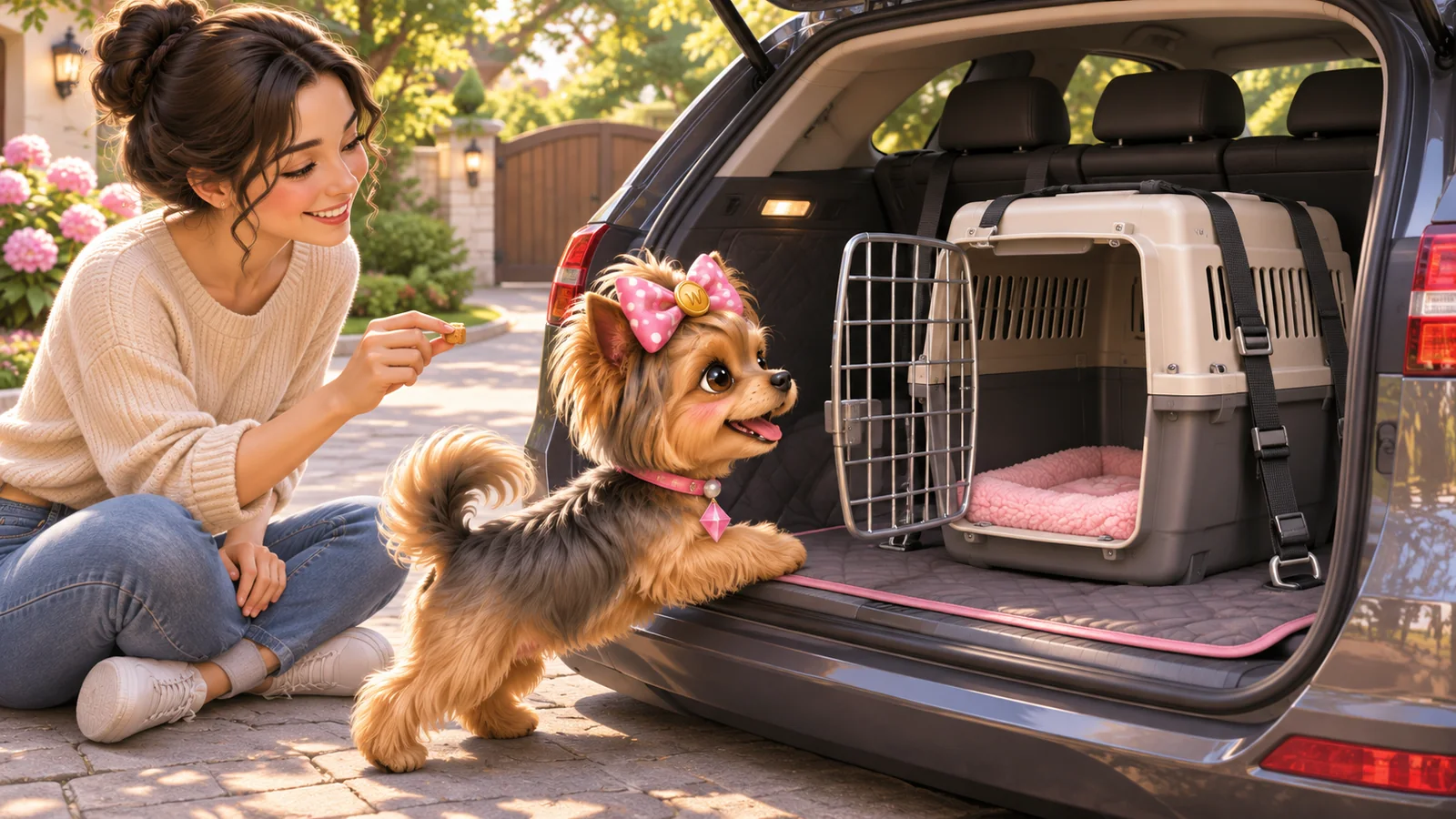
Table of Contents
Check whether sickness or pain is part of it
Drooling, vomiting, repeated swallowing, restlessness or reluctance to enter can have several causes. Speak to your vet about travel sickness, pain and anxiety rather than assuming the dog only needs more practice.
A dog who feels ill on journeys may not improve simply through repeated exposure. Ask about an individual plan and suitable veterinary treatment; do not use human travel medication or sedatives without direction.
Record when signs begin: approaching the car, hearing the engine or after movement. That detail can help the team.
Begin beside a parked vehicle
Choose a safe quiet place, engine off, with the car secured and weather comfortable. Keep the dog safely managed so opening a door cannot lead to an escape.
Reward a comfortable look or approach at a distance they can manage, then move away. There is no requirement to enter during the first session. Do not lure the dog into position and then unexpectedly shut them in.
Dogs Trust's car-travel guide recommends careful, gradual preparation.
Make entry and resting separate steps
Plan suitable access, especially for small, older or mobility-limited dogs. Ask about a stable ramp or appropriate support if jumping is difficult. Never pull a dog by the lead into the vehicle.
Introduce a suitable secured crate or travel restraint separately where possible, using the manufacturer's instructions and appropriate professional guidance. Allow brief comfortable practice while stationary, then finish.
Wendi would like to inspect the accommodation before accepting a reservation.
Add sounds and motion gradually
Only progress when the earlier stage is comfortable. Brief engine sound is a different challenge from a closed door, and a short smooth journey is different again.
Have another adult observe safely if needed so the driver can concentrate on driving. Do not lean back to handle or feed the dog while the vehicle is moving.
Choose an easy destination as part of the training plan, not only stressful appointments. Keep sessions short and reduce difficulty if signs of worry or sickness appear.
Treat journey safety as its own job
Use an appropriate properly fitted restraint or secured travel crate suited to the dog and vehicle. A dog lying quietly is not secured merely because they stay still.
Keep ventilation comfortable without allowing the dog to lean out of an open window. Never leave a dog unattended in a car where temperature or other conditions could put them at risk.
Plan stops and arrivals before opening doors. Have the lead arrangement ready in a secure way so the dog cannot jump out into traffic.
Get help before the next unavoidable trip
If an appointment is soon or previous journeys have caused severe distress, call the vet for a practical plan. Do not postpone urgent care while waiting for training to work.
Our pet-sitter handover can help you explain equipment and travel needs to another carer.
Comfortable travel is a collection of safe small experiences. The mileage comes later.