
Guinea Pigs Need Guinea Pig Friends: Company Without the Guesswork
5 min read
Category Life with Pets
Tags guinea-pigs small-pets care
A guinea pig who recognises the vegetable drawer can make you feel like a very important person. You are important—but you are not another guinea pig.
These social animals benefit from compatible companions of their own species. The practical challenge is not simply buying “a second one”. It is making a suitable match and giving both animals a home where company remains a choice rather than a competition.
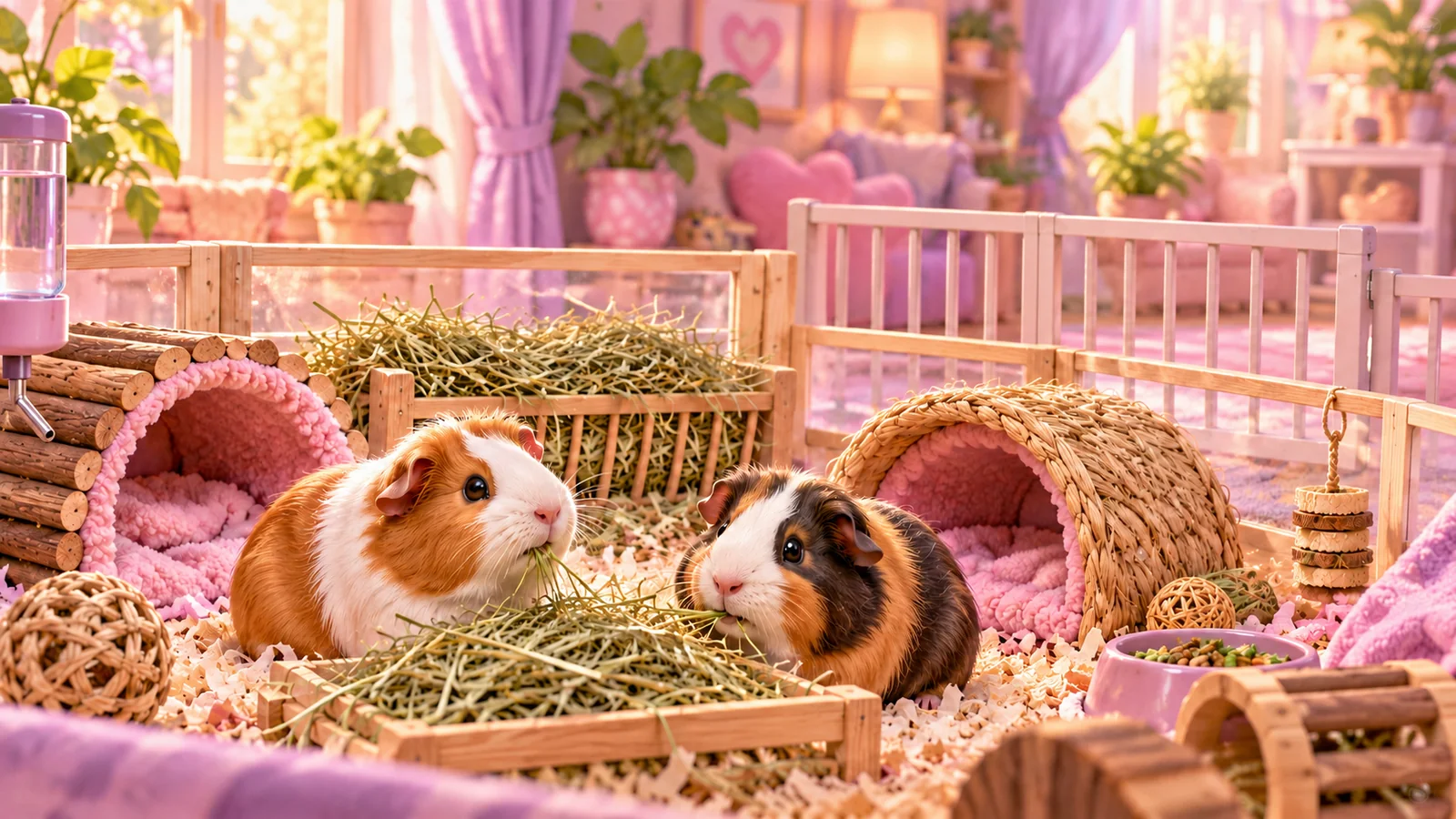
Table of Contents
Start with a pairing conversation
A rescue experienced with guinea pigs can help assess compatibility and may have an established pair available. Keeping a pair who already get on avoids making friendship your first experiment.
For an existing single guinea pig, ask about the animal's health, history, sex and pairing options. Have sex confirmed by someone suitably experienced; a shop label is not a reliable pregnancy-prevention plan.
Mixed-sex companionship requires veterinary advice about neutering and the period before a neutered male can safely meet females. Do not assume the operation immediately makes pregnancy impossible. Same-sex pairings still depend on individual compatibility; neutering is not a guaranteed cure for fighting.
The RSPCA's guinea pig company guidance explains why careful matching matters.
Prepare a home for two individuals
Plan a spacious enclosure with clear routes between resources. Give each animal places to rest and hide without trapping the other inside. Open-ended hides can make it easier to avoid being cornered.
Spread out hay and provide adequate feeding and water access. Two bowls side by side may still function as one defendable spot; think about distance and access, not just counting objects.
Watch each guinea pig eat, move and use the space. A full food bowl does not prove both animals are getting a fair share. Keep records of weights and discuss changes with a guinea-pig-experienced vet.
Introductions need a plan
Get guidance on appropriate health checks and any separation period before introduction. Do not drop a stranger into the resident animal's enclosure and hope enthusiasm will do the rest.
Follow an experienced rescue's introduction and monitoring advice, including when to intervene. If there is fighting or injury, use a safe separation method that avoids putting bare hands between animals, and seek help. Persistent exclusion from food, hiding all the time or losing weight also needs attention.
A guinea pig who stops eating or produces fewer droppings needs urgent veterinary advice. Do not wait for a social problem to sort itself out.
A rabbit is not the substitute
Rabbits and guinea pigs have different communication and care needs, and rabbits can injure guinea pigs. They should not be housed together as an improvised companion arrangement.
Likewise, a friendly dog or cat does not replace same-species company. Keep guinea pigs protected from predators with secure housing and appropriate separation. Wendi can admire the household from a safe distance; she is not available as a guinea pig flatmate.
Keep human friendship too
Sit quietly nearby, offer suitable food within their normal diet and let them approach. Support bodies carefully if handling is needed, keeping them close to a safe surface. Some animals prefer interaction without being picked up.
A compatible pair does not make you redundant. It means their social life can continue when you close the vegetable drawer.