
Guinea Pig Hay Stations That Work: Easy to Reach, Easy to Keep Fresh
4 min read
Category Life with Pets
A beautifully tidy hay rack is not much use if a guinea pig cannot comfortably reach dinner. These animals spend a large part of life eating fibrous food, so easy access deserves more attention than perfect presentation.
Think of a hay station as a dependable feeding area, not a puzzle the animal must solve before they can eat.
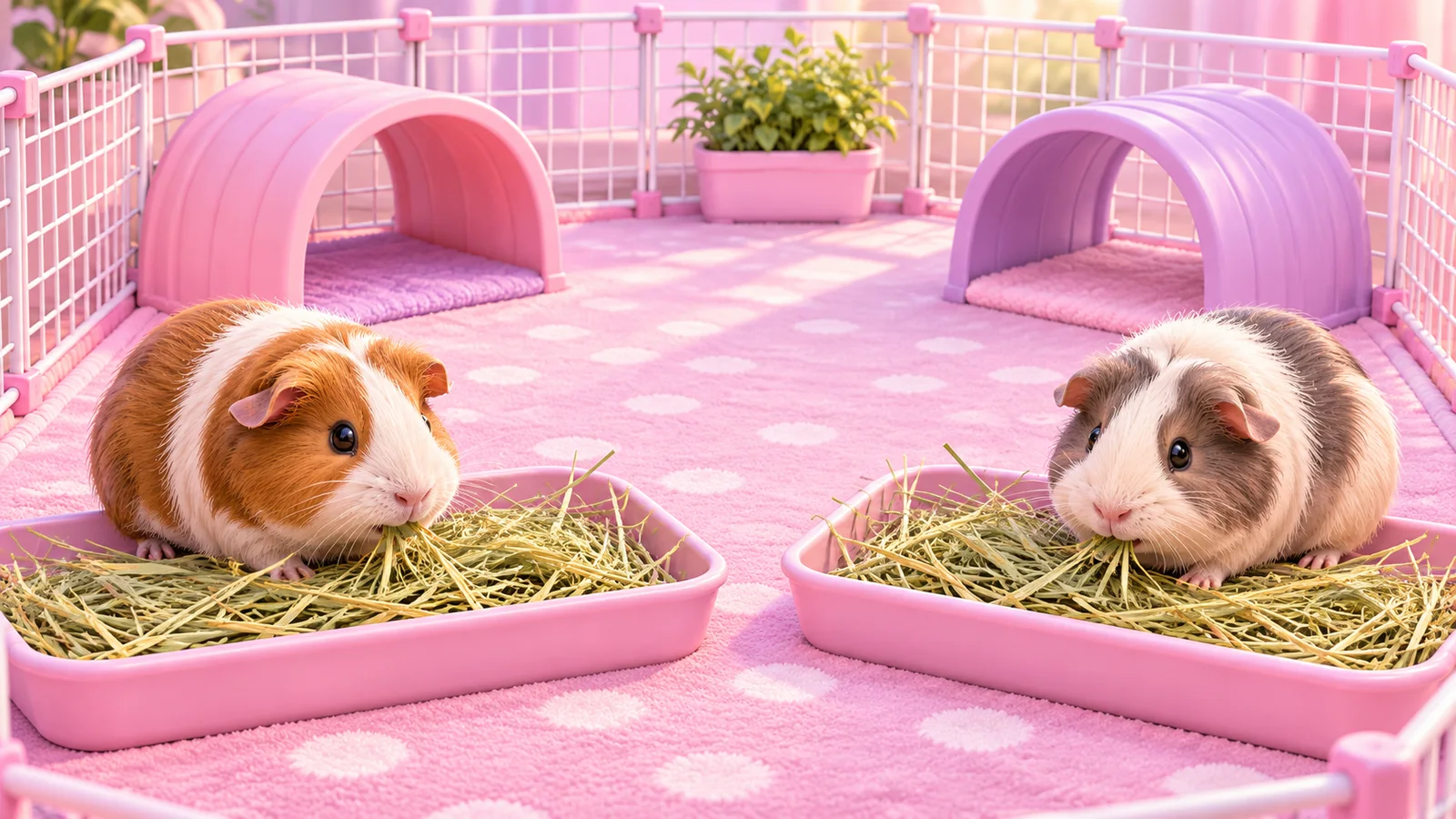
Table of Contents
Keep the essential food available
Good-quality grass hay should be accessible at all times as a central part of a suitable guinea pig diet. It supports normal chewing and digestive function; pellets and vegetables do not replace it.
Use hay that smells fresh and is dry, rather than mouldy, damp or heavily dusty. Store it appropriately and replace soiled material. Do not offer lawnmower clippings.
The RSPCA's guinea pig diet guidance explains hay's role alongside appropriate pellets, fresh food, vitamin C and water. Individual diet questions belong with a guinea-pig-experienced vet.
Put access before clever hardware
A broad, open shallow tray can be easier to inspect than a complicated hanging holder. If you use any rack, check every opening for a risk of trapping the head, limbs or body. Make sure the animals do not need to climb or balance to reach it.
Avoid tight hay balls or designs an animal can get stuck inside. “Sold for small pets” is not the same as suitable for your particular animals.
Watch actual use. Does each guinea pig reach the hay comfortably, or do they stretch, hesitate or wait for a companion to leave?
Spread feeding opportunities out
Offer hay in more than one accessible area for compatible companions. Distance matters: two piles immediately beside each other may still be defended as a single spot.
Leave clear routes past hides and water. Open-ended shelters can help prevent an animal being cornered. Do not pack so many feeding containers into the enclosure that the guinea pigs lose room to move.
Our guinea pig companionship guide explains why sharing a home should not mean competing for every resource.
Make freshness easy to check
Build a quick inspection into morning and evening care: fresh hay present, damp material removed, water working and both animals moving and eating as expected. Add checks as needed for the conditions and individual animals.
A pile that still looks full is not proof everyone has eaten. Notice each guinea pig's chewing, droppings and normal activity. Keep regular weight records using a suitable method your vet recommends.
PDSA's feeding guidance also stresses continual hay access and an appropriate balanced diet.
Take eating changes seriously
Reduced eating, fewer droppings, weight loss, drooling or difficulty chewing needs prompt veterinary attention; not eating or a marked reduction in droppings warrants urgent advice. Do not simply swap hay brands and wait.
A new holder is not treatment for dental disease or illness. Keep normal food available while arranging care and follow the vet's instructions.
Wendi would probably choose a pink serving dish. The guinea pigs' priorities are more useful: fresh hay, easy reach and nobody blocking the buffet.