
Calmer Doorbell Greetings: Give Your Dog a Job Away From the Door
4 min read
Category Training & Behaviour
The doorbell rings, and your dog promotes themselves to head of security. Their operating procedure involves speed, volume and very little consultation.
A calmer arrival starts by making the real doorway safe. Training can then happen in manageable pieces, rather than during the busiest ten seconds of a delivery.
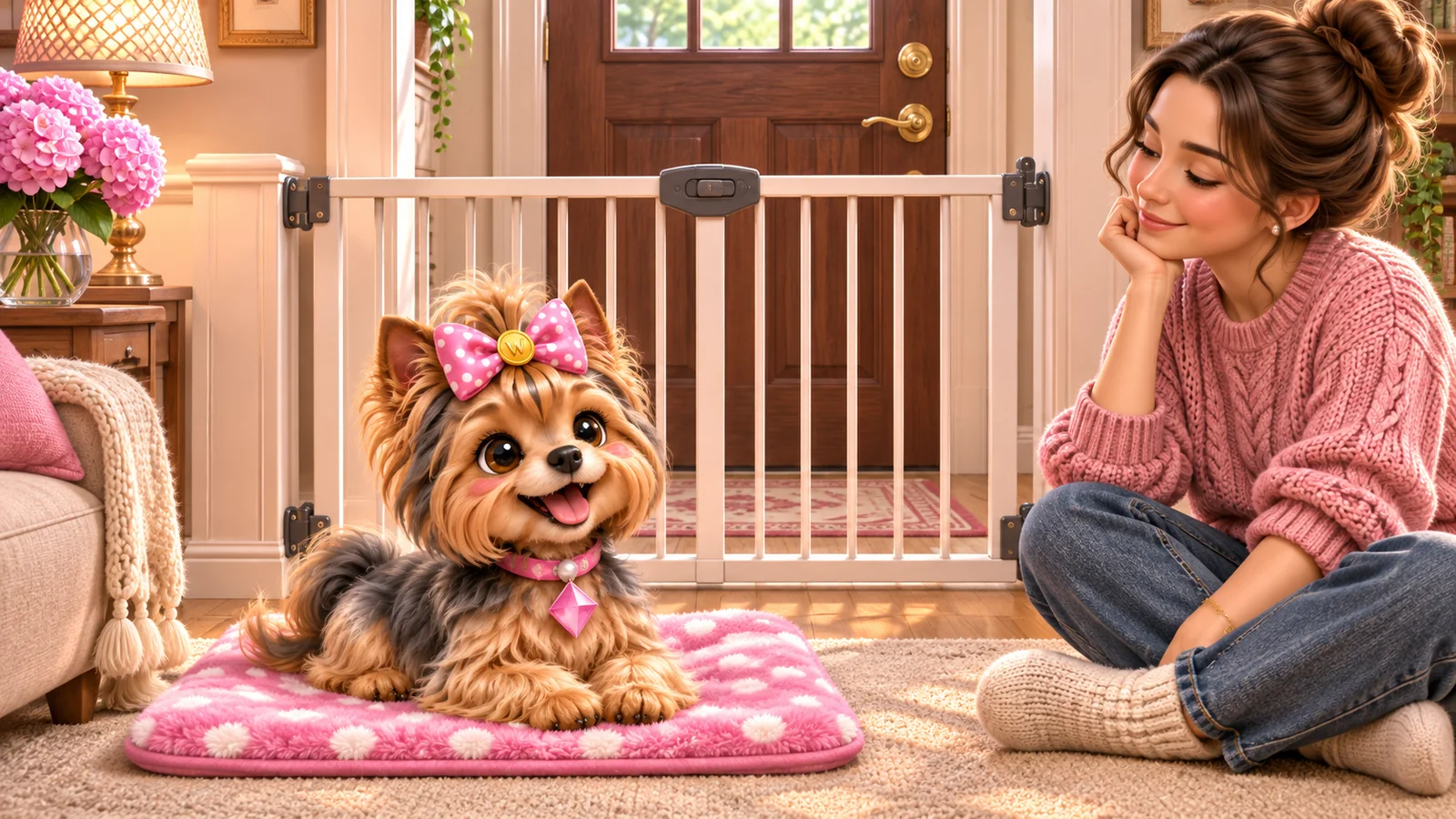
Table of Contents
Protect the entrance first
Use a secure gate or closed interior door appropriate to the dog, with a comfortable area behind it. Check gaps, latches and whether a small dog can squeeze through. Keep the dog safely separated before opening the outside door.
A bed alone is not a barrier. A trained cue is useful, but people carrying parcels or managing children should not have to rely on a perfect response to prevent an escape.
If separation is worrying, arrange calm company and seek help choosing a setup the dog can manage.
Build the alternative without the bell
Practise settling on a mat or bed in a quiet setting first. Reward comfortable voluntary use and brief pauses, then release the dog before they become restless.
Choose a spot away from the arrival route. It should not leave the dog trapped beside someone leaning over them or stepping across the bed.
Our mat-settling guide covers the foundation. Wendi can still hold an important job; “relaxed observer” comes with excellent working conditions.
Introduce the sound at an easy level
A recording played softly may let you start below the intensity of the real bell. Brief sound, good outcome, pause. If the dog startles, rushes or cannot take part comfortably, the sound or setup is too difficult.
Do not repeatedly ring the real bell until the dog gives up. Increase realism gradually, changing volume, location and visitor activity separately.
The Royal Kennel Club's doorbell guidance treats the sound response as a training task in its own right.
Rehearse with a willing adult helper
When the foundations are comfortable, ask a helper to create a very easy practice arrival. Keep the barrier in place, reward the familiar alternative and end before excitement builds.
Have visitors ignore the dog initially rather than calling, reaching or demanding a sit. Calmly sitting down may be less intense than standing in a busy hallway.
Nobody needs to greet every visitor. A comfortable separate room with suitable support can be the right plan for some dogs.
Respect worry as well as excitement
Barking can occur for different reasons, and a wagging tail does not settle the question. Watch the whole body and allow distance.
If your dog freezes, growls, lunges or has a bite history, do not invite people closer as a training test. Use safe management and consult your vet and a qualified reward-based behaviour professional.
Woodgreen's doorbell advice recommends moving worried dogs somewhere safe while managing the arrival.
A successful greeting may be uneventful—and may involve no greeting at all. The parcel can arrive without the dog attending the meeting.